Here’s Jean Hudson’s latest Places I Love
Relative to its size, Malta offers an incredible richness of history and terrain. It’s a tiny Mediterranean island between Europe and Africa that’s been occupied for over 7000 years, and has ruins that are older than the pyramids. Global influences have shaped the island over centuries.
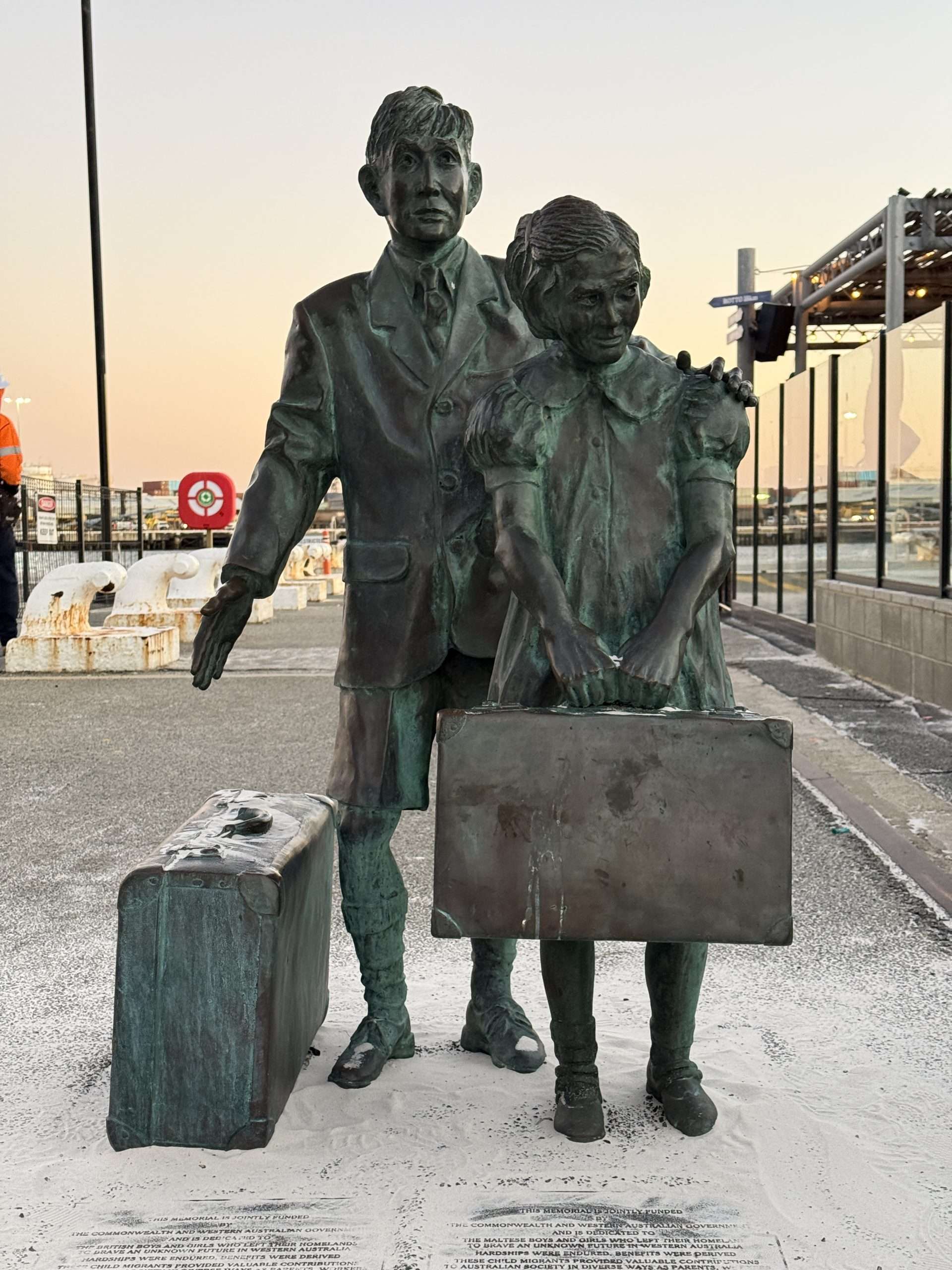
The more I travel, the more I realise how connected all the world is. Malta and Fremantle share a real, and often painful, migration history. Fremantle was the arrival port in Western Australia for waves of Maltese settlers, including accompanied children sent under child migration schemes. After WWII, between 1947 and 1953 over 3,200 children migrated to Australia under approved schemes, most came from UK, but 100 children came from Malta. The life-size bronze sculpture of two Maltese children outside Fremantle’s Maritime Museum is a physical reminder of these sometimes shocking migration schemes.
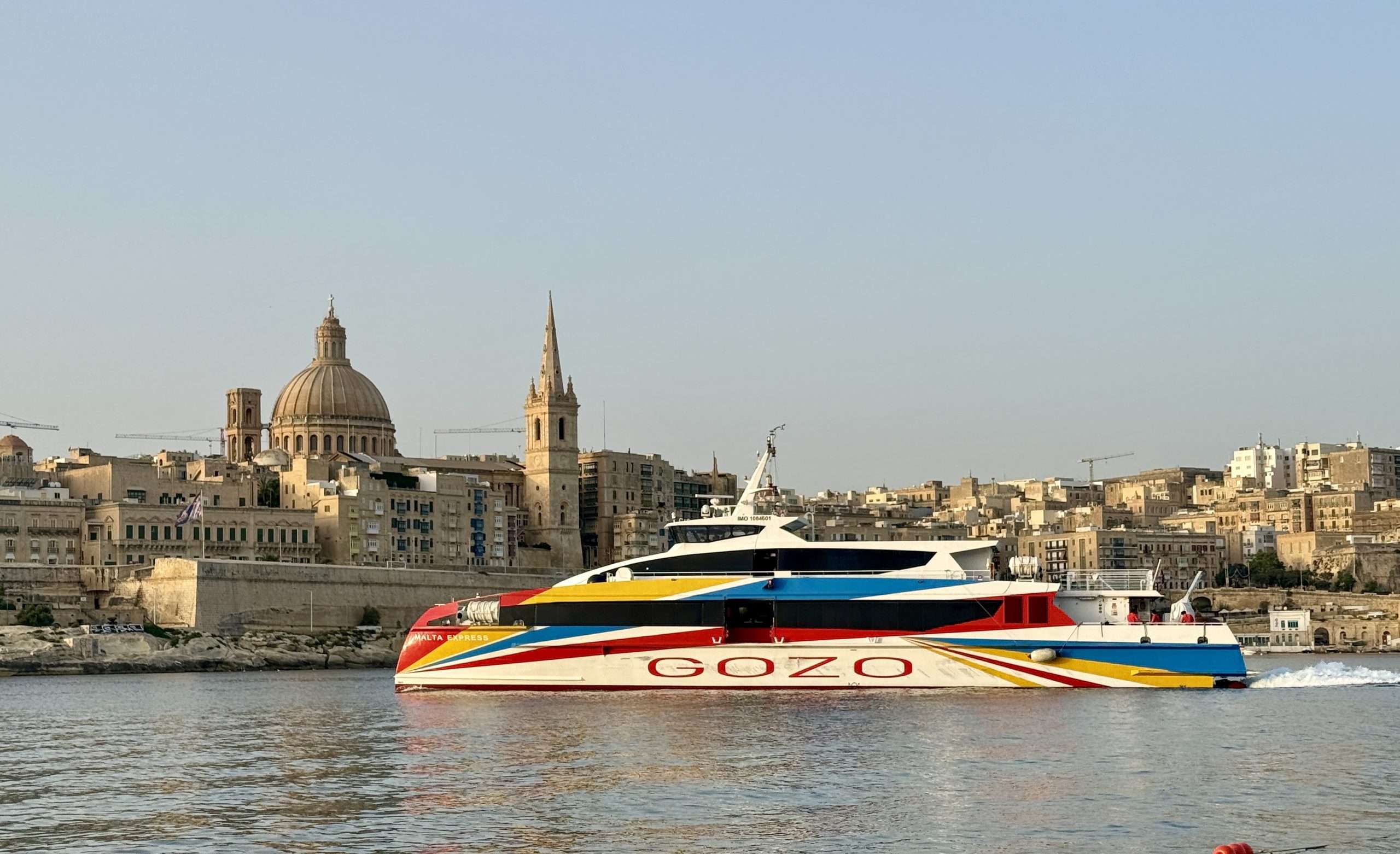
We stay at Sliema across the water from Maltas’s capital Valletta. Narrow cobbled streets with honey-coloured baroque facades and brightly painted wooden gallarija (closed balconies) run downhill to the harbour. The harbour waters are busy with ferries travelling back and forth to Gozo Island, Malta’s Rottnest, along with yachts, and colourful tourist boats.
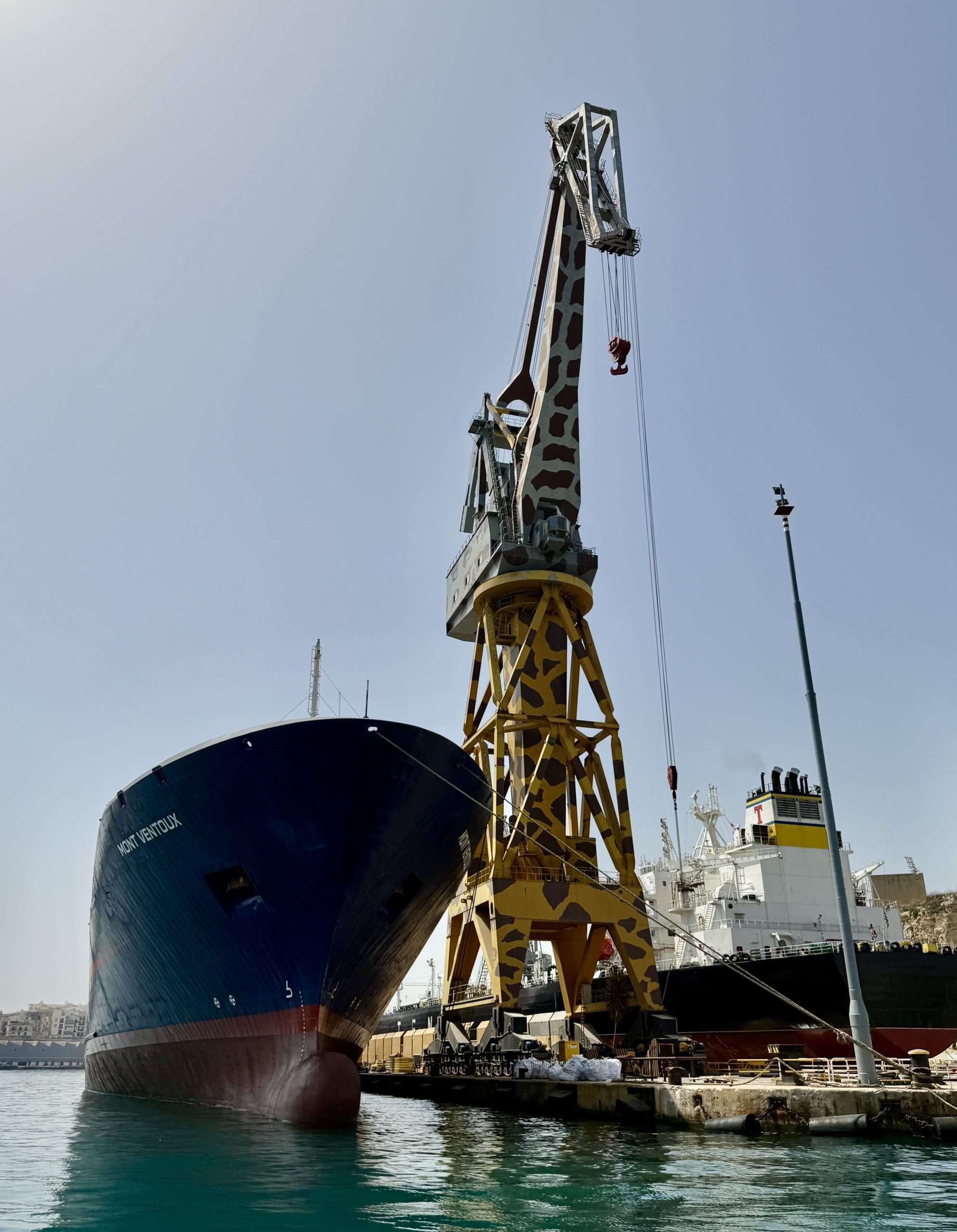
Our days begin with a sunrise swim at one of the city’s swimming spots—the Victorian or Roman baths where locals have enjoyed the Mediterranean Sea for thousands of years. A harbour cruise on a traditional wooden boat is the best way to explore the creeks and waterways of the city and get up close to fortresses, marinas, ferries, cruise ships, container ships and cranes.
Valetta’s Giraffe Crane towers 120-metres above Dock Six in the Grand Harbour like it’s been drinking from the Mediterranean for centuries. Maltese artist James Micallef Grimaldi aka Twitch transformed the crane into a giraffe, acting as a reminder of Malta’s link to the African continent. The Giraffe was part of the Valletta 2018’s major visual arts exhibition.
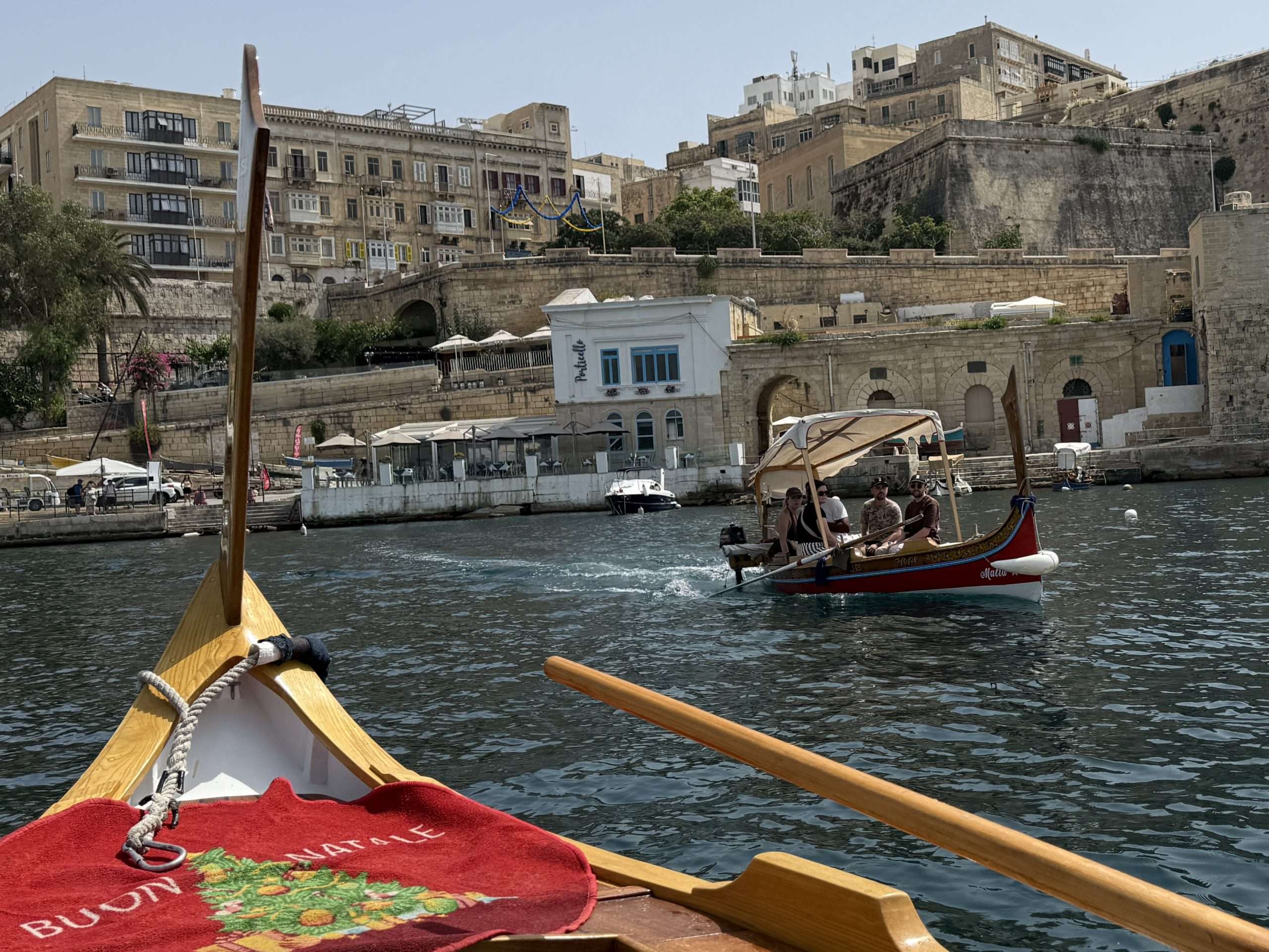
To visit Valletta, we hop onboard a dghajsa, a traditional gondola-shaped water taxi, the trip takes 15 minutes each way and costs three euro.
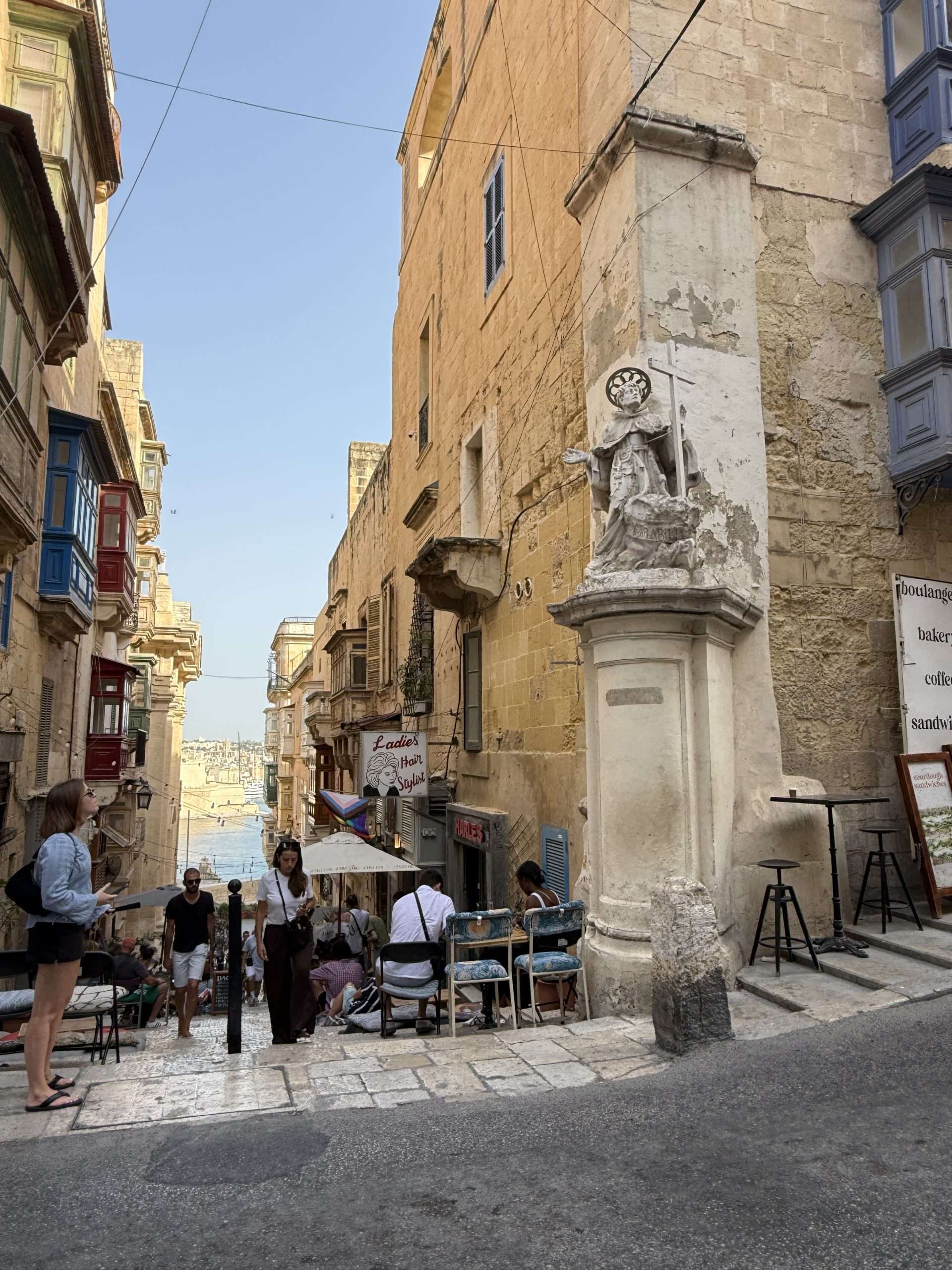
Wandering Valletta, you’ll notice Catholic statues on almost every street corner, these 16th century niches were built as public displays of faith. Malta is full of churches and boasts one for every day of the year. Each one we pop into is more beautiful than the next with marbled floors and elegant chandeliers and each provides its own soothing stillness. Expect to see lots of nuns in white habits and collared priests around the city.
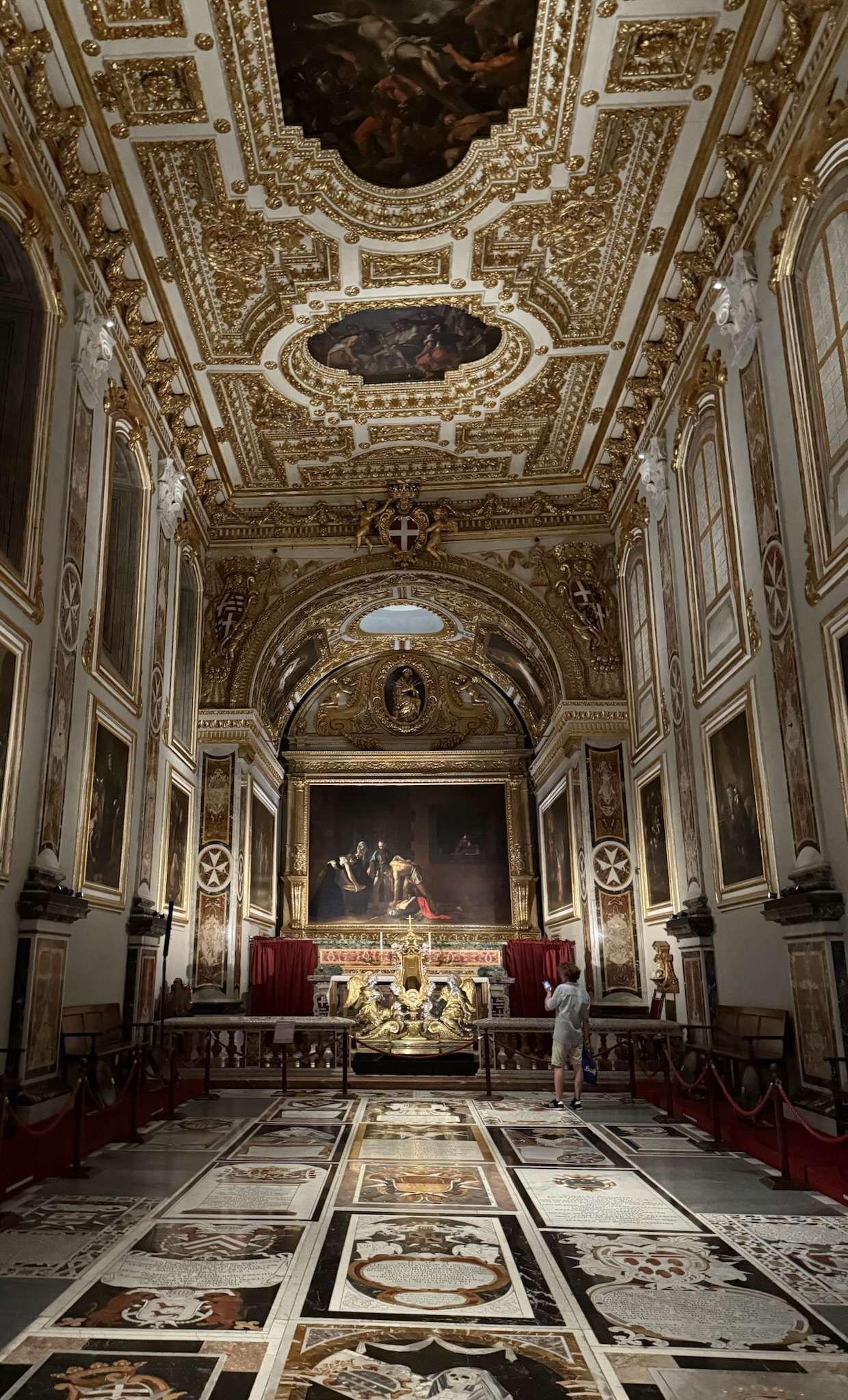
St John’s Co-Cathedral built by The Knights of St John, a religious and military order is a must-see destination of exquisite architecture and tranquillity. Transfixed, I gaze at armies of painted angels swirling overhead, archways festooned with elaborate carvings, and the gleaming coats of gold on every surface. The floor is a maze of intricate marble inlay slabs, each marking one of 400 knight’s tombs. Visitors light candles and bow their heads in pray.
The Knights of St John originated in Jerusalem in the Medieval ages and were charged with the defence of the Holy Land under papal charter. They were wealthy men from elite noble families from across Europe and made Malta their capital in the 16th century and fortified the city of Valetta over the next 250 years.
The cathedral showcases some of the finest 16th and 17th century European art and architecture – it’s a bit like a living Louvre! And the most precious artistic treasure is the 16th century oil painting by Caravaggio – The Beheading of St John the Baptist. It stretches more than five metres wide, above an altar, a brutal and haunting scene. A prostrate St John, with his throat brutally slit, bleeds on the ground, while a stony-faced executioner and onlookers nearby. The longer I stare, more details emerge from the 400-year-old painting, the glint of the knife and Caravaggio’s signature in the pool of blood.
In 1798, The Knights left Malta without a fight and surrendered to Napoleon. They left behind fortresses, churches and the charmingly unaltered City of Medina in the centre of the island. It’s a time warp walled city with no cars, and one of the locations used in the Game of Thrones. The setting sun turns the buildings and countryside to shades of pink.
Above Valletta are the Upper Barrakka Gardens, a huge green space with lawns and flowers, popular with pouting and posing Instagram-ers. The English ruled Malta for over 150 years until Malta became independent in 1964. From here you can tour the underground war tunnels used for shelter during the Second World War bombings. Malta was the most bombed place during WWII suffering a total of 3,000 bombing raids over two years; 6,700 tons of bombs fell on the Grand Harbour alone. Over 1300 Maltese lost their lives with thousands wounded and 30,000 buildings destroyed or damaged.
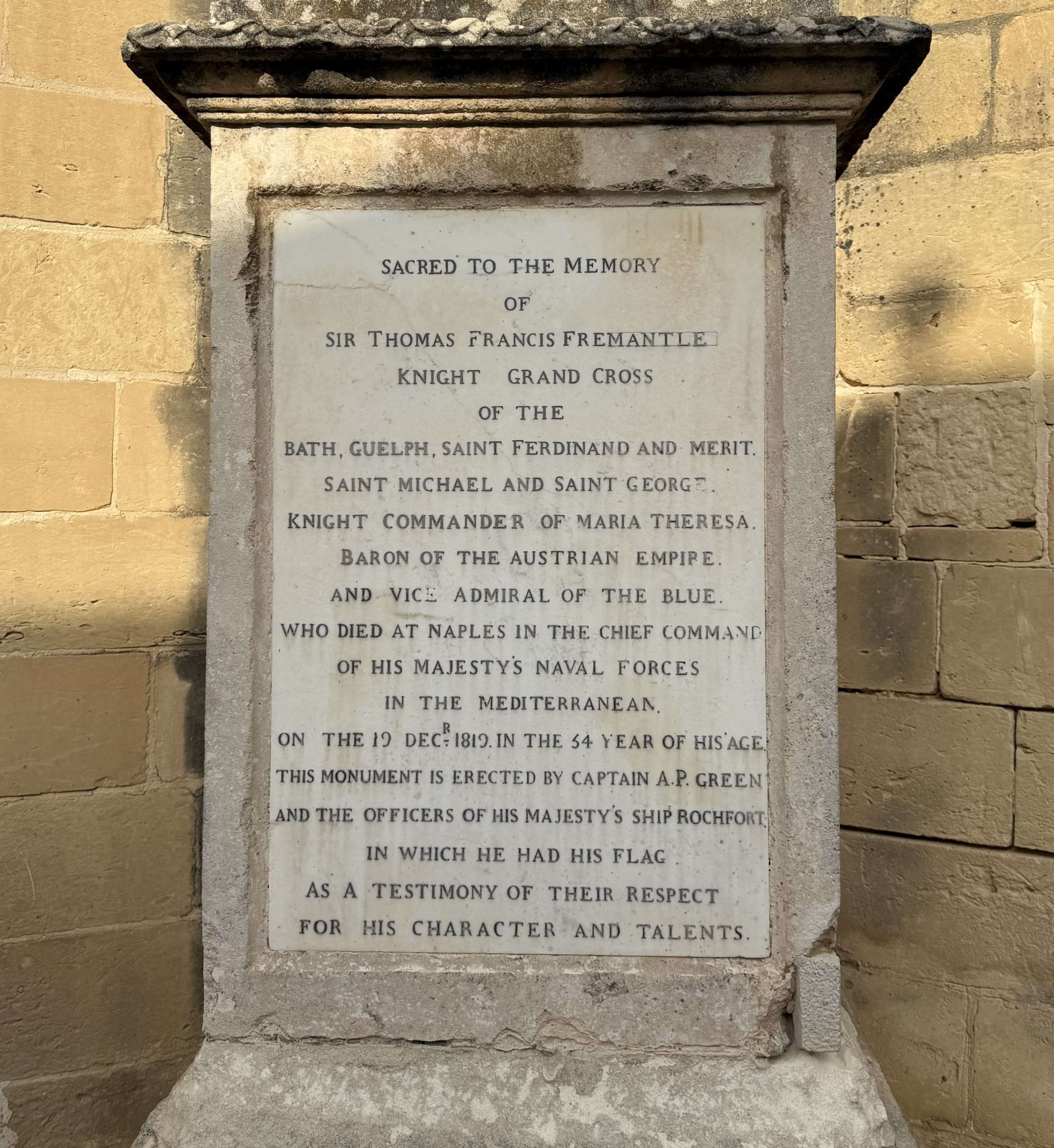
In the gardens, I came across a monument honouring Sir Thomas Francis Fremantle who died in Naples in 1812, while in command of His Majesty’s Naval Forces in the Mediterranean. Another link to the town of Fremantle – he was the father of Charles Fremantle after whom the town of Fremantle was named in 1829 by the new British settlers.
A visit to Malta wouldn’t be complete without a trip to the Blue Lagoon and a swim in its milky-blue waters, or eating rabbit ravioli washed down with a local Cisk lager. Cars drive on the left, taxis are inexpensive and most Maltese speak English – all making it a great location for short European break for visiting Aussies.
*STORY AND PHOTOGRAPHS by Jean Hudson @jeansodyssey.
Jean Hudson is our Shipping and Sailing Correspondent and also a regular feature writer and photographer here on the Shipping News. You will find Jean’s informative Places I Love stories, as well as other feature stories and Freo Today photographs, right here.
~If you’d like to COMMENT on this or any of our stories, don’t hesitate to email our Editor.
~WHILE YOU’RE HERE –
PLEASE HELP US TO GROW FREMANTLE SHIPPING NEWS
FSN is a reader-supported, volunteer-assisted online magazine all about Fremantle. Thanks for helping to keep FSN keeping on!
~Don’t forget to SUBSCRIBE to receive your free copy of The Weekly Edition of the Shipping News each Friday!