Teenage Sex and Death at Camp Miasma concludes Jane Schoenbrun’s LGBTQI trilogy after We’re All Going to the World’s Fair and I Saw The TV Glow. It’s a thematic feast, topped with candy, fried chicken, and blood fountains.
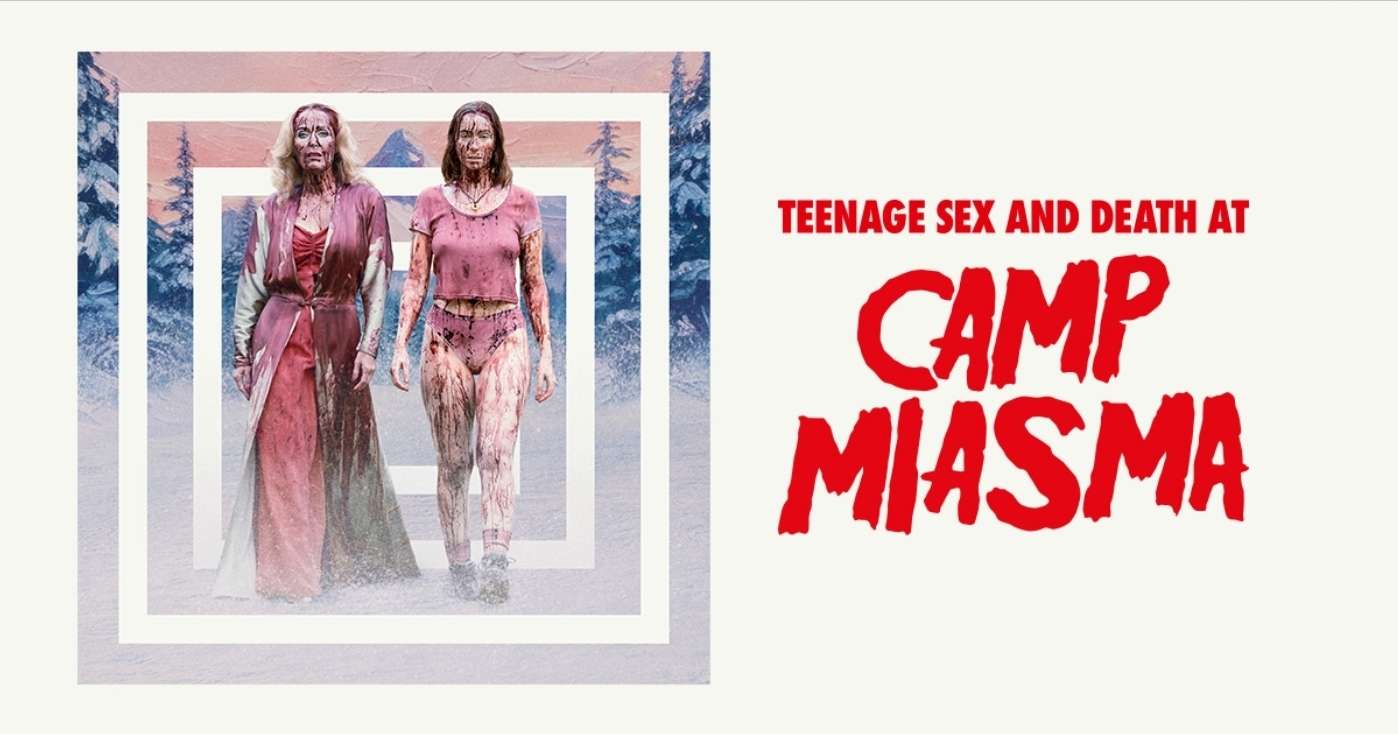
Queer film director Kris (Hannah Einbinder), is presented with the opportunity to revive a “zombie IP” and add a “woke lens” to a problematic lusty slasher series. She’s typecast as just the lady for the job after releasing her debut remake of Psycho, shown from the perspective of the shower curtain. Kris seizes the challenge as an opportunity to go deeper than tacking on an awkward origin story to the Camp Miasma antagonist “Little Death” (wink wink). She wants to see the story from their eyes AND the victims’. Why can’t it be both? Isn’t both better?
She seeks out the original film’s “final girl” Billy Presley (Gillian Anderson) to entice her to join the reboot. Billy, intriguingly enough, declined opportunities to star in the sequels, but lives secluded in the camp retreat setting of Miasma itself.
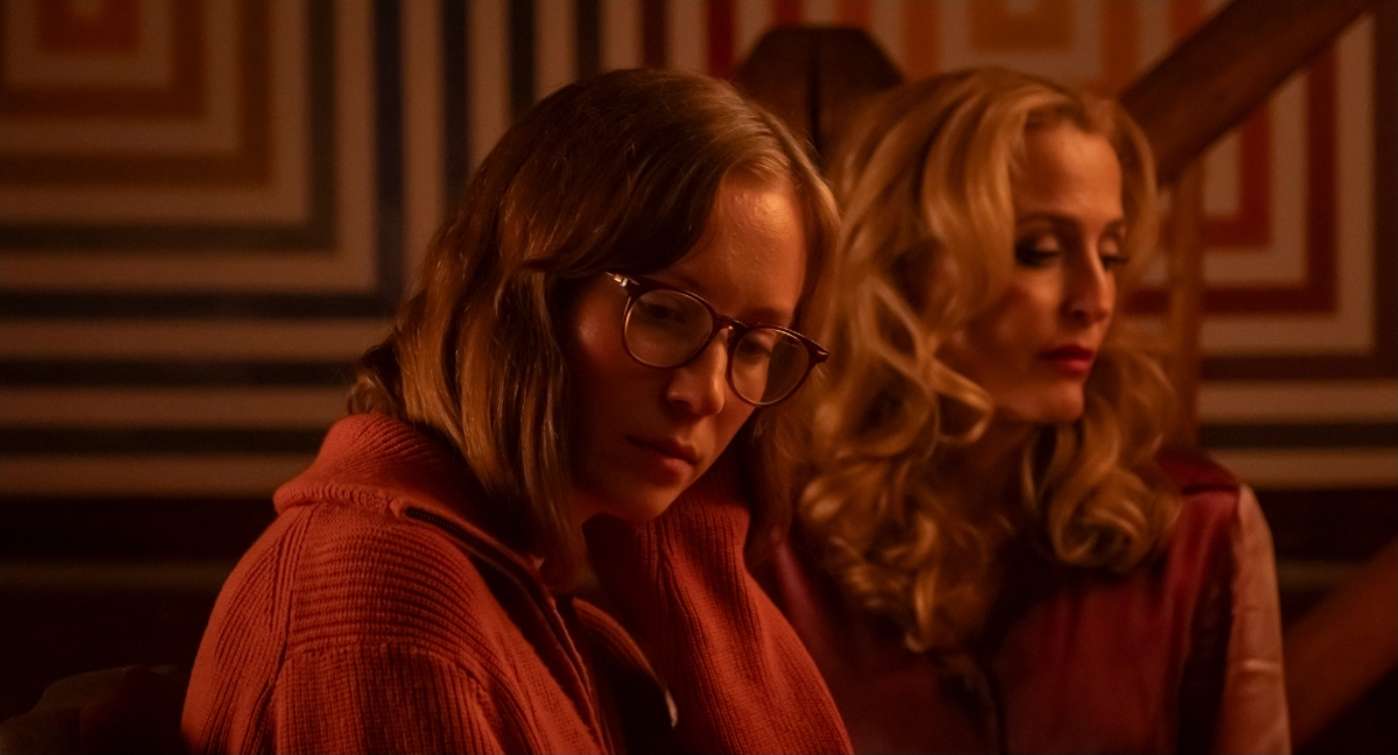
And so, this strange and wonderful bloodsoaked flick is much more than a “flesh and fluids” B movie excuse to see daft horny teenagers meeting nefarious ends by a maligned outsider. It’s also more than a mere parody of them. This film was shot in just 25 days on a shoestring budget and does so much with it.
TSDCM manages to shine a spotlight on the thin suggestive metaphors in all the classic teens screams such as Nightmare of Elm Street, Friday the 13th and Halloween and the hypocrisy of their shunned, bullied or otherwise misunderstood social misanthropes morphing into murderers, but it also does something much more clever to reveal why they’re beloved despite arguably being crap.
They’re inextricably linked to sexual awakening. Considering the target audiences, often teens sneaking in theatres despite the R18 rating or youngsters staying up to secretly watch a VHS, you understand the sentimentality behind them, as best depicted while Kris is transfixed on the happenings of film six in the Camp Miasma series while munching on the candy treats of her childhood. She even admits her first exposure to the concept of sexuality came from watching one of the films at the age of eight. They almost always explore a transformation in tandem with loss of innocence, usually exemplified with a hapless, helpless female as the lead. No wonder Schoenbrun was eager to explore it from a trans perspective.
Here’s a few more hints that this trascends a standard genre sendup. There’s aesthetically pleasing blends of traditional and digital film. Eerie blue hues in dark interiors and lakefronts contrasting against warm firelit rooms. Plenty of visual cues to remind you of what we’re analysing. Zoomed out shots of remote gas stations. Establishing shots of log cabins. Jocks in stupid caps and flannel or puffer jackets. That “one edgy” yet profound friend who is killed off quickly. Terrified, screaming, scantily clad teenagers with bouncing chests and long legs that keep tripping over. Even on flat ground…
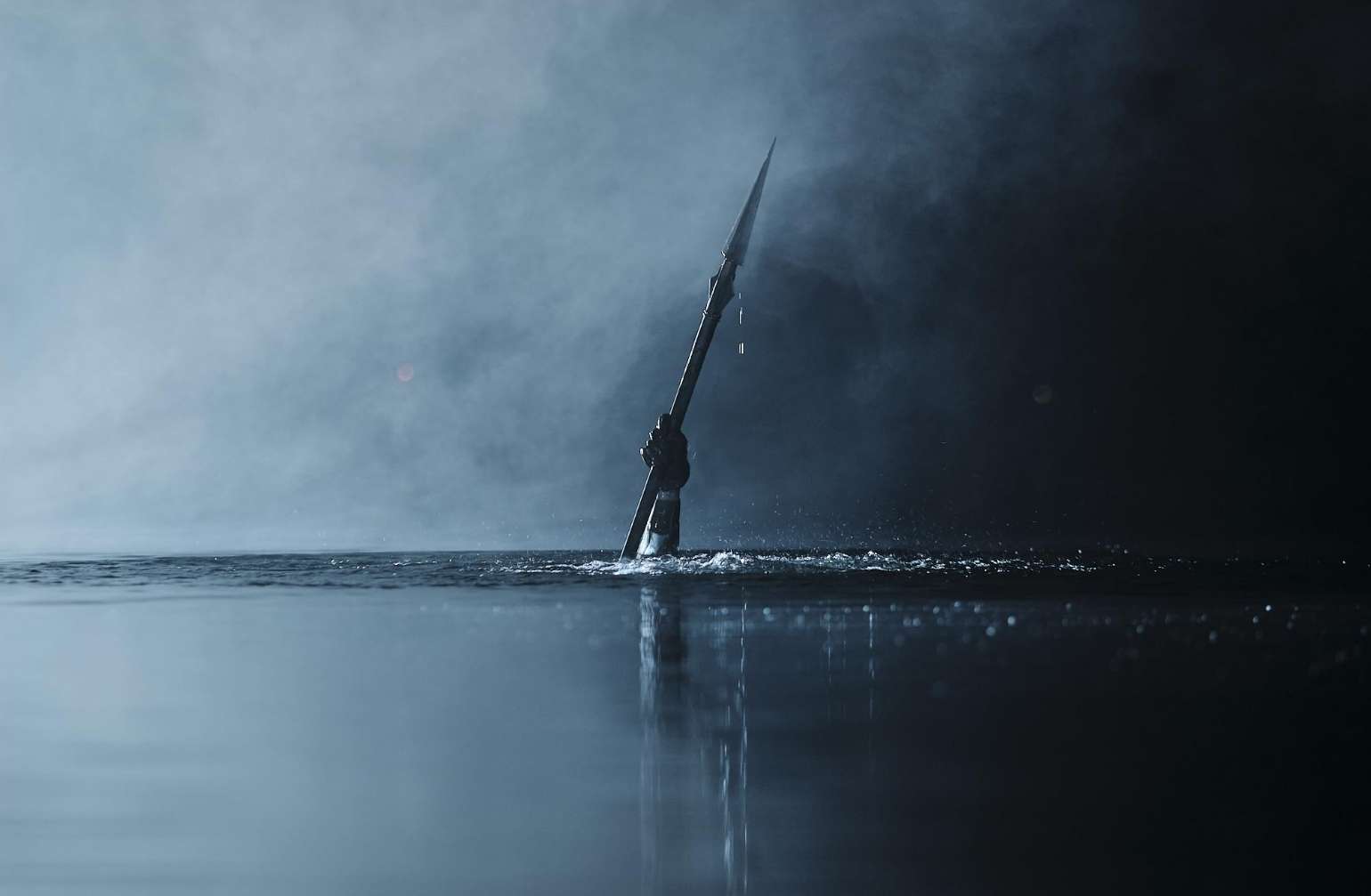
The primary slasher scene with the serial killer shows it all with a GoPro strapped close to his helmeted head, giving a magnificent, dynamic flow to the carnage that you absolutely could never have hoped to see in a genuine B movie. Especially because that scene departs from the normal visual language of linking horror with dark blue-black slow shots and boldly opts to rapidly lockstep with Little Death to bloodshed in the cosy, brightly lit cabin. It lifts the film completely and adds to the treasure chest of great shots, blatant and covert, scattered throughout the runtime.
A cameo appearance of Patrick Fischler brings us straight back to the diner scene of Lynch’s Mulholland Drive, who warns Billy Presley’s character not to go to Camp Miasma lest they tempt the killer to resurrect with their presence, “especially with such a young, nubile female as yourself”. Subtle!
A “good feminist” is supposed to abhore these tired tropes and write the genre off as trash. Schoenbrun has fun with examining why that doesn’t always have to be the case. You can embrace learning more about yourself while surrendering conservatism. As shy Kris learns herself under the tutelage of Billy Presley, who spent much of the first Miasma movie as a palid mousy brunette with the nickname “Pipsqueak”. Kris even finds herself running for her life. And you’re so happy for her when it happens.
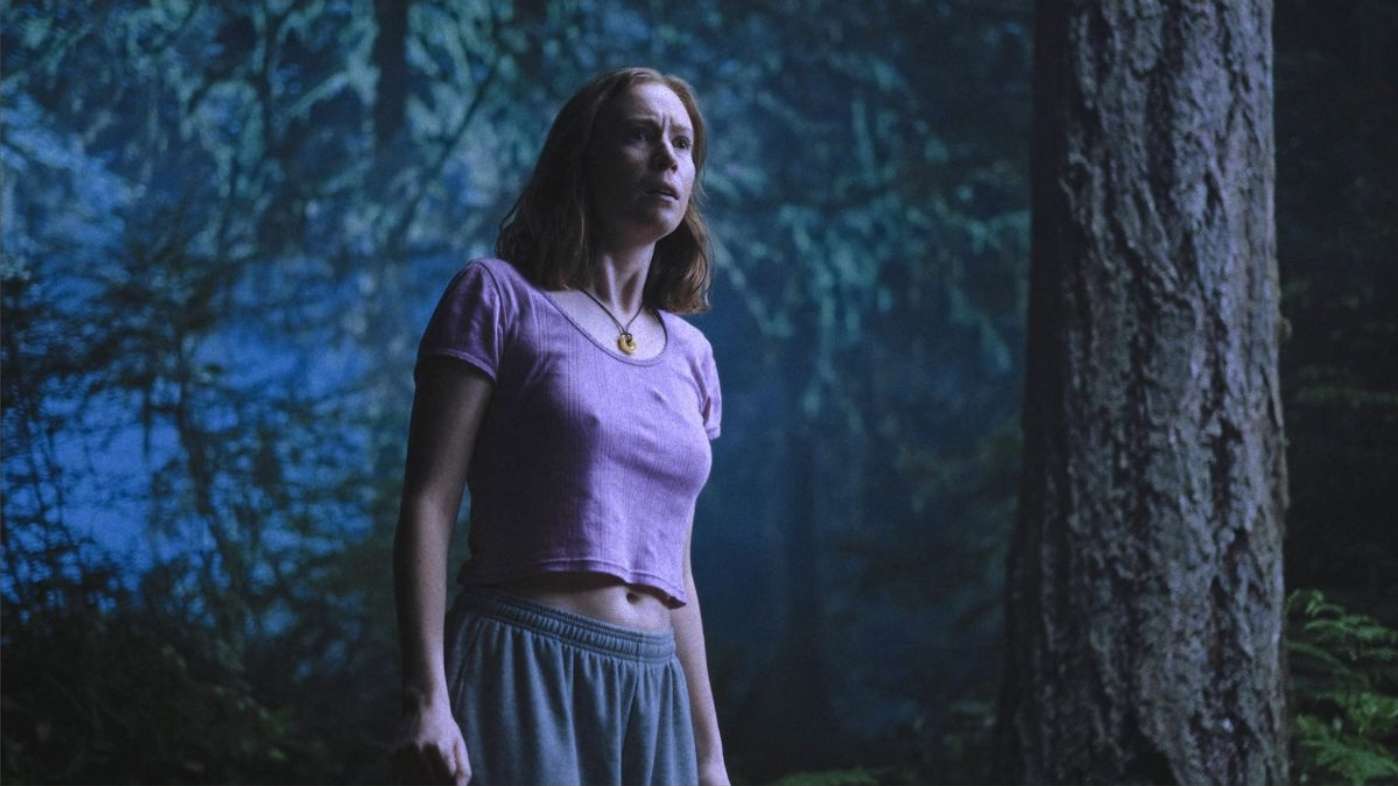
This film is ironic and extremely self aware. Hollywood’s ruthless disregard for ventures that risk profitability is thinly reflected on the set of a squash court and a disastrous zoom meeting. Dazzling, stylised painted landscape scenes are intentionally not disguised as reality and are instead celebrayed for their fantastical quality. Queer stereotypes are crowned with an airconditioning vent and ripped to shreds (pun intended). Even more fitting that this ‘hero’ of the slasher, wrapped up in plastic and a Pyramid Headesque metal cube is played by Jack Haven, who you’ll recognise as the female lead from I Saw the TV Glow.
TSDCM is exceptionally funny. Gillian Anderson’s hesistant but unselfconscious witch’s cackle is so perfect for adding a punchline to spooky scenes and underlining her disconnection from the outside world. She lives life quietly entirely on her own terms, dressing in stunning garb and contentedly laying feasts of fried chicken on silver platters, knowing the Little Death will always return. That’s a good thing, as far she’s concerned.
On the topic of choosing Anderson as second protagonist, this marked a stroke of genius by the director and outright links the film through references to the latest Halloween sequels where Jamie Lee Curtis challenges Michael Myers (cue inevitable Mike Myers reference) as an emboldened, strong female and thus successfully redeems the genre. Hurrah!
Gillian Anderson is film royalty and it’s a nice message to send Hollywood that actors improve as they age, they deserve their place front and centre on our screens, and we WANT to see them. So, it was a bit frustrating to me that TSDCM dipped a little in self awareness by thoroughly exposing the young lead, Kris, to the camera, but kept Billy covered up the whole time in golden film era costume or silk gowns. Maybe that was Anderson’s choice? Maybe Schoenbrun is still worried that audiences will perish from fear if they see untaut flesh. Seemed cowardly.
Continuing on the director’s love letter to the industry, there’s explicit links to Sunset Bouelvard (1950) in tandem with the slashers. There’s plenty of violence used with comedic effect, deliberately suggestive, and a bit of body horror in an interesting tip of the hat to David Cronenberg. I caught Multiple hints at David Lynch filmography, especially Mulholland Drive (have to admit I kept mistaking the lead actress for Naomi Watts in the trailer).
Much of the score, composed by Alex Giannascoli or Alex G, sounded Bowiesque, and I’d like to believe he would have approved of this, too. Much like Kris’ late night horror fest best enjoyed with a bucket of popcorn, gummy bears and chocolate raisins that all us grown ups are continuously warned to shun, TSDCM is a homage to Schoenbrun’s formative horror novels and films (she credits Goosebumps with eventual uncloseting, thanks to the exploratory nature of horror).
We left the theatre with a newfound appreciation for slashers and the ‘villains’ who make them memorable.
Eight out of ten
Teenage Sex and Death at Camp Miasma hits Luna Cinemas on 29 July
PS – Fun fact: my first review for FSN was of I Saw The TV Glow!
*By Gayle O’Leary. If you’d like to catch up on more by Gayle here on Fremantle Shipping News, look right here!
~ If you’d like to COMMENT on this or any of our stories, don’t hesitate to email our Editor.
~ WHILE YOU’RE HERE –
PLEASE HELP US TO GROW FREMANTLE SHIPPING NEWS
FSN is a reader-supported, volunteer-assisted online magazine all about Fremantle. Thanks for helping to keep FSN keeping on!
~ Don’t forget to SUBSCRIBE to receive your free copy of The Weekly Edition of the Shipping News each Friday!