Did you know Western Australians have been invited to contribute to the development of a proposed Multicultural Act? I didn’t until I spotted mention of it in a comment below the line on one of those paid journalism enterprises. Seems to me like something all Western Australians would want to contribute to, especially after all that has happened in Australia over the Birak season.
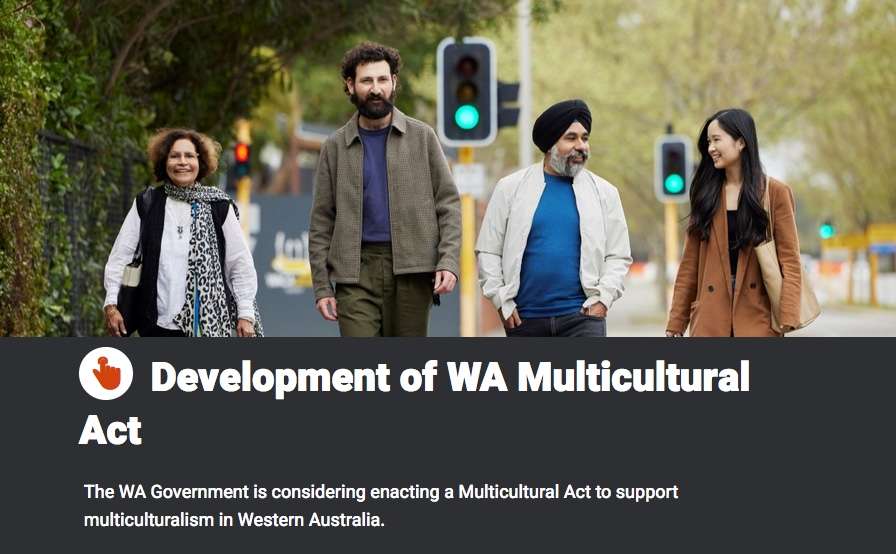
I have not seen any coverage of this proposed Act other than on the WA.gov.au website, the Office of Multicultural Interests website, and on Brief, the home of news, views and analysis for the WA legal profession. It would be great for a diverse view of perspectives to be involved in developing this legislation and not just the lawyers and government people. Sorry to say, however, that submissions are only open until 15 February 2026. Don’t let this stop you getting involved – there is a short survey you can complete online here.
Before you do so, have a read of the WA Multicultural Research and Findings Report and the Discussion Paper.
It is uplifting to hear about this idea for legislative reform, particularly at this time. The initiative is inspired by other jurisdictions, including in the ACT, NSW, Qld, SA, Victoria and Canada. Canada led the way with its multicultural laws coming into being in 1988. New South Wales was the first jurisdiction in Australia to introduce a Multicultural Act in 2000. I wonder if it helped stop that Y2K bug from spreading? And Victoria followed suit in 2011.
Broadly, the objectives of the legislation are to tackle systemic discrimination and deliver services that meet people’s different needs. It is described as a ‘policy framework for substantive equality’ and focuses on:
- understanding community needs
- monitoring service outcomes
- improving government agency performance
- training staff to be inclusive.
The design of the policy framework has the objective to remove unfair systems and make services more equitable for everyone. Sounds like good stuff to me. But I’m also not sure. Issues of inequality and unfair systems still seem to be a factor in other jurisdictions which already have this legislation. Could it be possible for a policy to be developed that is likely to make a substantive difference instead of adding yet another layer of legislation?
According to the Scanlon Foundation Research Institute’s 2025 Mapping Social Cohesion Report released on 16 October 2025, ‘while overall cohesion remains stable, [there are] ongoing strains in belonging, trust and identity, particularly among younger Australians and those facing financial hardship.’
Anthea Hancocks, CEO of the Foundation said: “Social cohesion is not static – it changes as our circumstances do. This year’s findings show that while Australians continue to draw strength from their communities, many are feeling the strain of affordability and global uncertainty. Supporting belonging and confidence in the future remains vital to our national wellbeing.
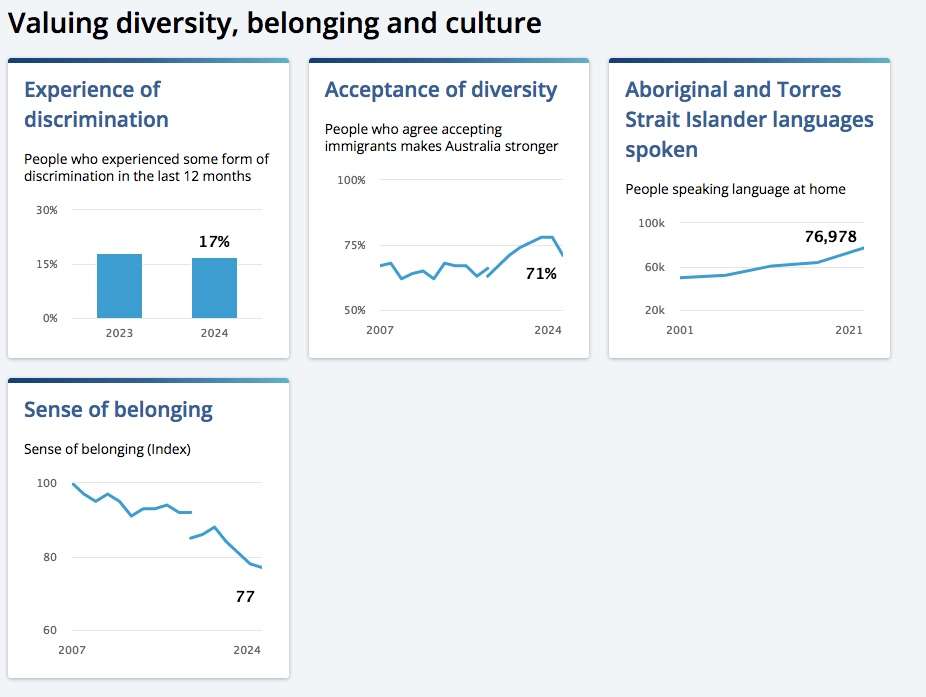
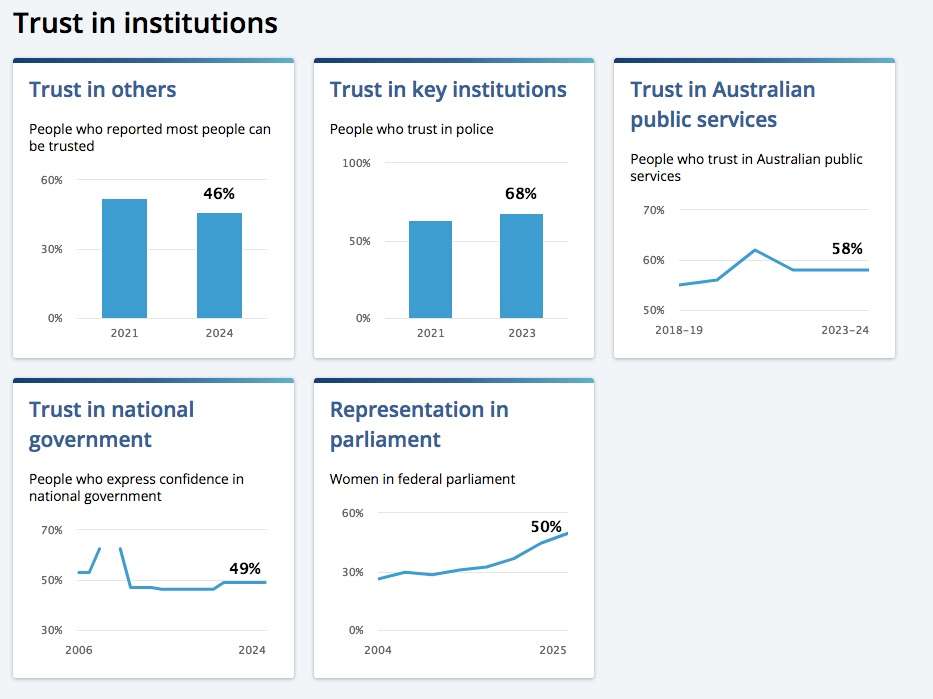
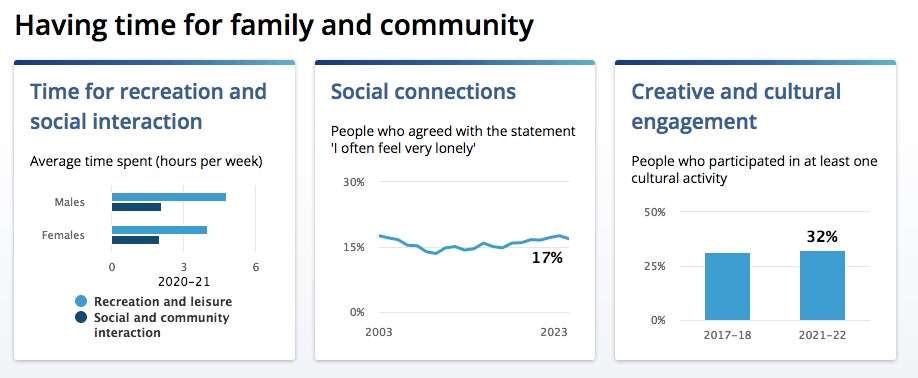
Our Australian Bureau of Statistics also keeps track of social cohesion and trust. Last year, federal Treasury issued the “Measuring What Matters” wellbeing framework. This framework tracks our progress towards a more healthy, secure, sustainable, cohesive and prosperous Australia. The most significant figures there show a drop in sense of belonging between 2007 and 2024, whilst trust in national government in 2024 was slightly below 2006 levels when John Howard was prime minister. On trust, it went up briefly when Kevin Rudd was prime minister but then fell again.
Could it be that instead of a new multicultural law, a federal bill of rights is needed instead, as Julianne Schulz opined at the start of Bunuru in The Guardian? Maybe we need both. Hard to choose. According to a new report from the Whitlam Institute and the Human Rights Law Centre, the introduction of a new human rights act could now be closer than ever. Professor Azadeh Dastyari, report co-author said:
“After fifty years of challenges and missed opportunities, public support for an Australian Human Rights Act has never wavered – what has been lacking is the political will.
“This is a long overdue reform that would ensure everyone’s rights are protected, the time for action is now.”
Caitlin Reiger, Human Rights Law Centre CEO said:
“Everyone benefits when their human rights are protected and put at the heart of government decision making. An Australian Human Rights Act remains the missing foundational piece in our legal framework.
“Now is the time for the Albanese Government to seize the moment to legislate and create a fairer future for every person in Australia.”
Western Australia has missed out on the chance to be the first mover on introducing a legal framework for human rights protection. The ACT introduced a human rights act in 2004, followed by Victoria in 2006 and Queensland in 2019 (thanks for the great summary Allens).
From a brief review of the information on WA’s proposed Multicultural Act, the way the various multicultural legislation operates across Australia and how this legislation interacts with the various human rights laws does not appear to have formed part of the WA.gov.au Discussion Paper. What additional insights might have come from adopting a wider angle lens in the WA Multicultural Act Research and Findings Report?
Another proposal around social cohesion came in last week, this time from former Liberal opposition leader, John Hewson and former Labor minister for science, Barry Jones. Together, they have proposed the creation of a minister for social cohesion:
“[Following recent events], as the parliament negotiates hate speech legislation and hopes for a positive result from the royal commission into anti-Semitism, we believe there is a strong case for the creation of a minister for social cohesion. Such a position will give definition to the challenge, collect and manage the relevant data, create national focus and monitor activities across the key portfolios. Tanya Plibersek would be an ideal choice as minister, but that would be in the hands of the appointer and not the appointee.
“We are making this call together, as elders from the Labor and Liberal parties, wishing for the bipartisanship that was once our experience and is increasingly rare.”
Wouldn’t that be lovely to see? Our parliamentarians working together across federal and state jurisdictions in service of the peace, order and good government of all Australians.
With all of these questions, it might make completing the survey a bit of a challenge but just give it a go – it’s your chance to have a say. And whilst you’re about it, have a look at the Human Rights Law Centre report and if you agree, you can support a federal Human Rights Act here.
By Madeleine Cox
* Madeleine Cox was raised on a farm on Bindjareb Noongar country and now, together with her New Zealand/Aotearoa husband, lives with their children in Fremantle/Walyalup. She loves exploring places and ideas, and connecting with people and nature. This has prompted Madeleine to start writing independently, after many years work as a corporate and government lawyer, and service on not-for-profit boards in the health and education sectors.
~ For more articles by Madeleine Cox on FSN, look here.
~ If you’d like to COMMENT on this or any of our stories, don’t hesitate to email our Editor.
~ WHILE YOU’RE HERE –
PLEASE HELP US TO GROW FREMANTLE SHIPPING NEWS
FSN is a reader-supported, volunteer-assisted online magazine all about Fremantle. Thanks for helping to keep FSN keeping on!
~ And SUBSCRIBE HERE to receive your FREE copy of THE WEEKLY EDITION of Fremantle Shipping News each Friday