SEEING RED is an irregular column on Fremantle Shipping News by Barry Healy*. In this piece, Barry ponders whether the Jensen Huang affair be remembered as the pinprick that punctured the AI bubble with subsequent damage making the 2008 Global Financial Crisis look minuscule, or not.
Imagine a film made about the Jensen Huang affair. It would feature sex, multiple infidelity, espionage, smuggling, high finance and geopolitics against the backdrop of the Trump White House, Singapore’s financial hub and the moral wasteland of Silicon Valley.
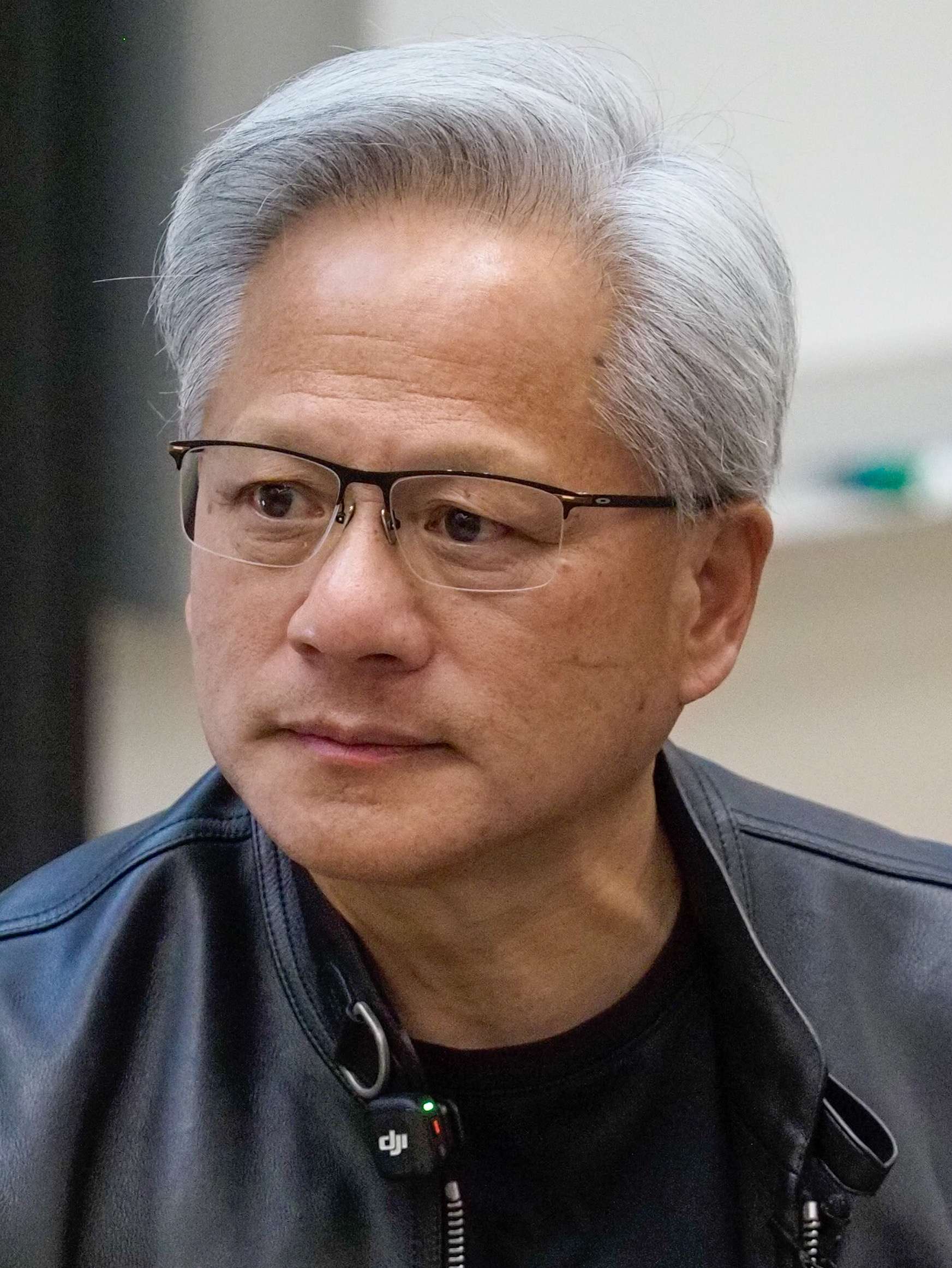
But how will this story end? Will Jensen Huang survive the scandal? Will his affair with Alice Huang become a historical footnote? Or will the AI boom unravel, collapsing the whole financial house of cards? As of today, the answer to these questions are becoming clearer.
There is another question that has not shown up in the media: who in Washington inflated this story so that it became a political sensation?
The return of Kremlinology
These days we need the lost art of Kremlinology to understand Washington. In the Soviet era observers deciphered power shifts by studying who appeared beside whom, who disappeared from public view and who was leaking damaging information about rivals.
The real Nvidia story has not necessarily become public. A sordid story of Chinese espionage is headlined, but some facts suggest we should be looking deeper.
It began on October 29 with a The New York Times article headlined “Nvidia Chief Seen as Target of Chinese Spy Plot“. Its subtitle stated that a Chinese businesswoman with close connections to Jensen Huang had been passing intelligence to Beijing and that President Trump had been briefed but had taken no action.
The report relied on interviews with anonymous White House officials who had been briefed on classified documents. But the narrative soon unravelled.
A spy story without a spy?
People associated with the Office of the Director of National Intelligence, which had produced the intelligence assessment, spoke to CNN. They said there was no evidence proving that Alice Huang had knowingly passed information to Beijing.
More seriously, they alleged their report had been “over-torqued” by someone in the White House. That is: the original intelligence had been exaggerated to slander Alice Huang and then leaked to the press.
These are extraordinary allegations. If the intelligence assessment was deliberately distorted and selectively leaked, the story is about the weaponisation of American intelligence in a political struggle.
What evidence is there that Alice Huang was a spy? On the information publicly reported, very little. These days, it appears, Chinese background is enough to turn anyrelationship into a national security threat.
Of course, Alice Huang’s business activities deserve scrutiny. Her Singapore-based company, Megaspeed, has been helpingChinese businesses obtain access to Nvidia technology by establishing data centres outside China, thereby avoiding US export restrictions. That legal process was explained in the last Seeing Red column.
Those dealings are not the same thing as espionage.
Singaporean authorities investigated Alice Huang and Megaspeed in February. According to the Singapore Ministry of Home Affairs, they found no evidence supporting chip-smuggling charges. They identified irregularities in financial reporting, for which she was banned from Singapore.
NBC reports that, in June, Singaporean authorities together with the US Commerce Department physically inspected Megaspeed facilities to check on any smuggling activities, again with nothing to show for it.
Some commentators say that the number of chips that Nvidia has transported to Singapore is greater than the number used in local data centres and have surmised that the excess must have been smuggled to China. The figures quoted would equal about 20% of Nvidia’s production. That could be about 1.64 million chips worth over $78 billion. So, massive numbers of chips transported with nobody noticing and huge amounts of money transacted without evidence.
Before establishing Megaspeed, Alice Huang worked in Chinese private equity and investment banking, and previously in television journalism. Her business activities seem to have involved moving money through opaque corporate entities, possibly amounting to sanction avoidance. There is a legitimate basis for investigation here.
But financial irregularities do not establish that someone is a Chinese intelligence operative.
Nvidia’s own financial merry-go-round
If Alice Huang was involved in unconventional financial practices, Jensen Huang would hardly have been uncomfortable. Under his leadership, Nvidia relied on a web of obscure financial relationships. Nvidia is not simply selling chips to customers, it financially underpins the companies buying its products.
AI companies need enormous quantities of Nvidia chips to build data centres. But these companies’ business models depend on anticipated revenues rather than actual profits. Nvidia finances them and those companies then purchase Nvidia hardware. The money goes around in a circle, with Nvidia collecting the revenue. Its beneficiaries include OpenAI, Anthropic, CoreWeave and Meta.
This financial merry-go-round makes AI look healthy. Nvidia records sales, its customers expand their operations and investors believe in ever-growing AI success. But how much represents independent demand and how much is money circulating within cosy Silicon Valley connections?
The Wall Street Journal has already raised the question of who will suffer when the music stops.
The China paradox
There is a glaring omission from much of the reporting. Why would the Chinese government need to use its intelligence agencies to smuggle Nvidia chips into China when it is actively reducing its dependence on American technology?
According to Reuters, 600,000 Nvidia chips are sitting in Hong Kong warehouses, with the potential value of $30 billion. Chinese authorities have stopped their further movement into China. China’s plans on developing its own semiconductor and AI industries. Continued dependence on Nvidia would undermine that.
The pinprick that bursts the bubble?
What can we conclude from this affair?
Firstly, so far, public evidence does not establish that Chinese intelligence used Alice Huang as a spy or that Beijing was attempting to smuggle Nvidia chips into China.
Secondly, serious questions exist about American intelligence being manipulated by people inside the Trump White House and leaked to the press.
Thirdly, the scandal exposes the problem of the US AI industry’s unstable financial arrangements. Donald Trump’s reckless war on Iran has already destabilised the world economy. The struggle over Nvidia and advanced semiconductor technology is doing the same.
Will the Jensen Huang affair be remembered as the pinprick that punctured the AI bubble with subsequent damage making the 2008 Global Financial Crisis look minuscule? At the moment after Jensen’s reinstatement the newer is not entirely clear.
* Barry Healy is a life-long Marxist who first came to Perth in the 1970s to establish the Resistance young socialist group. He was a founder of the Green Left and currently edits the Culture section of the Red Spark website.
~To catch up on Barry’s earlier SEEING RED columns, look here
~ If you’d like to COMMENT on this or any of our stories, don’t hesitate to email our Editor.
~ WHILE YOU’RE HERE –
PLEASE HELP US TO GROW FREMANTLE SHIPPING NEWS
FSN is a reader-supported, volunteer-assisted online magazine all about Fremantle. Thanks for helping to keep FSN keeping on!