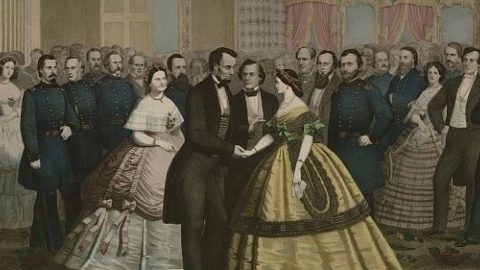
Says our regular contributing thinker Bruce Menzies*
‘Always remember that to argue, and win, is to break down the reality of the person you are arguing against. It is painful to lose your reality, so be kind, even if you are right.’
A poignant observation from the Japanese writer, Haruki Murakami. For repeat offenders, to which I plead guilty, it’s a teaching of the highest order. A bit like some of the Leunig cartoons that hang on my wall.
This came into focus as I awoke to a Spring morning in Fremantle. If the birds were singing, I didn’t hear them. Instead, I lay inert, feeling vaguely flat. Distracted myselfwith dark thoughts. In a word, grumpy.
Weird, if I think about it. Only a day had passed since the good lady and I joined thousands of others celebrating the birth of ‘Wally’ – our gleaming new Walyalup Bridge, spanning Swan River in Freo. A joyous throng, cool music, an impressive structure. A tribute to all involved.
Yet my mood had gone downhill overnight.
Amidst the gloom, stray thoughts. True, the state of the world remained parlous. True, the Aussie cricketers had fallen in a heap in Cape Town. True, I wasn’t getting any younger.
Perhaps that was the problem. I hadn’t yet managed to save the planet.
It got me thinking about this miserable aspect of human behaviour: Why can’t we get along with one another?
Like a broken record, it often comes back to this sort of question – at least for me.
Don’t get me wrong. I’m a competitor. Fiercely fought card games are my forte. (Ask the grandchildren!) And I wasn’t called Pig Iron on the football field for nothing. More recently, being a Dockers diehard alternates between rapture and tears. So, there’s a happy place for competition. Competition of a certain kind.
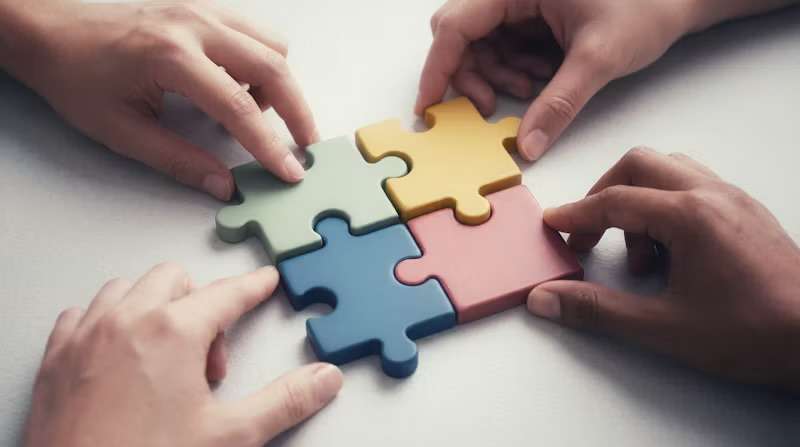
But there’s another side to this coin. The need to collaborate. To work together, despite differences of opinion. Despite differing worldviews. Not necessarily to become friends. But to become less like strangers. Not to roll over and be told what to do or what is right. But to argue passionately and to listen attentively.
Credit Alan Aprilio for Unsplash
An invitation to work things out collectively. An embrace of a path towards what is euphemistically referred to as the common good. If we don’t learn to do that, it may not matter how many premierships the Dockers win in the next decade.
Because the world in which we live may become the kind of dystopia brought alive in the recent novels of Tim Winton and Margaret Atwood.
How might we interact with one another clearly, constructively, and compassionately while having the gumption to call a spade a spade? With my interest in conflict resolution and experience within intimate relationships, and in various group dynamics, this question hovers above the discourse like an enigmatic butterfly.
Unless we elect for a solitary life and do our best to avoid contact with other humans, we deal daily with ongoing challenges within couple relationships, group and workplace membership, and community participation.
Now. Comes. A Sweeping Statement. (Or two,)
The long evolution of Homo sapiens, with our marvellously developed capacities for self-awareness, contemplation, insight, intuition, storytelling, and reason – has not yet brought about shared values that involve an inherent respect for each other, and neither has it led to a preference for collaboration rather than heedless competition. Not to mention acceptance of human rights and responsibilities founded upon notions like truth, justice, and fairness. Neither – accelerated by the Age of Enlightenment and the Industrial Revolution -has it ushered in an accepted understanding that our species is interconnected with what we call Nature and our wellbeing irrevocably tied up with what we might describe as planetary health.
Today, rampant individualism trumps community cooperation. Call it what you will, the Super Organism or the Machine – a force predicated upon growth, growth, growth and jobs, jobs, jobs, is a relentless tsunami, swamping communities and nations, despite pockets of resistance.
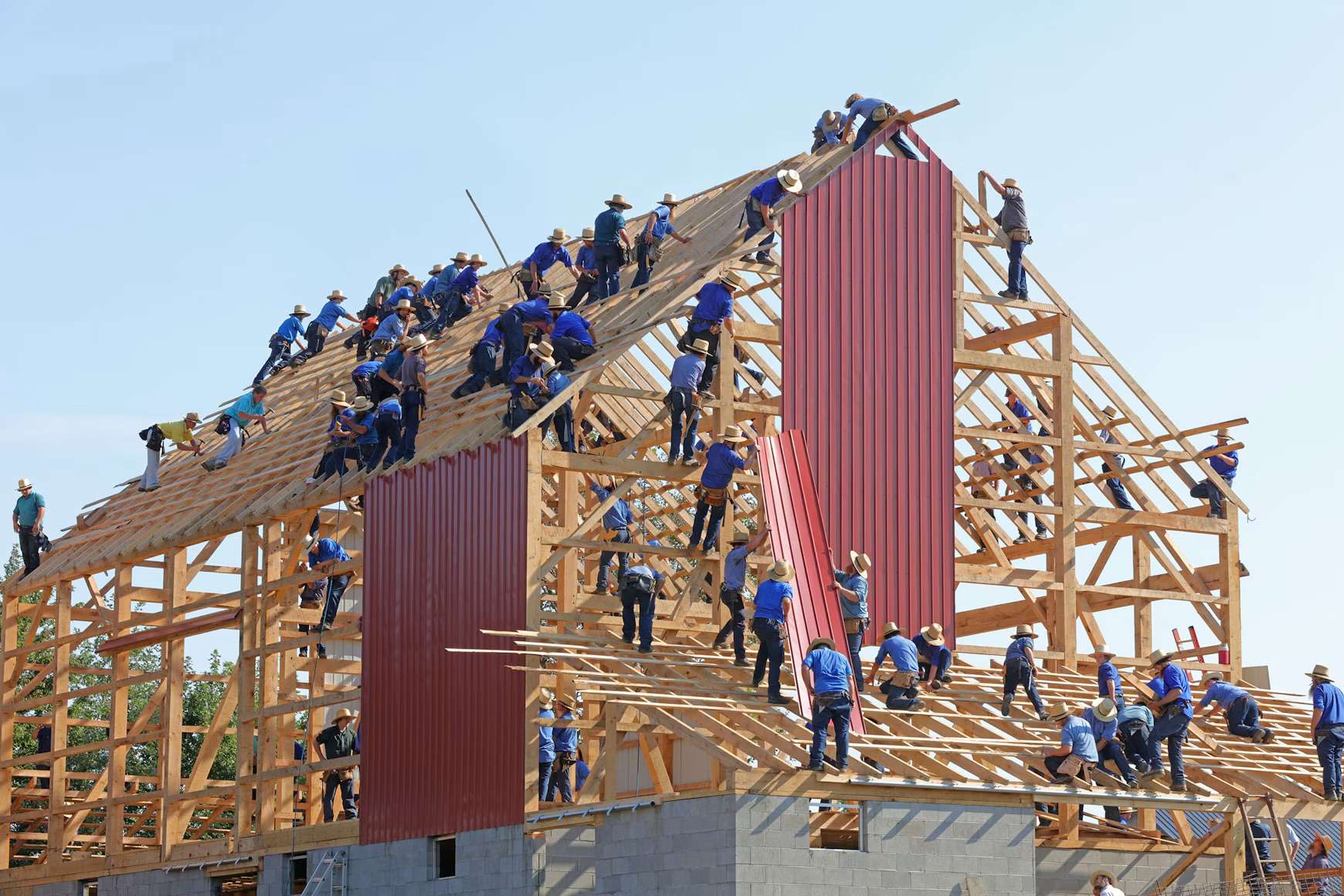
If we are part of that resistance, if we value a non dog-eat-dog approach, we still need to develop skills and insights that assist rather than hinder. Such skills do not fall like manna from heaven. In fact, our culture, our family conditioning, our direct experience at school and later in the workplace, mitigates against exploring and navigating the demands of disagreement; the challenges of conflict.
Credit Randy Fath for Unsplash
My work as a mediator, such as it was, centred around holding space for participants to be able to express themselves – and be heard.
What do I mean by ‘holding space’?
For me, it boils down to having both the physical and emotional capacity to be with others who are in some form of turmoil. It means nurturing a relationship of trust – which in turn will lead people to be more honest and potentially open to embracing a process that might lead to some form of resolution. It means attuning into where people are actually at, putting aside preconceptions of where you’d like them to be. It means being attentive to the various nuances of human behaviour – not simply the words – but body language, tone, gaps, hesitations, silences. Especially the silences.
Above all, it means being self-reflective, understanding your own biases and beliefs, not rushing things as a result of your own needs, your anxieties, or your desire to ‘achieve’ a result. And, while relying upon your experience and skills, you are well advised to leave your ‘expert’ hat on the hookand not pretend you have all the solutions. ‘Advice’ is not what is usually wanted or required.
It makes sense to me, as someone once wrote, that a good process is one in which conflicts ‘dissolve’ rather than are ‘resolved’. And another apt homily that I often throw into the ring: ‘It’s not that we should disagree less – it’s that we should disagree better.’
Easier said than done!
Pretty much everyone I know, at one stage or another, has had trouble in the workplace, challenges in their intimate relationships, and frustrations within their community organisations. Often, problems are swept under the table – until they can no longer be hidden.
Rarely, do we find satisfying ways to ‘agree to disagree’.
We might shrug our shoulders and ‘get on with it’. Or we bury our feelings and our opinions and pretend that all is apples. Or we blow a gasket.
If we look closely, we can see that what goes on for individuals is replicated collectively. Politics is the most obvious example – but by no means the only one. Potential bipartisan support is subsumed by the need to shout and scorepoints. Mainstream and now social media ups the ante. The culture of polarisation is a culture of criticism and complaint.
Most of us know this. Yet feel frozen and helpless.
Some of us know this. And seek a way out.
Over the years, I’ve belonged to organisations and groups of varying kinds. Some function better than others. Some ‘achieve’ what they set out to do, although often at the expense of disgruntled or burnt-out members. But not manyattach practical importance upon learning how to deal in a healthy way with conflict or differences of opinion. When serious issues arise, they reverberate through the organisation. Solutions are rarely obvious.
Is this inevitable, an intractable trait often attributed to our human nature? Put more baldly, humans have always fought with words or weapons since time immemorial and there’s bugger all we can do about it?
Maybe. Yet I think we’re capable of turning the dial more in the direction of collaboration. It already happens in some societies, in smaller communities where traditions and guidelines remain intact. To turn the dial requires a rearrangement of values. For collaboration to become an embedded reality rather than an aspiration, values and priorities are crucial.
Perhaps the human predicament is approaching crisis point. Perhaps that will be the nudge, the impetus to change. Of course, it could go the other way, down the rabbit hole of violence , anarchy, and authoritarianism.
At a personal level we have choice. At a local level we also have choice. The choice is to learn and participate. We can’t hope or expect for our leaders to change. We can’t hope or expect politicians to walk their talk. We can’t, most of us, turn away from the power imbalances that exist in hierarchical workplaces. But we can get better at handling some of the brush fires that inevitably erupt in the course of our daily lives. We can get better – if we have the patience and the persistence and the willingness.
I write these words for public consumption. Once released, they fly away and land somewhere. They can inspire or provoke or puzzle. At best they can engender thoughtfulness and conversation.
Anyone who has been reading me for any length of timewill pick up the echo of past offerings. An echo that oscillates between hope and despair. On the one hand I refuse to believe humans aren’t capable of effective collaboration. A culture of collaboration that would underpin stability and prosperity and provide a deeper meaning to why we are here in the first place.
On the other hand, the prevailing evidence suggests otherwise.
Then I remember where I’m lucky enough to live. A place bearing twin names Fremantle, after a British sea captain. And long before that, Walyalup, the original name for the region where a native possum, the Woylie, was found.
Credit Dimmis Vart for Unsplash
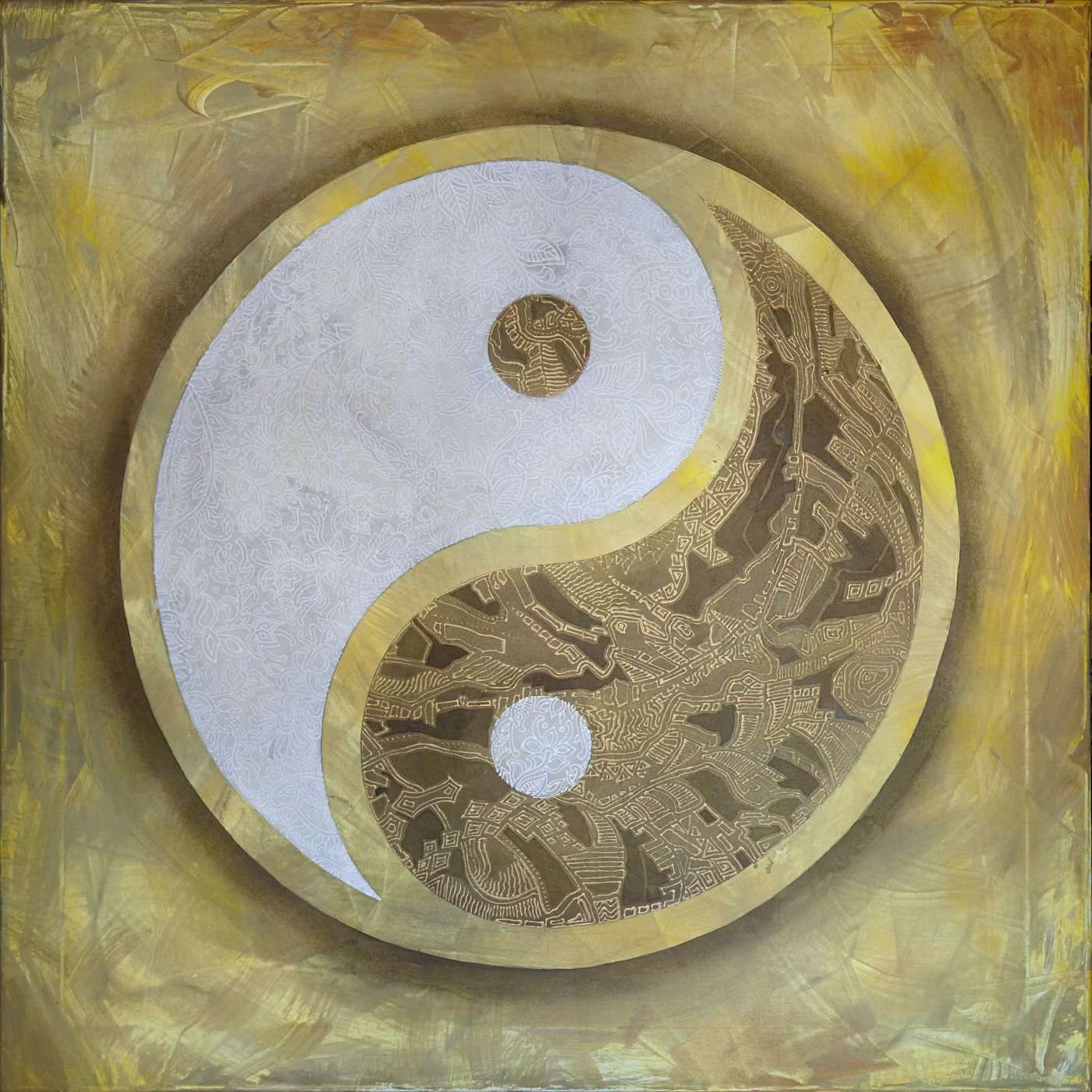
Somehow these two names symbolise the yin and yang of human connection. While we, as individuals, groups and nations, have our differences, there is an overriding commonality. We are human.
Within that recognition lies both predicament and possibility. In the days of the White Australia policy there was a slogan: ‘Populate or Perish’. Well, we populated the Land of Oz with settlers, refugees, migrants, and backpackers. But we might still yet perish.
Maybe it’s time for those of us in the Lucky Country – along with the rest of the world – to entertain the thought that we may well go down the gurgler if we can’t get our act together. And if not us, our descendants will cop what’s coming.
How getting one’s act together would look is anybody’s guess. But sincere and serious collaboration at every level seems like a no-brainer.
*By Bruce Menzies. Based in Fremantle, most of the time, Bruce Menzies is the author of three novels, a family history, and a recent memoir, as well as be8ng a regular contributor to FSN. Details at BruceJamesMenzies.com If you’d like to read more of Bruce Menzies’ work on Fremantle Shipping News or listen to a fascinating podcast interview with Bruce, look here.
~ If you’d like to COMMENT on this or any of our stories, don’t hesitate to email our Editor.
~ WHILE YOU’RE HERE –
PLEASE HELP US TO GROW FREMANTLE SHIPPING NEWS
FSN is a reader-supported, volunteer-assisted online magazine all about Fremantle. Thanks for helping to keep FSN keeping on!
~ Don’t forget to SUBSCRIBE to receive your free copy of The Weekly Edition of the Shipping News each Friday!