Our Shipping & Sailing Correspondent Jean Hudson has been getting up close and personal to Orca, the apex predator of our oceans, lately. Here’s her report first from Bremer Bay, WA, and then from Portugal.
Bremer Bay, West Australia, 2026.
Five months ago, I witnessed the first ever observed Fin Whale predation by Orca in Australia. I was on a Bremer Bay Orca Whale Watching trip. We motored out to ‘The Patch’ – an area offshore in the deep waters of the Bremer Canyon, the Orca’s usual hunting ground. Between January and April, more Orca gather in one place than almost anywhere else on earth. Suddenly we were surrounded by Orca – surfing and diving beneath our boat; breaching, tail slapping and sky hopping close by. It was more than we could have wished for. I could hear the exhale before I saw the blow.
Suddenly the energy shifted, with four Orca surging towards our boat to collect their calves. Then every Orca in the vicinity was heading towards the shore. As far as the eye could see, there were flashes of black and white in the water. The Orca were travelling at over 40 kilometres an hour and our boat followed behind unsure of what was happening. It was eerily quiet as we rocketed towards the coast. We followed the pods for over thirty kilometres; the township of Bremer Bay was now in sight – we were about four kilometres offshore.
Queen, one of the matriarchs, lead the hunt, backed up by two other females, Cooee and Cookie. The regular watchers know them by name. A juvenile Fin Whale had become separated from its mother and had called out too loudly for other Fin Whales.
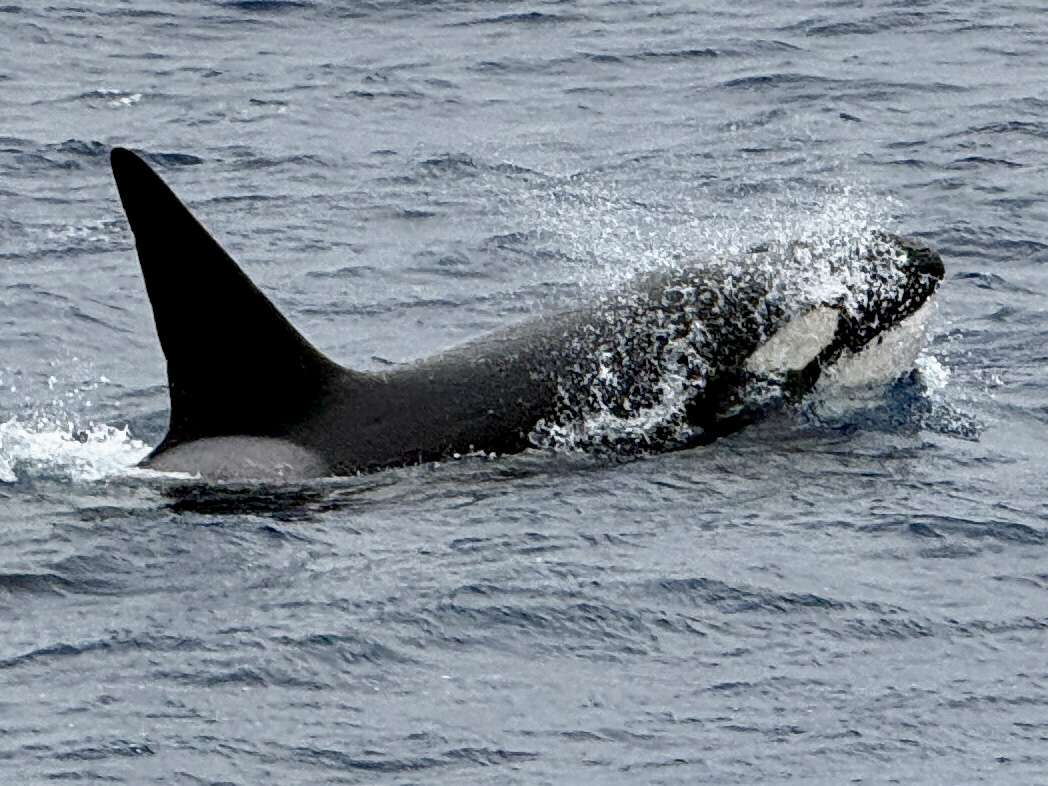
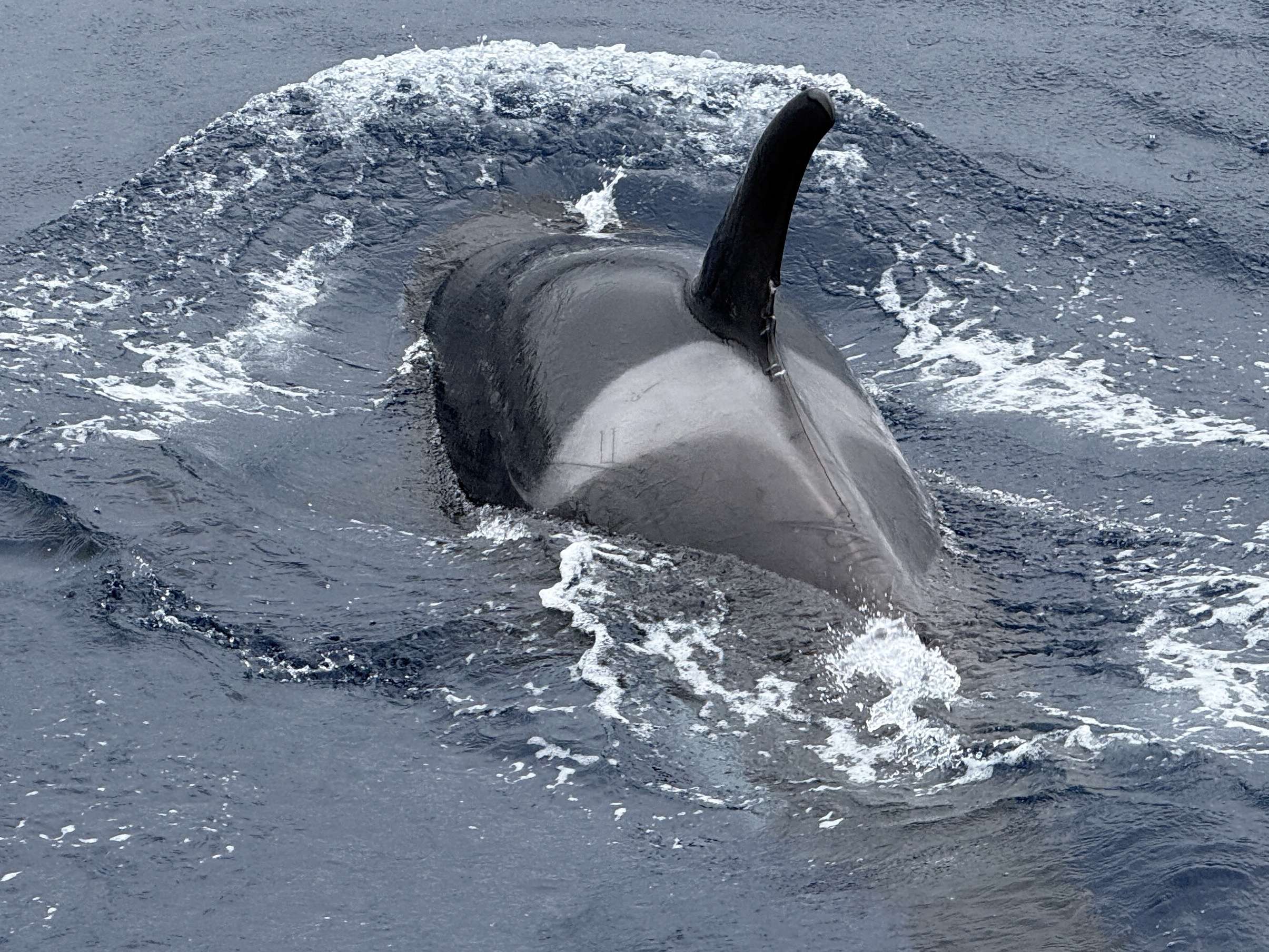
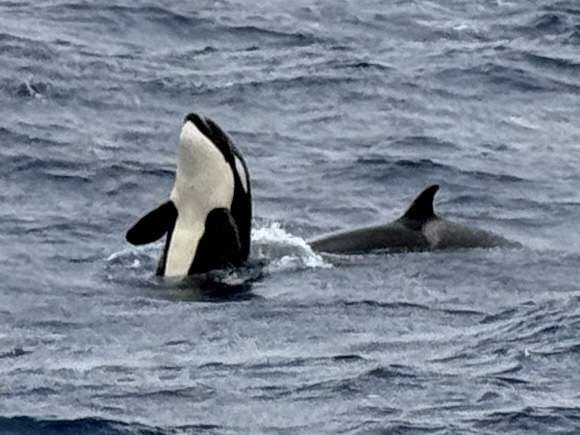
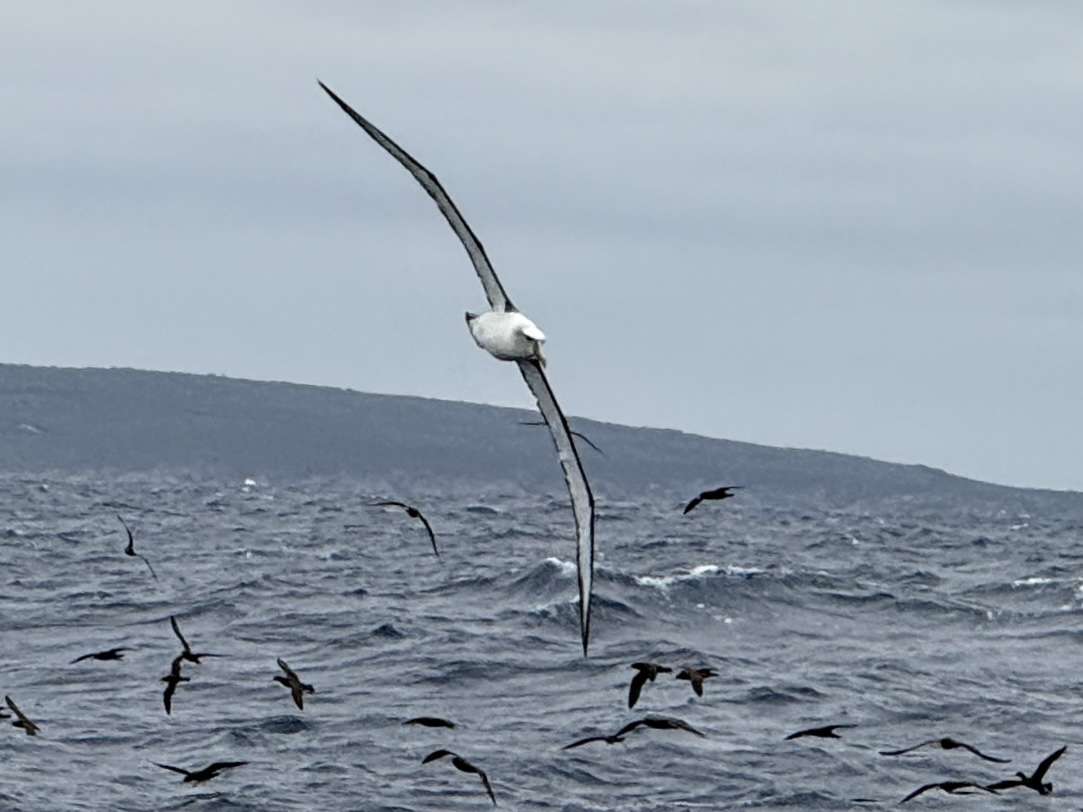
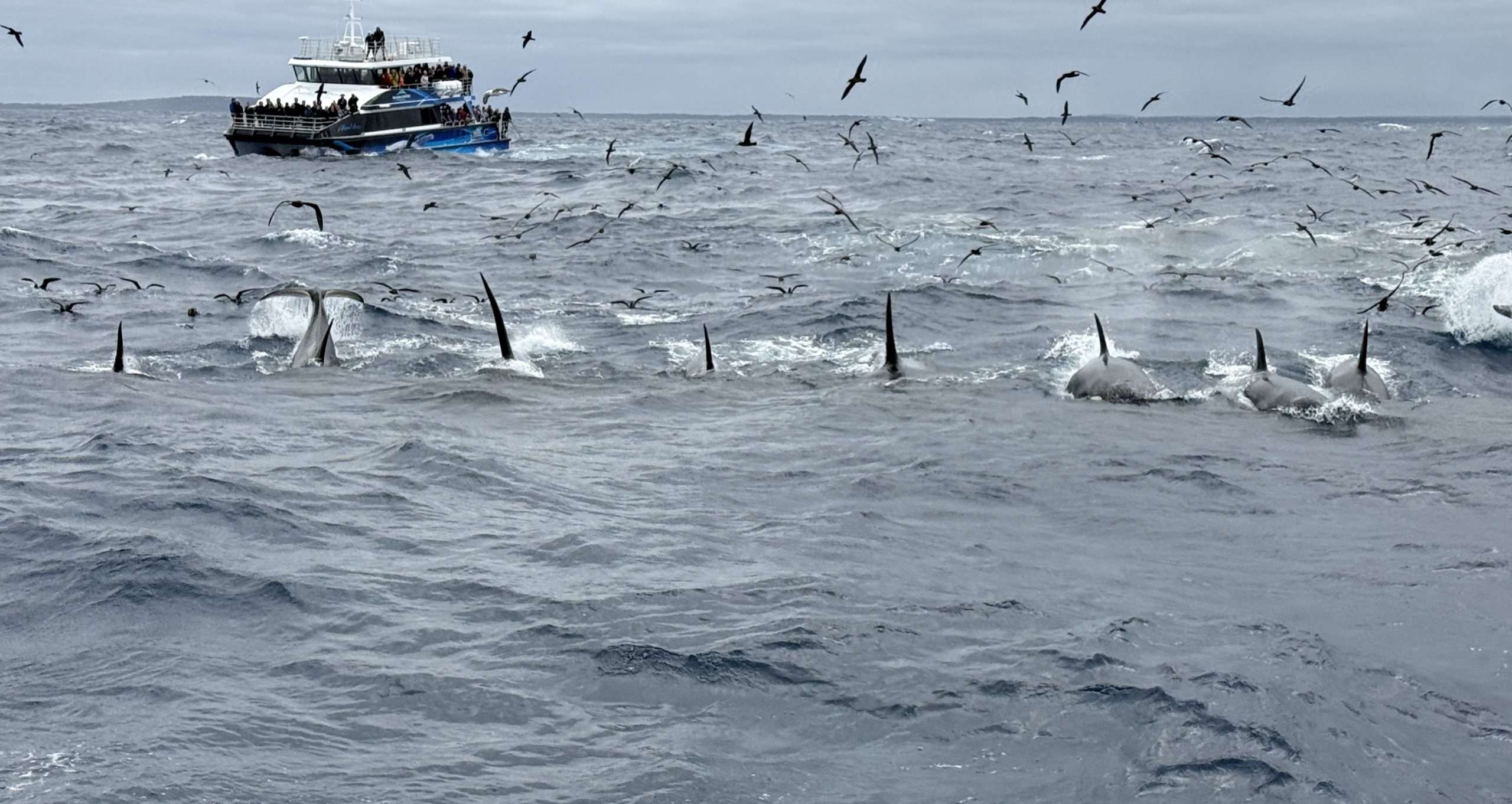
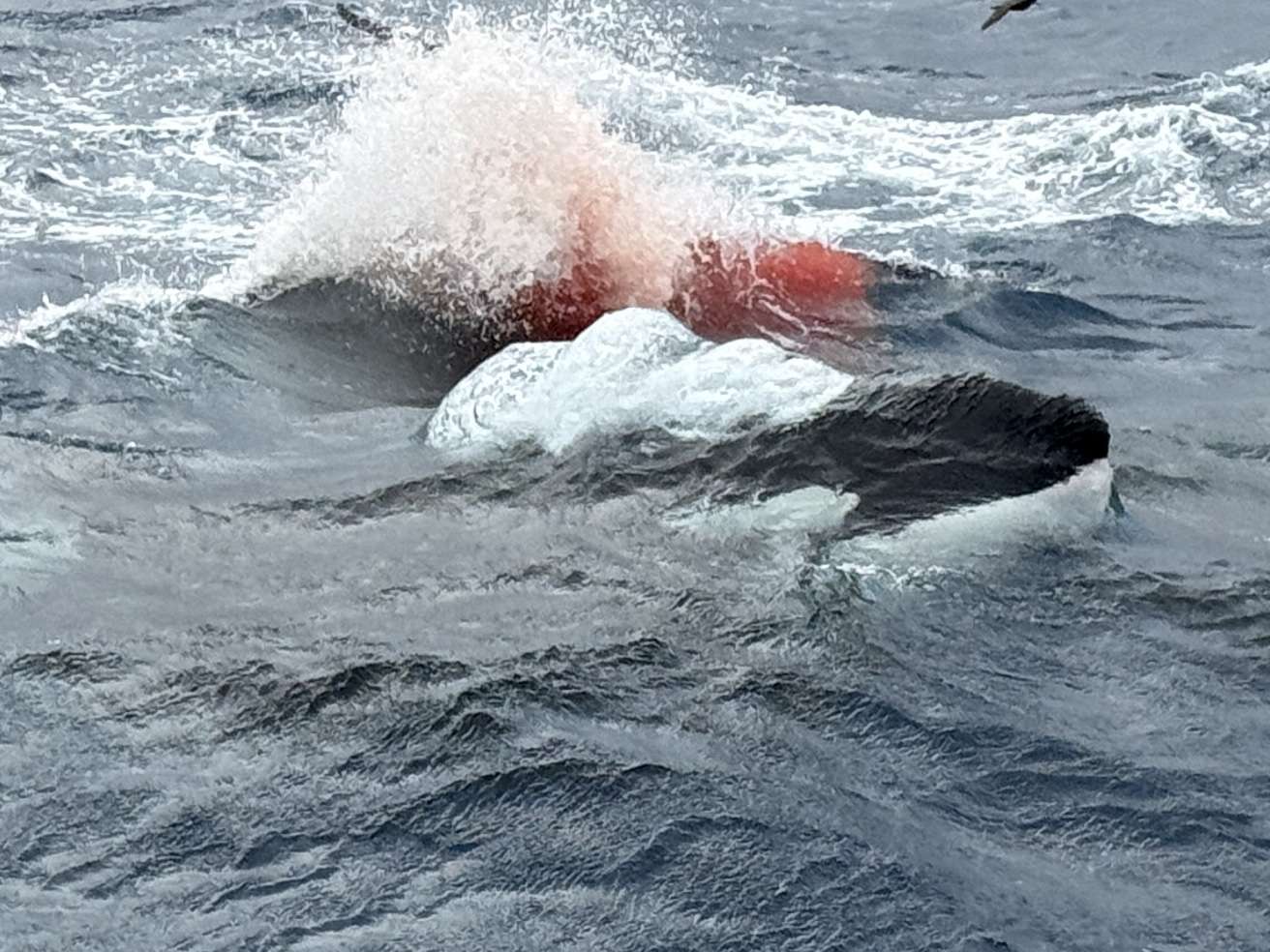
We watched as Orca family members grouped up around the young whale, preventing it from diving or evading them. This young whale was no match for the apex Orca predators. There were now over 65 Orca involved in the hunt for the 11-metre whale. After failing to drown the whale, Queen decided to use our vessel, herding the Fin Whale directly towards us. The young whale became disoriented and tired. The Orca then piled onto the whale, drowning it; finally the hunt was over. It was hard to watch the sea turning red as the Orca feasted on the whale’s lips and tongue.
Queen’s pod ate first, then other pods charged to feed. They carried mouthfuls of food to share with family members. The sky became full of Shearwaters, Albatross and gulls who dived and swooped at every scrap of food. It was truly amazing to see so many Orca, hear their calls and witness their speed and energy.
Observing the predation was nature at its purest and was somewhat confronting, but the sacrifice of this one whale nourished countless other creatures within the ecosystem, and nothing went to waste.
Orca are our ocean’s apex predators, no wonder they are called ‘Killer Whales’.
Five months later, Portugal, 2026
I was on a yacht, cruising along the Iberian coast, and ‘Orca’ had become a word I flinched at rather than desired to chase. Since 2020, a subpopulation of Orca has been ramming boats and attacking their rudders off the Iberian Peninsula, mostly slow-moving, medium-sized sailboats in the Strait of Gibraltar, along the Portuguese, Moroccan and Galician coasts.
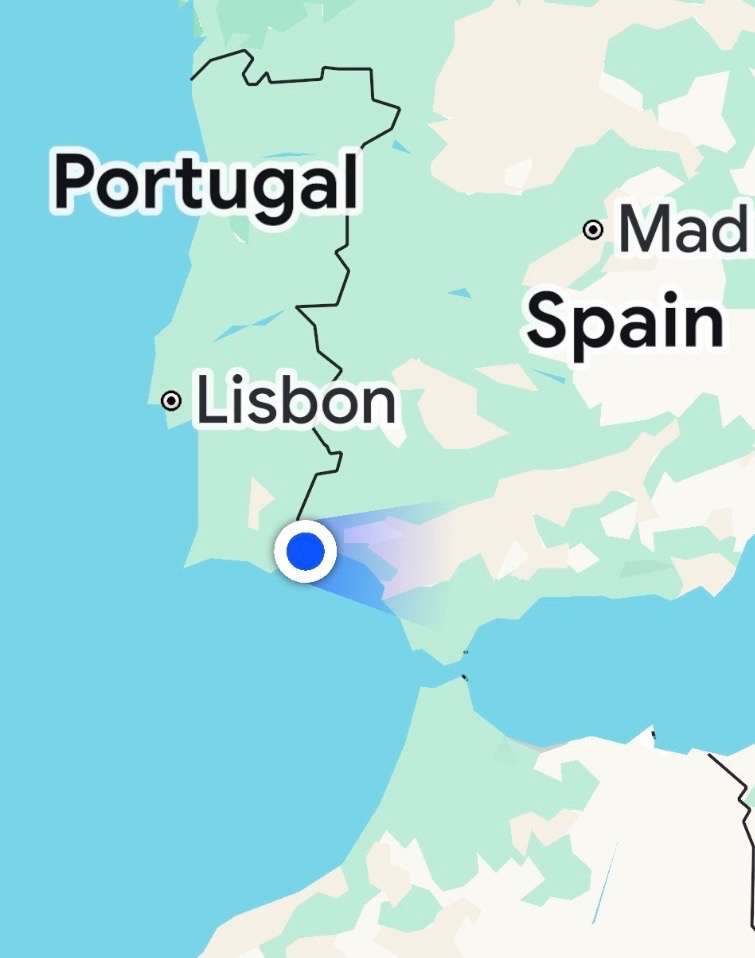
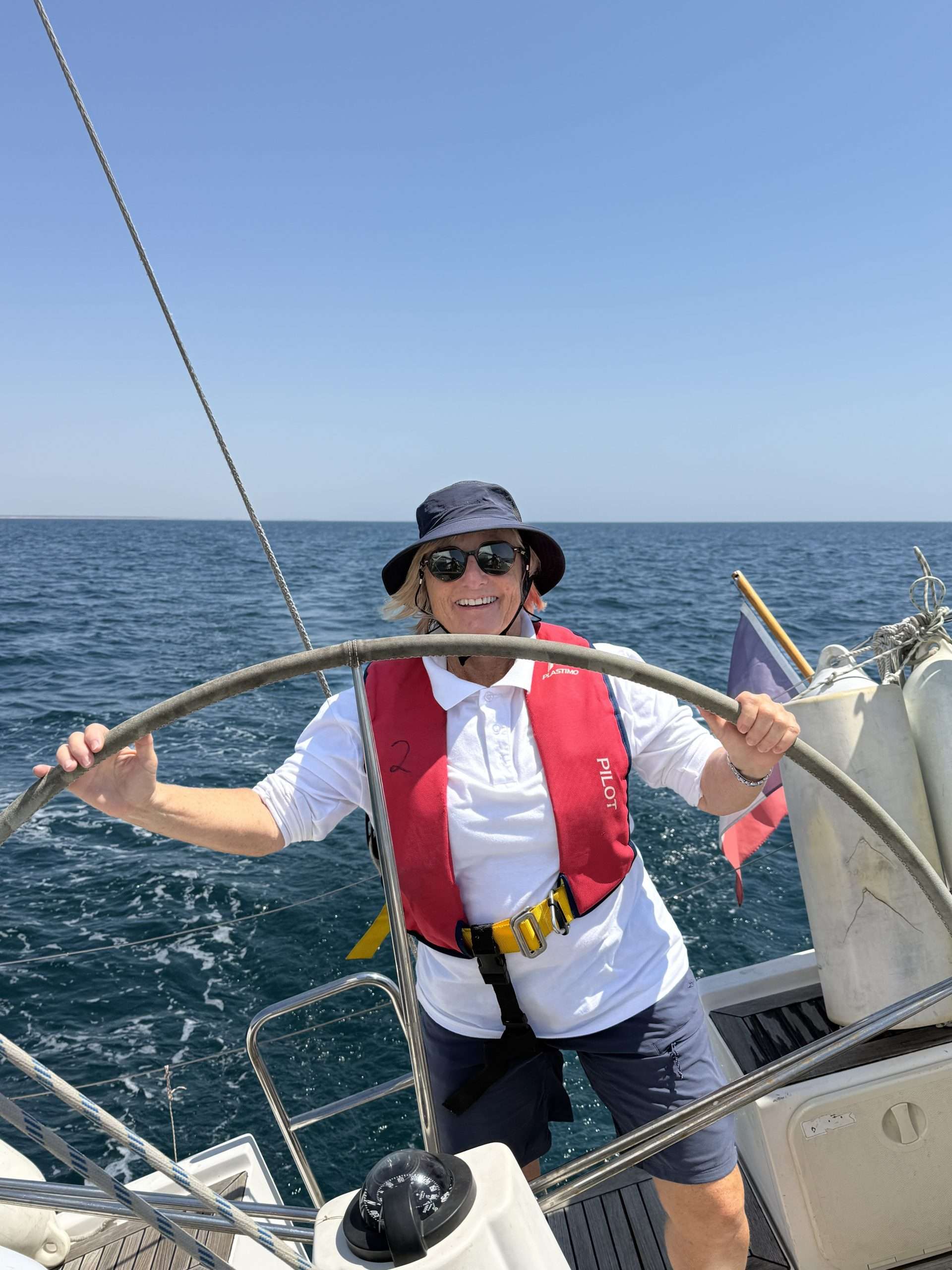
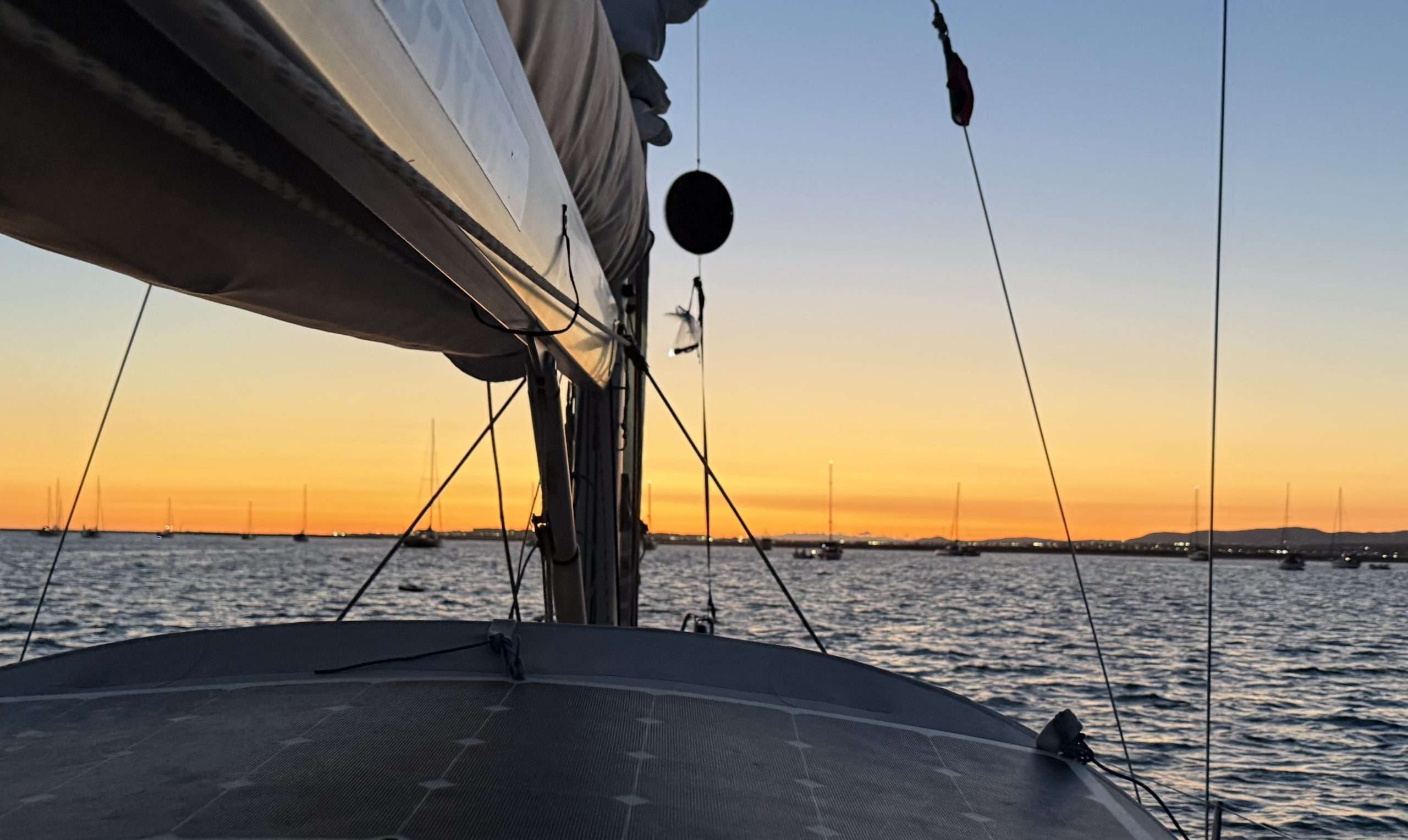
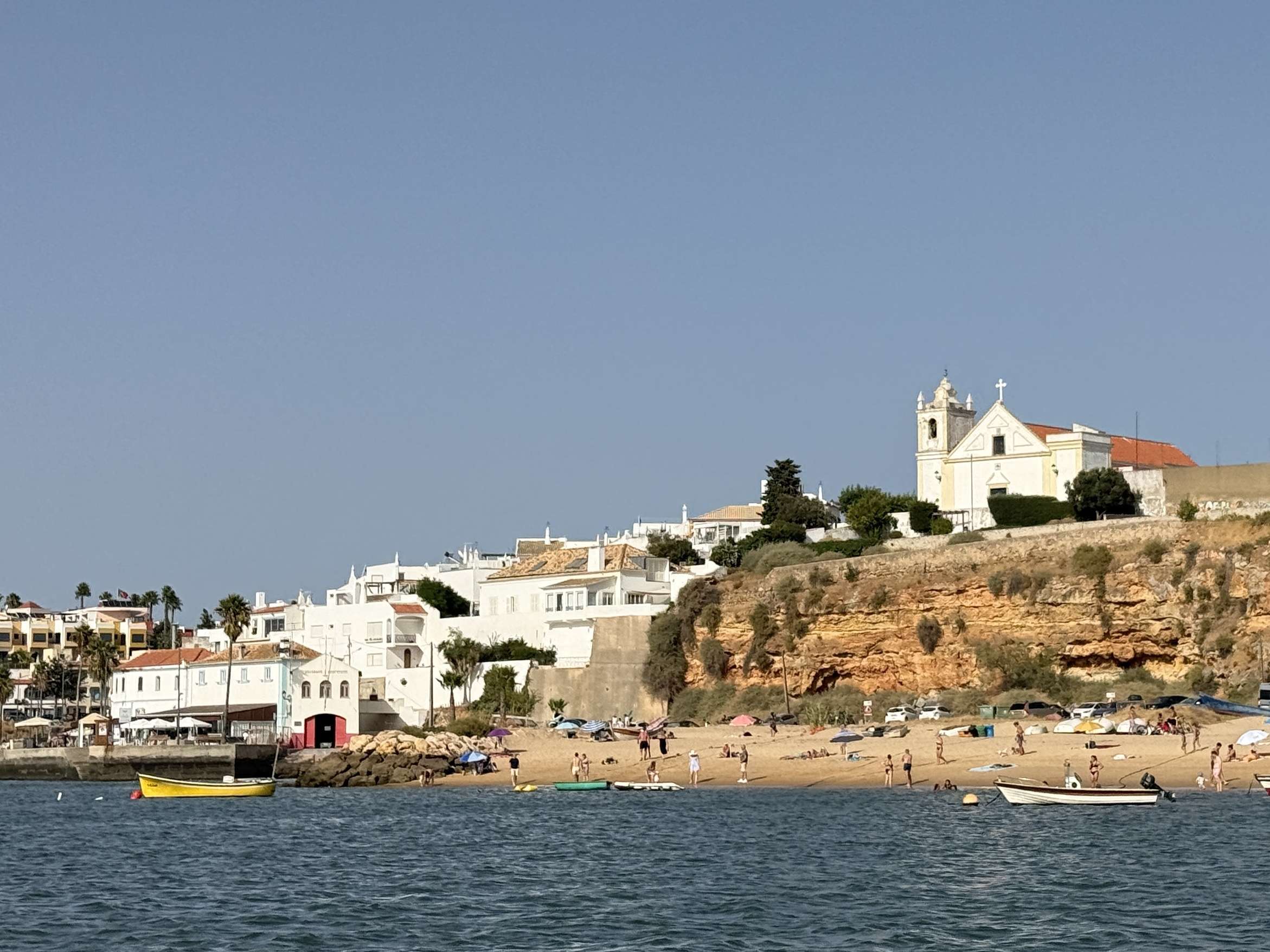
Seven boats have been sunk, and more than 250 boats damaged. Roughly 700 interactions (this is what they are called – not attacks) have been recorded. Nobody fully agrees on why. One theory name ‘White Gladis,’ a matriarch who had a bad encounter with a boat and started targeting rudders in a kind of retaliation, a behaviour her calves then picked up and spread through the group. Other researchers lean toward something less dramatic: bored young Orca treating rudders as playthings. Either way, no humans have been harmed in any of the interactions, only boats. It seems they are not interested in people.
It was a strange type of fear to carry: the same intelligence and social coordination that made the Bremer Bay predation so extraordinary to watch was exactly what made me nervous every time I scanned the water for a black fin. Awe and dread, it turns out, come from the same place.
During our cruise, we learned the sad news that Toni, known as ‘La Abuela’, the grandmother, the oldest known member of the Iberian Orca population was found with wounds believed to have been caused by a shotgun blast. The Portuguese population of Orca is small enough to be counted individually, and vulnerable enough to be shot at.
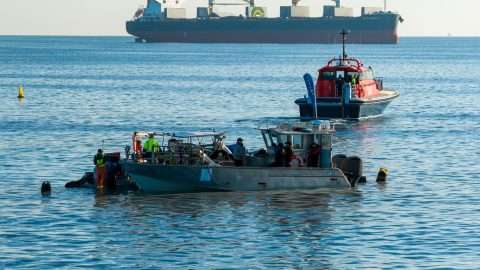
We sailed close to shore in depths of around 20 metres to avoid encounters and fortunately had none. We learned of two incidents during our two-week cruise, both yachts were rammed and had their rudders bitten off – the terrified crew managed to motor to shore.
I kept coming back to the same thought: I’m crossing a hunting ground that orcas have used for longer than anyone’s been keeping records.
Please don’t shoot the Orca.
*Story and pics by Jean Hudson. Jean is our Shipping and Sailing Correspondent and also a regular feature writer, reviewer and photographer here on the Shipping News. You may also like to follow up her informative Places I Love stories, as well as other feature stories and Freo Today photographs, right here.
~ If you’d like to COMMENT on this or any of our stories, don’t hesitate to email our Editor.
~ WHILE YOU’RE HERE –
PLEASE HELP US TO GROW FREMANTLE SHIPPING NEWS
FSN is a reader-supported, volunteer-assisted online magazine all about Fremantle. Thanks for helping to keep FSN keeping on!