Last week in Melbourne on Friday, Astrid Puentes Riano, the United Nations Special Rapporteur on the human right to a clean, healthy and sustainable environment, filed an application to assist the Federal Court as amicus curiae – a ‘friend of the court’ – in three separate challenges which have been made to Federal Environment Minister Murray Watt’s decision to approve an extension of Woodside’s North West Shelf gas project to operate until 2070.

The three legal challenges are:
- a challenge brought by Friends of Australian Rock Art seeking review of Minister Watt’s decision; and
- two legal challenges brought by Australian Conservation Foundation, also seeking review of Minister Watt’s decision and challenging government refusal to assess its climate risk.
The Special Rapporteur’s application needs to be approved by the Federal Court, and it is expected to be considered ahead of a hearing of the three Federal Court challenges scheduled for July 2026.
If the Court decides to give the Special Rapporteur leave to intervene in these challenges as amicus curiae, this will represent the first time ever a United Nations Special Rapporteur has sought to intervene in an Australian legal proceeding. Even so, the amicus curiae mechanism for non-parties has been used previously in proceedings in Australia, including by Australia’s own Australian Human Rights Commission.
Since this post was first published, we have become aware of the #DeadlyAir case in South Africa where the then UN Special Rapporteur was for the first time in South Africa admitted as an amicus curiae by court.
According to Environmental Justice Australia who are acting on behalf of Australian Conservation Foundation in two of the legal challenges:
‘At the case management hearing, the Special Rapporteur’s legal representative told the Court that the Special Rapporteur had made the application to intervene in these legal challenges as amicus curiae to make submissions limited to Australia’s international law obligations with respect to the environment and their relevance to the Environment Protection and Biodiversity Conservation Act 1999 (Cth).’
An amicus curiae is a ‘friend of the court’ who assists the court on points of law in a particular case. Amicus are generally not parties to the proceedings, do not file pleadings, lead evidence or examine witnesses, and they may not lodge an appeal. Further, the level of participation by amicus curiae in proceedings is determined at the discretion of the court. This is to be distinguished from the role of an ‘intervener’ who becomes a party to proceedings, with the benefits and burdens of that status, including the right to appeal.
In determining whether to allow the Special Rapporteur’s amicus curiae application, the Federal Court will have regard to whether the Special Rapporteur’s contribution:
- will be useful and different from the contribution of the parties to the proceeding; and
- whether it might unreasonably interfere with the ability of the parties to conduct the proceedings.
Amicus curiae are more likely to be heard where a case gives rise to an important question of law or matter of general public interest.
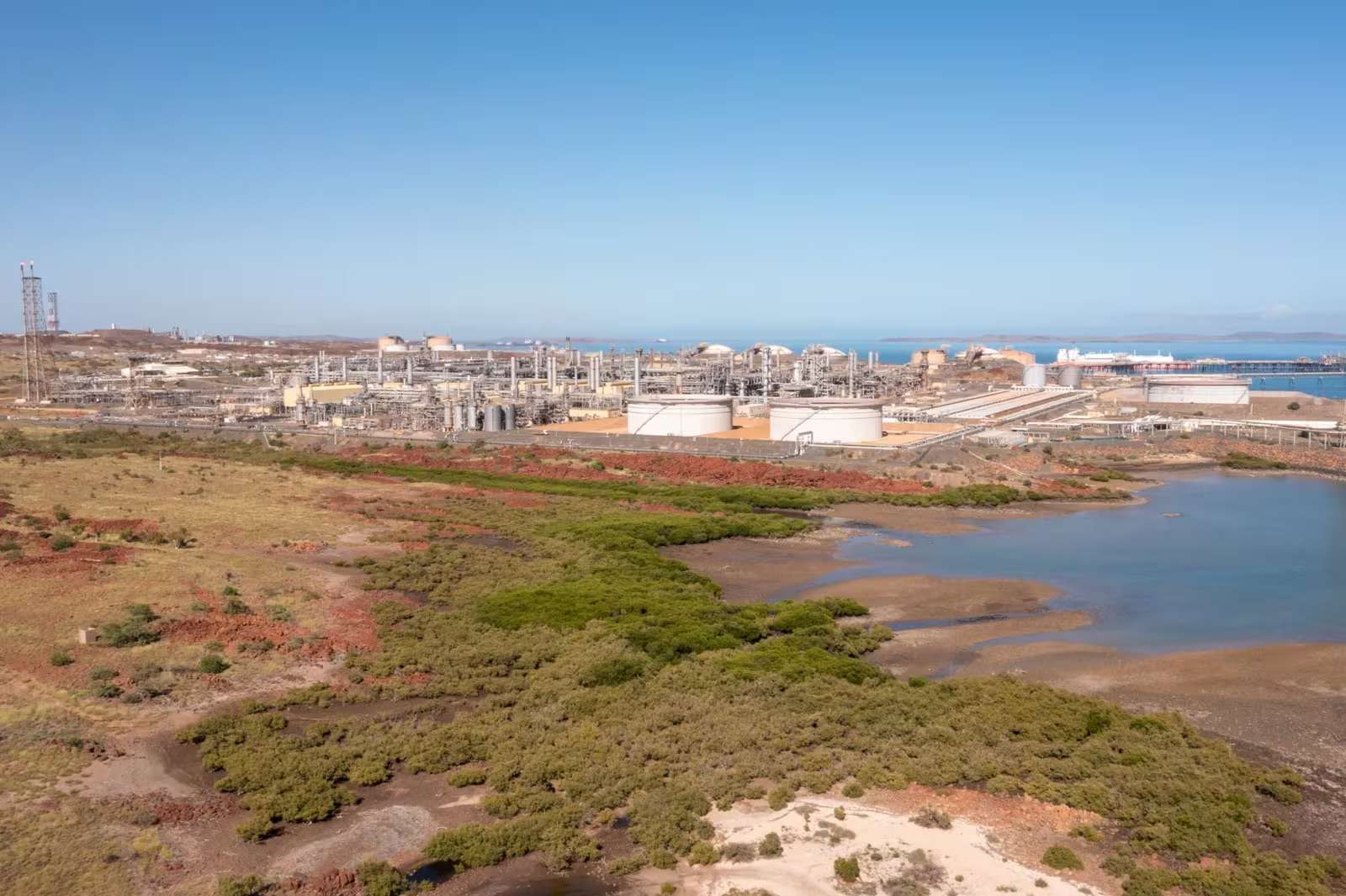
In respect of the approval of Woodside’s North West Shelf project extension, this begs the question: What could be more important than what the International Court of Justice unanimously described in July 2025 as an ‘urgent and existential threat’ to the planet’s life sustaining systems and therefore humanity itself the human made climate crisis?
The ICJ advisory opinion has been hailed as a gamechanger for climate justice and accountability. It made clear that the established legal duty of states under international law to do no harm, particularly transboundary environmental harm was universal and not contingent on a country’s ratification or membership of formal treaties such as the Paris agreement.
Indeed, the ICJ advisory opinion has been linked to the UN Special Rapporteur’s amicus curiae application in the three Federal Court challenges by both Friends of Australian Rock Art and the Australian Conservation Foundation. As reported in The Australian, Elaine Johnson, the lawyer representing Friends of Australian Rock Art, said of the extension of the North West Shelf project:
‘The night before this project was approved, our office wrote to the minister advising him that his proposed actions could constitute a breach of Australia’s international law obligations, after Vanuatu warned that approval of the project would represent an international wrongful act … It’s surprising that the Australian government appears to have taken no steps at all to respond to the recent [ICJ] opinion, which confirmed that continued fossil fuel production could expose countries like Australia to liability for transboundary climate harms.’
The Australian also reported that Minister Watt was aware of the Special Rapporteur’s application and that he believed the North West Shelf extension to be ‘consistent with Australian law and our international obligations.’
Late last year and before the North West Shelf extension and the ICJ advisory opinion, the UN Special Rapporteur issued a report on the ocean and human rights which stated:
‘The continued reliance on fossil fuels, including offshore oil and gas, exacerbates these crises [which include rising temperatures, acidification, sea level rise, intensifying heat waves, threats to marine biodiversity, displacement of coastal communities and nearing tipping points for such critical systems as polar ice sheets, land glaciers and the Atlantic Meridional Overturning Circulation]. Offshore oil and gas operations contribute significant emissions, with processing plants, shipping terminals and liquefied natural gas infrastructure polluting fragile marine ecosystems… Despite the urgency to phase out fossil fuels, the offshore oil and gas industry is projected to grow by 60 percent by 2030… The environmental harm of such activities is immense and the increase is incompatible with global climate obligations, threatening marine biodiversity, ecosystems and the livelihoods of millions. Immediate action is essential to phase out fossil fuel reliance, protect vulnerable habitats and align ocean activities with sustainable climate and biodiversity targets.’
This perhaps provides some indication of what the UN Special Rapporteur may wish to submit to the Federal Court as amicus curiae.
Some commentators have reported the amicus curiae application by the UN Special Rapporteur as an intervention which crosses the line on Australia’s sovereignty. Ultimately, however, it will be for the Federal Court to decide the merits of the UN Special Rapporteur’s application, and indeed the outcome of the three legal challenges. There is much at stake here not just for Western Australia and Australia, but for the planet.
By Madeleine Cox
* Madeleine Cox was raised on a farm on Bindjareb Noongar country and now, together with her New Zealand/Aotearoa husband, lives with their children in Fremantle/Walyalup. She loves exploring places and ideas, and connecting with people and nature. This has prompted Madeleine to start writing independently, after many years work as a corporate and government lawyer, and service on not-for-profit boards in the health and education sectors.
~ For more articles by Madeleine Cox on FSN, look here.
~ If you’d like to COMMENT on this or any of our stories, don’t hesitate to email our Editor.
~ WHILE YOU’RE HERE –
PLEASE HELP US TO GROW FREMANTLE SHIPPING NEWS
FSN is a reader-supported, volunteer-assisted online magazine all about Fremantle. Thanks for helping to keep FSN keeping on!
~ And SUBSCRIBE HERE to receive your FREE copy of THE WEEKLY EDITION of Fremantle Shipping News each Friday