Here’s the latest On Good Authority climate news in brief from Australia’s Climate Change Authority.

Global methane emissions still near record highs
Methane emissions from the energy sector have not fallen in 2025 despite the availability of cost-effective mitigation measures, finds the International Energy Agency’s (IEA) Global Methane Tracker 2026. The fossil fuel sector contributed 35% of methane emissions from human activity, with oil, gas and coal production output reaching a record high. The report also finds that around 70% of methane emissions from fossil fuels come from the top 10 highest emitting countries. The IEA suggests that 30% of fossil fuel methane emissions could be abated at no net cost, while 70% could be abated with existing technology.
The Authority is looking at opportunities to reduce fossil fuel methane emissions. The analysis will be published later this year in response to a recommendation in our 2025 Annual Progress Advice.
Australia and Japan deepen critical minerals partnership
Australia and Japan have signed a joint statement to strengthen critical mineral supply chains, investment and onshore processing for energy transition industries. The agreement commits to coordinated funding, up to $1.3 billion from Australia, alongside Japanese investment. It will prioritise projects across mining, refining and advanced manufacturing to address supply vulnerabilities, and support minerals like rare earths, nickel and graphite.
In the Authority’s 2035 Targets Advice, we highlighted that global decarbonisation will reshape Australia’s industry and resources sectors. Partnerships like this are expected to create opportunities to expand domestic production of low‑emissions goods and critical minerals, and leverage Australia’s comparative advantages.
Electric trucks power cleaner deliveries in major Australian cities
Thirty electric trucks will be rolled out across Sydney and Melbourne to support zero‑emissions appliance deliveries. The project includes vehicles, charging infrastructure and ongoing services under an electric vehicle‑as‑a‑service model. It removes upfront costs and reduces operational risks for the fleet operator.
AEIC report outlines implementation challenges in energy transition
Transparency and community trust have emerged as key pressure points in Australia’s energy transition, with the Australian Energy Infrastructure Commissioner receiving 205 complaints across more than 75 projects in 2025. The Commissioner’s Annual Report highlights ongoing concerns about transparency and involvement in planning processes. It identifies the growing complexity of renewable rollouts and the importance of effective engagement practices. These findings reinforce the importance of community engagement in enabling the transition, echoing the Authority’s 2025 Annual Progress Advice recommendation to strengthen community trust, engagement and benefit-sharing in the energy transition.
Less tropical forest loss, but long-term risks remain
Global tropical rainforest loss fell 36% in 2025, but new research suggests the long-term stability of these critical carbon sinks is still under increasing threat. Global Forest Watch data show 4.3 million hectares of primary rainforest were still lost, with climate-driven fire identified as a growing threat. A recent Nature study finds that deforestation and climate change are making key forest systems like The Amazon less resilient, raising the likelihood of large-scale degradation at lower levels of warming than previously estimated. Together, the findings suggest that while policy action can curb short-term forest loss, ongoing risks from fire, clearing, warming and drying may weaken forests’ carbon storage role without sustained protection and restoration efforts.
New data shows energy and agriculture are still leading sources of methane
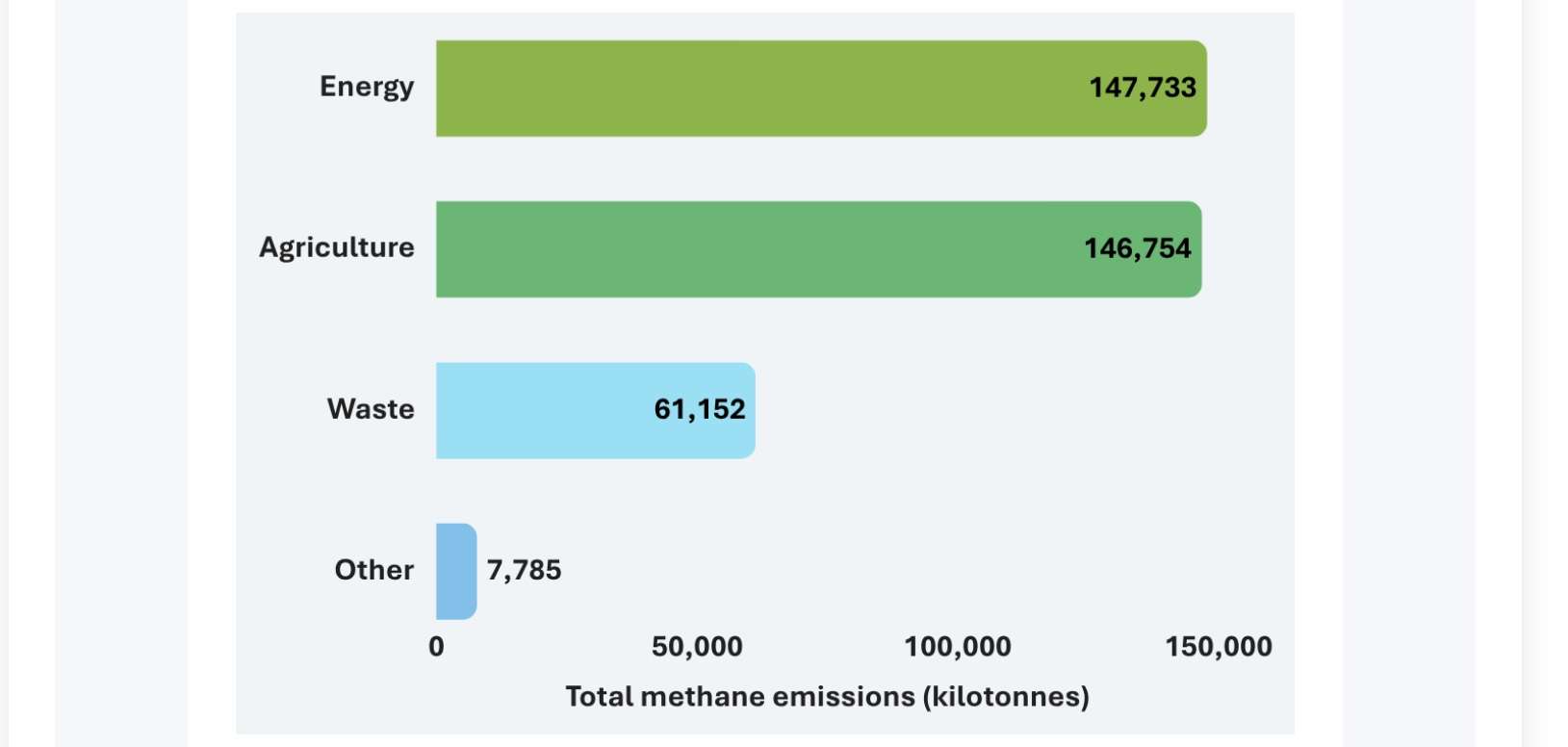
Source: Global Methane Tracker 2026 – Analysis – IEA
Our feature this week

Budget shifts focus to energy security as climate funding is reshaped Australia’s 2026–27 Budget includes a mix of climate, energy and environmental measures, but places a stronger emphasis on energy security and significantly cuts some existing climate and clean industry funding.
Last week’s Budget allocates up to $11.9 billion over 5 years for fuel security and resilience, with support for fuel and fertiliser supply and storage, building strategic reserves and improving freight resilience. While much of this funding is focused on energy supply, some measures may support the net zero transition. Some of these measures include support for: rail freight ($55 million in 2026–27) electrification of Australia Post’s fleet ($40.5 million in 2026–27) development of a green fuel bunkering strategy ($4 million over 3 years).
The Budget also includes $31 million over 4 years to develop and implement a Domestic Gas Reservation Mechanism. It made no change to the diesel fuel rebate and the Government defied calls from some community groups and MPs for a windfall tax on gas exports.
At the same time, the Budget contains substantial reprioritisations from existing climate and clean industry programs. $1.3 billion over 10 years was redirected from uncommitted funding in major programs, including the Battery Breakthrough Initiative, Solar Sunshot and Hydrogen Headstart, as well as savings from the Powering the Regions Fund and Regional Hydrogen Hubs. This was part of broader savings of $2.2 billion over 14 years from the Climate Change, Energy, the Environment and Water portfolio.
The Budget also scales back the Electric Car Discount over time, with a permanent 25% fringe benefits tax discount to apply from 1 April 2029 for eligible electric cars up to the fuel-efficient luxury car tax threshold.
Some new funding could support decarbonisation over time. The Budget invests in faster approvals processes, including: modernising environmental information, data and digital systems ($106 million over 4 years) progressing bilateral agreements with states and territories ($48 million over 4 years) developing bioregional plans and strategic assessments ($26 million over 4 years). These measures are consistent with the Authority’s recommendations in its 2025 Annual Progress Advice.
The Budget also provides funding for the new National Environmental Protection Agency. Additional measures also support implementation of the National Consumer Energy Resources Roadmap, including establishment of a new National Technical Regulator within the Clean Energy Regulator ($97 million over 5 years) and uplifting the Australian Energy Regulator ($16 million over 4 years). Other funding supports include for the National Greenhouse Accounts, administration of the ACCU scheme, and climate risk capability within the Australian Public Service.
The Budget also includes funding for active and public transport, science and research, and Australia’s engagement around COP31, including delivery of Pre-COP and Leaders’ events in the Pacific.
While the Budget includes some new measures to support the transition, the Authority’s 2025 Annual Progress Advice makes clear that significantly faster progress will still be needed to meet Australia’s emissions reduction goals.
Find more here on the Climate Change Authority
~ If you’d like to COMMENT on this or any of our stories, don’t hesitate to email our Editor.
~ WHILE YOU’RE HERE –
PLEASE HELP US TO GROW FREMANTLE SHIPPING NEWS
FSN is a reader-supported, volunteer-assisted online magazine all about Fremantle. Thanks for helping to keep FSN keeping on!
~ Don’t forget to SUBSCRIBE to receive your free copy of The Weekly Edition of the Shipping News each Friday!