Our regular contributor Bruce Menzies contemplates them
The impetus for this article came from a small book by indigenous author and theologian, Stan Grant. The title, When Words Fail Us, captures the flavour. The sub-title is more subtle: Truth Beyond Time.
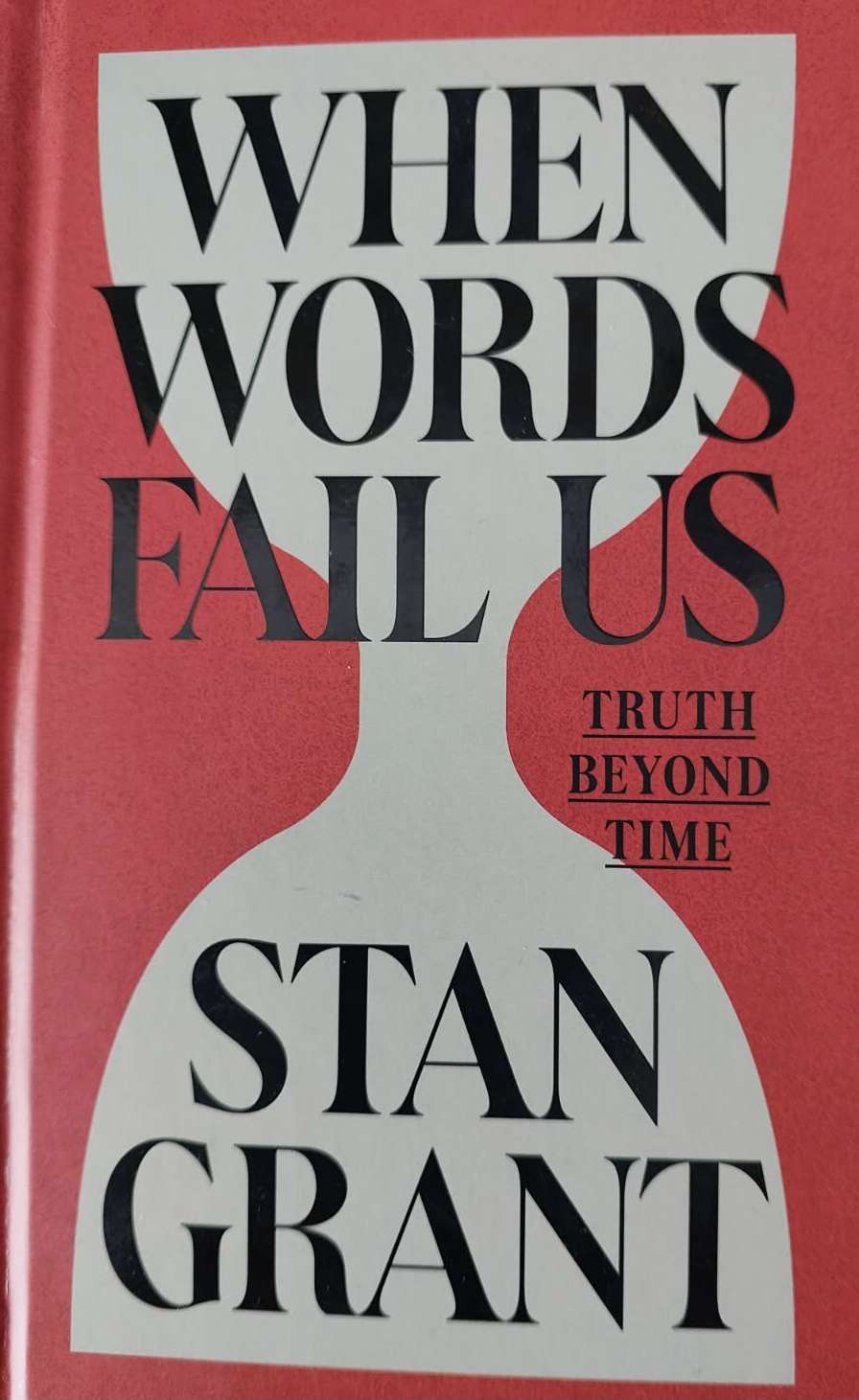
The book grew out of the Simone Weil lecture series delivered in 2025 at the Australian Catholic University.
References to Weil are spread throughout. Grant writes:‘Simone Weil said what the human requires is silence and warmth and what we are given is an ‘icy pandemonium’’. He notes this was written during the Second World War but says we have learnt nothing: ‘We are more brittle today, shriller, colder. Try this: mention God in polite company and watch people twitch.’
Grant asks himself why is he writing this book? Noting it’s a bit too late for that question, he instead offers a justification: ‘Damn it, words must matter. Better that they are insufficient.’
Immediately, he qualifies that assertion, rejecting ‘the charlatans who imitate speech’ in favour of ‘words that, when we hear them, let us know it is a human speaking’.
With the runaway train that is ‘Artificial Intelligence’, I suspect most of us hold out hope we will continue to converse with humans. But will we – can we – truly understand one another? What potential quality or depth are we seeking in conversation with others? Do the words we use and the intent behind them matter, or are we merely enabling what Grant describes as the ‘incomprehensible’ nature of the modern age; a dulled reality not divided by language but because ‘we speak into a void’?
Well, I guess many of you reading this have reflected on the kind of discourses you have enjoyed (or suffered) with others – those that satisfy, and those that leave a sour taste. And there may have been times when you wished to flee from the cacophony of sound arising in some conversations, and to retreat into a companionable silence. Ingrained politeness or a vague sense of inertia may have kept you glued to your seat or couch. Or maybe those encounters, whether with a single person or with a group, were within your range of tolerance – water off a duck’s back, so to speak.
As the odd friend has occasionally reminded me, hankering for the deep and meaningfuls can be a recipe for frustration. Being something of an impatient type, it’s a lesson I find difficult. And being in love with words, spoken or written, is not necessarily a shared joy. ‘Here he goes again’, will surely arise in the minds of certain friends and family members as I launch into impassioned argument or write emails longer than a short sentence.
What to do?
Well, a starting point could be to keep in focus the old adage: silence is golden. In my younger days, when love songs of loss and betrayal drifted in and out of the charts, I recall a cheesy group, The Tremeloes who sang:
Silence is golden
But my eyes still see
Silence is golden, golden
But my eyes still see
The context for the song was a woman scorned. But, for better or for worse, she was not fooled. Sealed lips no match for visual perception. Not that this form of silence would have made much sense to 13th century poet-priest, Myoe the Dreamer. Medieval Japan was somewhat unlike modern Tokyo. Myoe would have struggled to dream up the 21stcentury and the daily assault on the senses for those who live in a big city. Not to mention pop songs and the quaint notion of romantic love.
Small wonder that so many of us urban dwellers scamper off in search of wilderness or at least pastoral serenity, only to find that thousands of others share our aspiration.
Australian author, Robert Dessaix, writes about the delights of some form of sanctuary – a peaceful place where creativity can flourish. Even then, he says, the ‘clatter and clang of the world’ have a way of barging in. At the same time, he reckons artists are caught in a double bind. ‘While the imagination may bloom best in an attentive stillness, it needs to be seeded in the noisy world. You can’t just sit about alone in an old crofter’s cottage by a deserted bog, listening to the wind, for instance, pulled into nothingness, and expect to fall pregnant with a novel.’
I’ll take his word for that. Up in my Fremantle eyrie, I’m pleasantly exposed to sun and wind and birdsong; less pleasantly to thunderous motorbikes and yapping pooches. If needed, I can use the latter to excuse my lack of recent pregnancy.
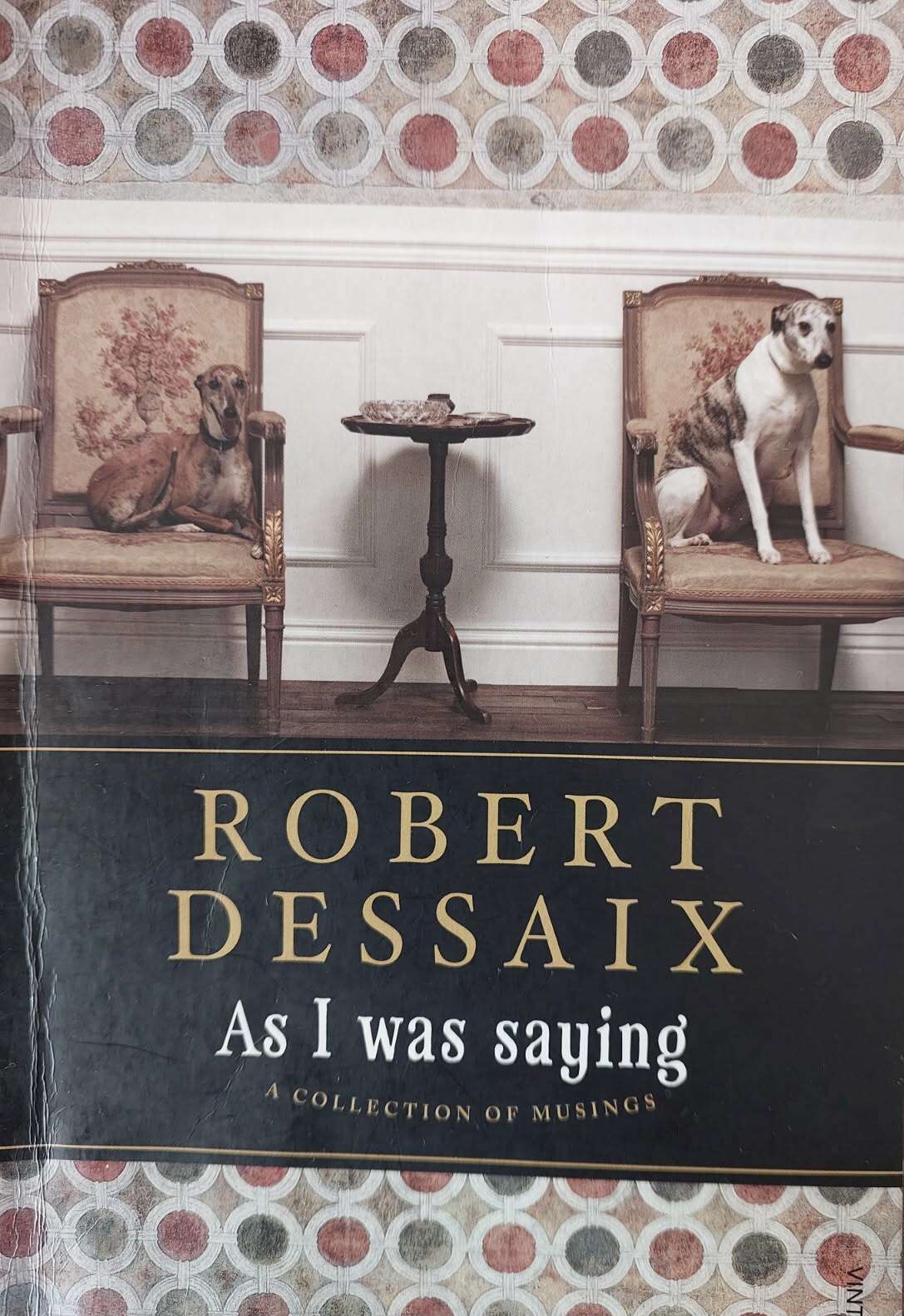
In his book, As I was Saying, Dessaix muses upon Noise and Silence. He is at his pithy best when he observes that ‘Westerners suspect they will cease to exist if they stop talking for a few more seconds, to themselves or others.’ Not only Westerners, I venture. French journalist and traveller, Bernard Ollivier, has walked from Istanbul to China. Upon entering the once Forbidden Kingdom, he is assailed by the traffic ruckus, the ever-present raucous music, and human chatter. No one, it seems, is ever inclined to press their pause button.
Dessaix expands his musing to take in the sense of silence alluded to by the venerable Myoe. Though he professes not to fully understand the Japanese concept, he thinks it contains a ‘desire to transcend the humdrumness of life, with an eye to both the pity of it and its beauty.’ This, Dessaix writes, differs from the Western idea of silence as a kind of emptiness or an absence of sound. Anyone who has meditated may be nodding their heads. Paradoxically, silence can contain a sense of fullness, within the apparent ‘emptiness’. But I like the distinction Dessaix makes between ‘tea-consciousness’ – a ‘refreshed reflection’ and ‘wine-consciousness’ as ‘excitement or inebriation’. In the former, you ‘cohere into something’ while, as you drift into wine consciousness, ‘you revel in incoherence’.
This distinction seems a metaphor for much of modern life. Television is an obvious example. Some of us mute the ads but I know of others who do not appear to be overly disturbed by a semi-hysterical gushing geyser in the background, even when it approaches fever pitch with Harvey Norman. Not that the ad-free ABC is immune from gratuitous noise. As Dessaix notes, confected laughter is par for the course in many programs. What do people find humorous? Is smiling compulsory when you appear on Auntie? Perhaps it’s something to do with my age but there seems to be less and less that I find funny. What ever happened to Norman Gunston?
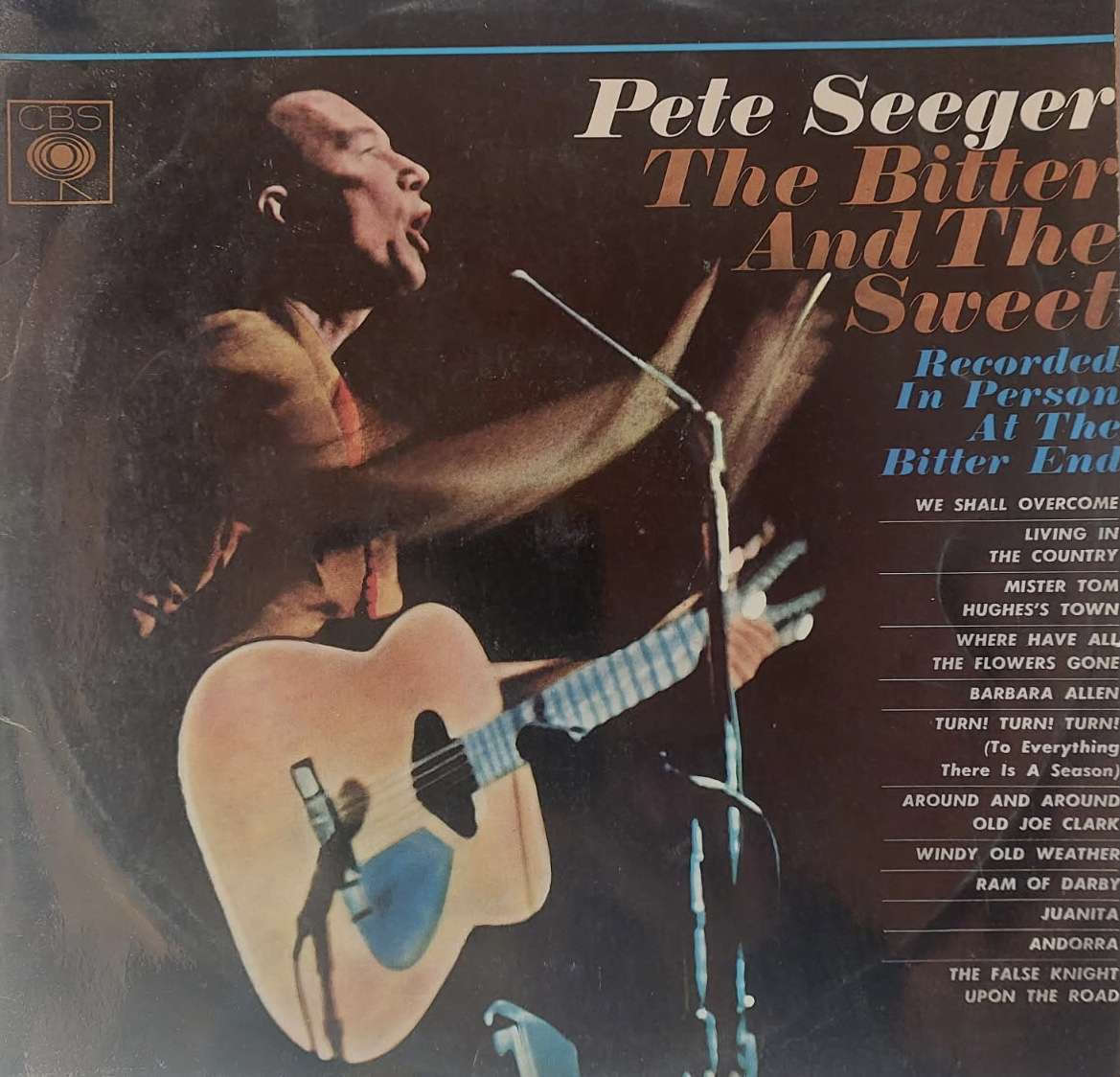
Back in 1959 (the year I wept when Subiaco lost a Grand Final to East Perth), the late, great folkie, Pete Seeger wrote Turn, Turn, Turn. A powerful rendition by The Byrds hit the airwaves in 1965. Amidst the angst and chaos of the Vietnam War, the song touched young and old. Elderly readers may remember that the words were taken from the Book of Ecclesiastes. ‘To everything there is a season’, in the opening line, foreshadows change. The verses that follow reveal a sequence of temporal opposites, exemplified by:
A time to weep, and a time to laugh; a time to mourn, and a time to dance;
A time to cast away stones, and a time to gather stones together;
The lyrics had me wondering about the time for silence and the time for sound. There is room for both, I reckon. Dancing wildly at a Bruce Springsteen concert need not be in opposition to sitting quietly under a gum tree. The two states can complement each other, rather than oppose. True, we may have a preference for tea consciousness, particularly at an advanced age, but now and again we might revel joyously in (wine induced?) incoherence – especially if the opportunity arises to dance on tables at one’s wedding.
On the flipside, modern life tends to mitigate against silent interludes. Scramble the Protestant ethic with the Industrial Revolution and we get a hyper-active omelette of “doing-ness”. Our culture compels us to do stuff, whether that stuff is work or leisure-related. Lip service is paid to taking time out to rest and restore. Productivity, however you define it, is the name of the game. Even in a supposedly laid-back country like our Land of Oz, rest and reflection may be labelled “un-Australian”.
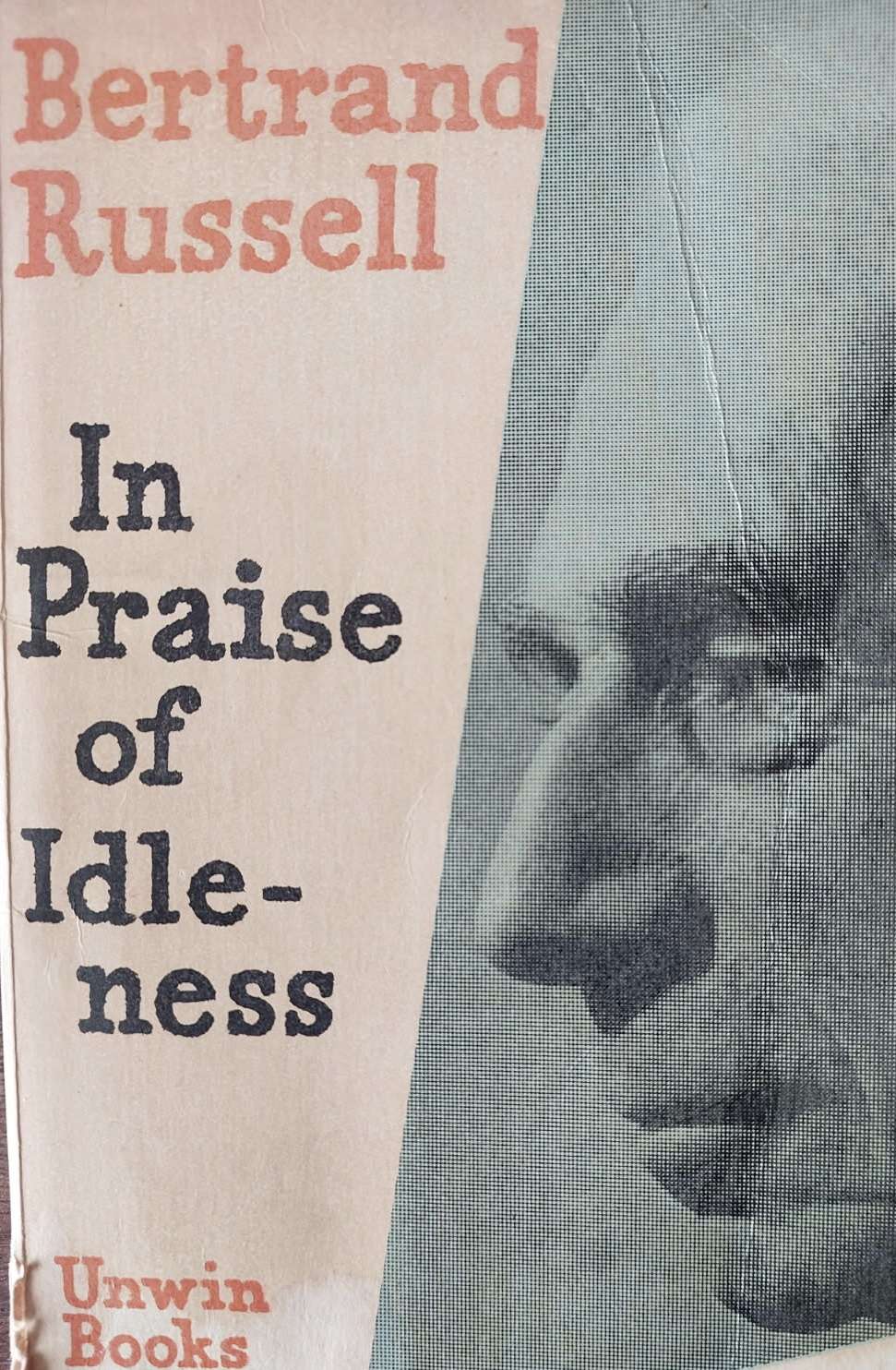
Bertrand Russell wrote a series of essays, beginning with In Praise of Idleness. He recalls being brought up to believe idle hands were the source of mischief. The edict was to work hard. As he grew older, he came to see “there is far too much work done in the world, that immense harm is caused by the belief that work is virtuous, and that what needs to be preached in modern industrial societies is quite different from what always has been preached.”
From the beginning of civilisation until the Industrial Revolution, Russell says a man could work hard to provide the basic necessities for himself and his family. But although the mechanisation of labour, and production on an industrial scale brought widespread benefits, the byproduct was a form of modern slavery. Writing in the 1930s, Russell thought people should work no more than four hours a day. “Above all, there will be happiness and joy of life, instead of frayed nerves, weariness and dyspepsia. The work exacted will be enough to make leisure delightful, but not enough to produce exhaustion.”
We might find Russell’s views slightly utopian – but they are echoed by commentators like Oliver Hamant, a French biologist, who was interviewed recently by Nate Hagens.Hamant picks apart the notion that putting in long hours in the workplace has a positive impact on efficiency. On the contrary, it becomes the self-defeating treadmill that Russell feared. It makes more sense, says Hamant, to align ourselves with what nature offers. By way of example, the lion sleeps for twenty hours a day and only hunts for four. Who, we might well ask, has their priorities in order?
I wonder whether any of this is related to what we value? Do we, consciously or otherwise, inevitably preference doing over being? I know of people who dread the thought of sitting with themselves, in some form of quiet contemplation. It makes no sense, it’s a waste of time, are the type of refrains I’ve heard. And underneath, perhaps, a touch of fear. What might be revealed if we sat with our thoughts and feelings, and did not distract ourselves with activities?
The idleness of which Russell and others speak should not be confused with indolence. Whereas the latter invokes laziness or slothfulness, idleness offers the opportunity to incubate ideas; potentially a state of refreshment and renewal. And that generally requires the absence of outside intrusion, particularly noisy machines, flashing lights, pinging phones, and demands for attention from those near and dear.
Happily, the mystics and the poets show a willingness to explore what silence is all about and what it offers. A few lines from the poet, Sara Teasdale, speak to me:
We are anhungered after solitude,
Deep stillness pure of any speech or sound,
Soft quiet hovering over pools profound,
The silences that on the desert brood,
Above a windless hush of empty seas.
These words beg to be read quietly and carefully. I would say they are to be imbibed. Time slows, and we sink into spaciousness. Silence befriends us and we befriend silence.
I look at the word ‘anhungered’, not exactly sure how Teasdale means it. But perhaps that’s a deliberate mystery. A kind of tease. Poetic license, if you like.
Words do matter, as Grant tells us. Yet they are also potentially playful. Together, in some formation whether it’s a novel or a poem, or the lyrics of the song, we are enticed to participate. At best, we disappear, intrinsically, within our reading or listening, into a private, personal space.
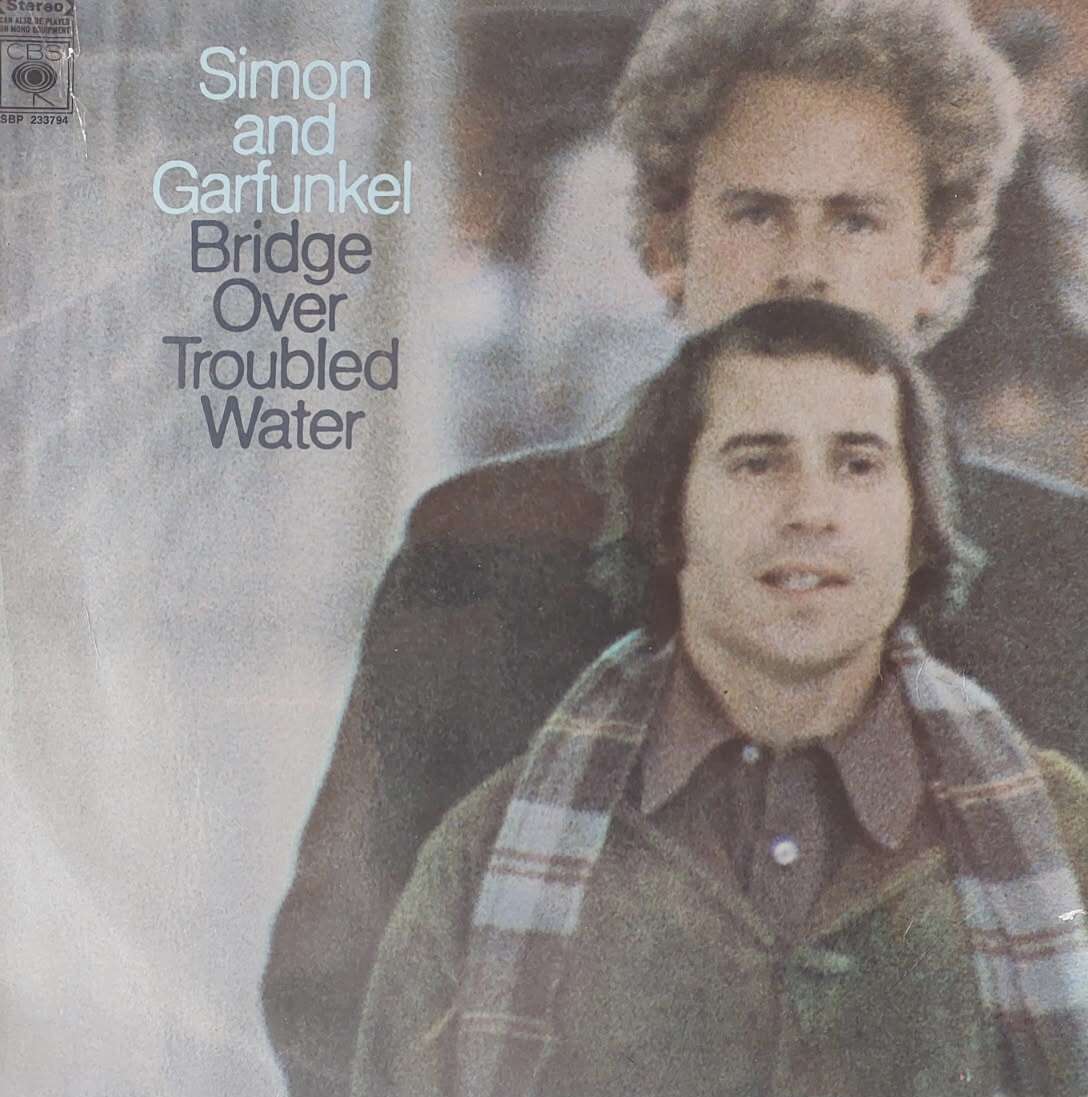
Simon and Garfunkel sang this beautifully in one of their classics:
hello darkness my old friend
I’ve come to talk with you again
because of vision softly creeping
left its seeds while I was sleeping
and the vision that was planted in my brain
still remains
within the sound of silence
That vision softly creeping may make an appearance in the waking state, as well as when we are dead to the world under the covers.
An old friend indeed, the sweet sound of silence.

*By Bruce Menzies. Based in Fremantle, most of the time, Bruce Menzies is the author of three novels, a family history, and a recent memoir, as well as be8ng a regular contributor to FSN. Details at BruceJamesMenzies.com If you’d like to read more of Bruce Menzies’ work on Fremantle Shipping News or listen to a fascinating podcast interview with Bruce, look here.
~ If you’d like to COMMENT on this or any of our stories, don’t hesitate to email our Editor.
~ WHILE YOU’RE HERE –
PLEASE HELP US TO GROW FREMANTLE SHIPPING NEWS
FSN is a reader-supported, volunteer-assisted online magazine all about Fremantle. Thanks for helping to keep FSN keeping on!
~ Don’t forget to SUBSCRIBE to receive your free copy of The Weekly Edition of the Shipping News each Friday!