Professors Ray Wills and Peter Newman highlight the need to design biosecurity settings in both Australia and New Zealand first to defend wildlife. They say ‘We can replace the chooks. We can’t replace our wildlife.’
“Feeding the chooks” is a phrase former Queensland Premier Sir Joh Bjelke-Petersen referred to managing the media. In the context of H5N1 bird flu, there is a risk that is exactly what happens: the conversation fixates on poultry, while our irreplaceable wildlife quietly faces catastrophe.
Every chicken in Australia can be replaced from multiple global sources, and farmers can be compensated. The same is true in New Zealand, which this week confirmed its first H5N1 case — a brown skua found on a Wellington beach, following the same migratory pathway as the initial Australian detections. We cannot replace our wild birds, our seabirds, our marsupials or our monotremes once we lose them.
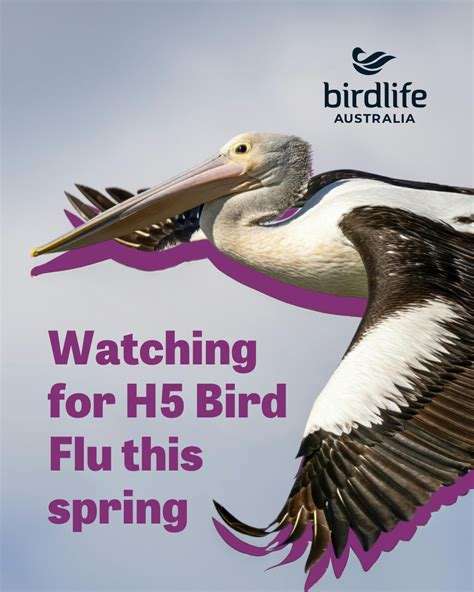
Credit Birdlife.org.au
The threat is far broader than seabirds. A Nature letter by Ritchie and Parrott, published this week, makes clear that H5N1 is already being detected across Australia and could have substantial impacts on endemic and increasingly imperilled species. That includes aquatic mammals such as the platypus and rakali, exposed through infected waterbirds, and scavenging marsupials and dingoes at risk from carcasses. The Australian sea lion and the Tasmanian devil are explicitly flagged as potentially exposed. And while H5 is a bird virus at its core, the indirect impacts — disrupted food webs, altered predator–prey dynamics, carcass pulses attracting scavengers — mean that reptiles, plants and invertebrates dependent on healthy bird populations are also at risk. This is not a coastal or marine problem; it is a continent-wide biodiversity emergency.
New Zealand faces an even sharper version of this crisis. It is considered the seabird capital of the world, with more than a third of its approximately 80 breeding seabird species found nowhere else on Earth. Its land birds — kiwi, kākāpō, takahē — are globally unique and already critically endangered. In a world-first response, New Zealand has already vaccinated 300 individual birds from five of its most endangered species, including kākāpō and takahē, against H5N1. That is the level of urgency this situation deserves.
Now consider what we actually spend on protecting these irreplaceable assets. Australia has around 230 threatened bird species listed nationally, sitting within a broader threatened species list of over 1,900 plants, animals and ecological communities. Yet the 2025–26 federal budget allocated just AU$110.8 million over two years for the Saving Native Species fund, while 42 more species — plants and animals — were added to the threatened list in 2024 alone. Conservation advocates describe it plainly as “less than one cent in every dollar” of the federal budget for nature. New Zealand lists more than 4,000 native plants and animals as threatened or at risk, with DOC facing comparable underfunding relative to the scale of its challenge.
Against this, consider the value both governments formally place on human life. Australia’s 2024 value of a statistical life (VSL) is set at AU$5.7 million, or AU$245,000 per life-year. New Zealand’s VSL, updated by the NZ Transport Authority, sits at NZ$12.5 million — higher than Australia’s on a per-capita basis. These are not arbitrary numbers; they are formally embedded in how both governments assess mortality risk in cost-benefit analysis.
Apply the same logic to threatened birds alone. Australia has around 230 threatened bird species; at VSL parity that represents an implied avian biodiversity asset of AU$1.31 billion. New Zealand has around 90 threatened bird species; at NZ$12.5 million VSL parity, the implied value is NZ$1.13 billion. Combined, that is well over AU$2 billion of irreplaceable avian biodiversity on the line — before we even count the plants, reptiles, mammals and invertebrates that depend on healthy bird populations.
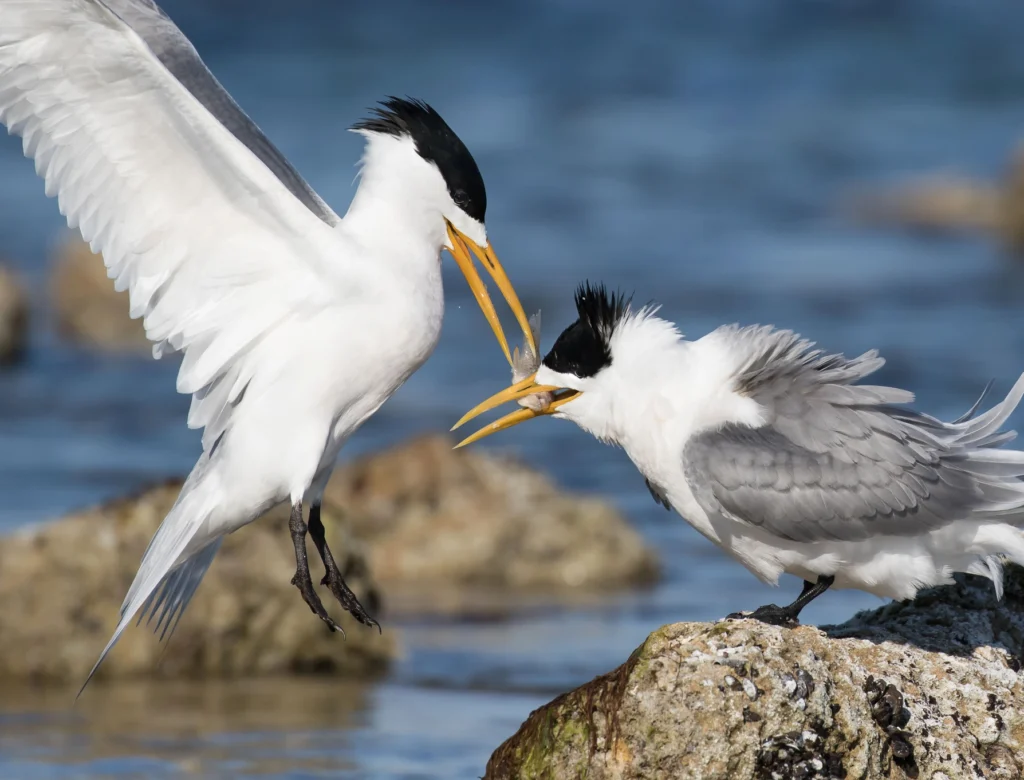
From Bird Life Australia. ‘Greater Crested Terns’ especially vulnerable to H5 bird flu. Photo by Rebecca Harrison.’
We must be vigilant, not alarmed — but vigilant in a way that demands urgent action. Biosecurity settings in both Australia and New Zealand should be designed first to defend wildlife and ecosystems, with poultry risk folded in, not the other way around. The chooks can be replaced and farmers compensated. History will not forgive us if we let H5N1 become the crisis that finally tipped our irreplaceable wildlife over the edge.
Ray Wills is Adjunct Professor at The University of Western Australia and Managing Director of Future Smart Strategies. Recognised internationally as one of the Top 100 Global Leaders in Sustainability, he tracks the data on biodiversity loss and the irreplaceable value of Australia’s unique wildlife in an era of accelerating environmental change.
Peter Newman AO is John Curtin Distinguished Professor of Sustainability at Curtin University and a Coordinating Lead Author for the IPCC’s 2022 Mitigation Report on Transport. He has spent five decades arguing that the health of cities and ecosystems are inseparable, and that biosecurity for wildlife is as fundamental to sustainability as clean energy and green transport.
~ If you’d like to COMMENT on this or any of our stories, don’t hesitate to email our Editor.
~ WHILE YOU’RE HERE –
PLEASE HELP US TO GROW FREMANTLE SHIPPING NEWS
FSN is a reader-supported, volunteer-assisted online magazine all about Fremantle. Thanks for helping to keep FSN keeping on!
~ Don’t forget to SUBSCRIBE to receive your free copy of The Weekly Edition of the Shipping News each Friday!