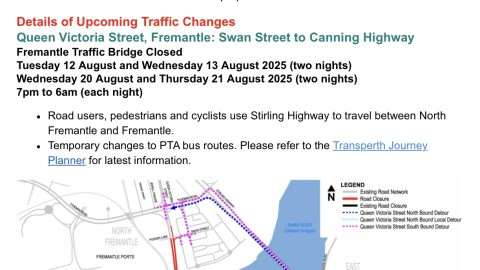
Here’s the latest Project Update just to hand from Main Roads WA. It’s a good and informative read!
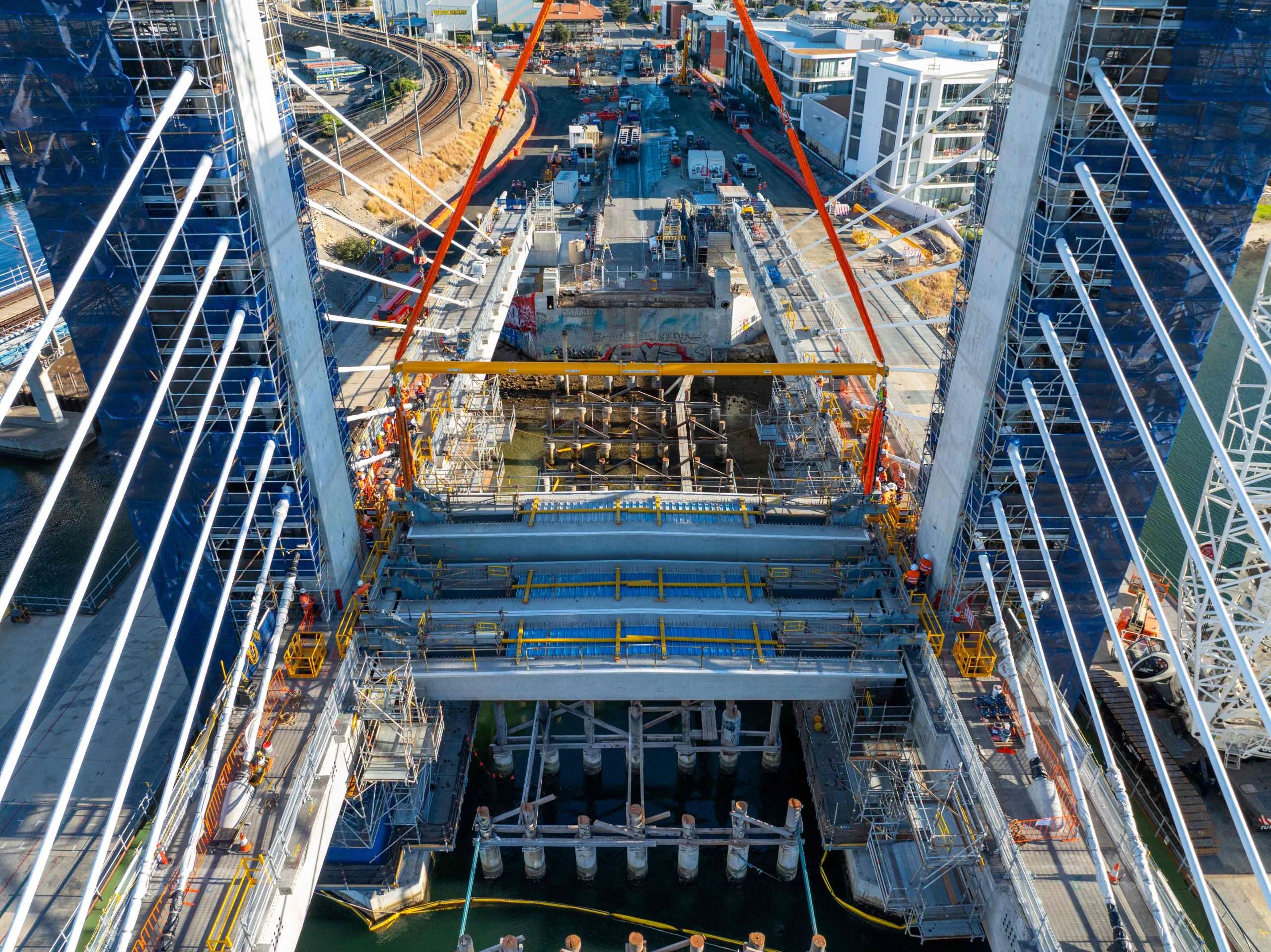
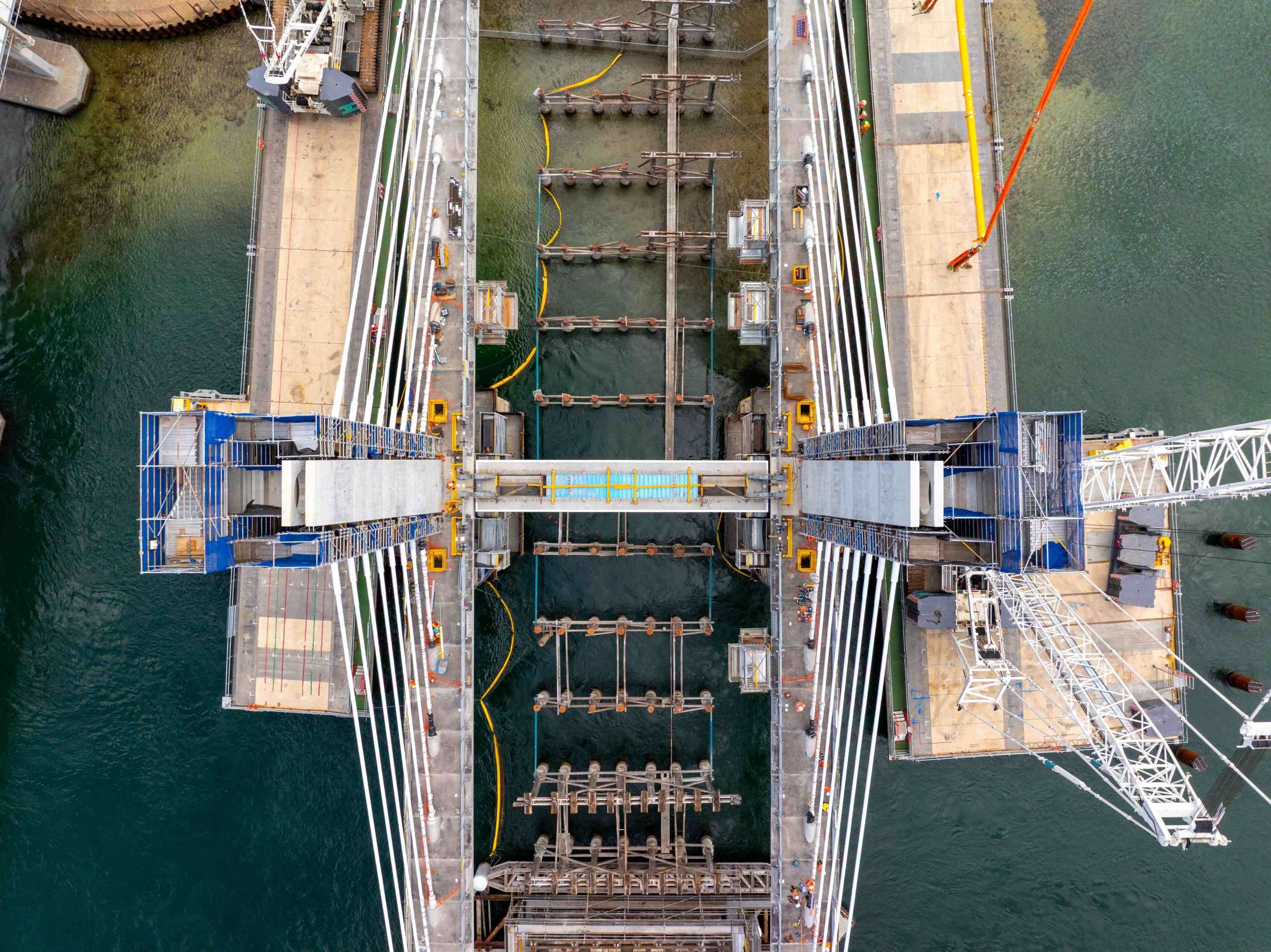
Figure 1. Three bridge beams installed on the north
First Beams Lifted for New Bridge Deck
11 March 2026 was a big day for the New Fremantle Traffic Bridge Project with the first two beams for the new bridge deck lifted into place and the final piece of the northern section of the old bridge deck removed.
At the time of publication, 21 of a total of 46 T-Roff beams have been lifted into place and fixed onto the bridge edge beams (east and west) using post-tensioning bars. Despite considerable logistical constraints, the installation process has made outstanding progress, with an average of 5 beams installed per-week.
In the coming months, glass reinforced polymer formwork panels will be placed in-between the beams to form the bridge deck, followed by major construction works to build the road for the new bridge.
The installation process requires careful planning and controlled movement to ensure worker safety, and includes:
• Lifting pre-cast beams weighing approximately 70 tonnes into place.
• Lifts require a high level of accuracy, as the beams are manoeuvred around the recently installed cable stays in a tightly constrained space.
• Keeping each lift stable requires crews to coordinate crane operations, rigging, and communication between the bridge and the crane to position the beam smoothly and safely.
The weight of the beams and the complexity of the environment make this process one of the project’s more challenging activities.
Cable Stay Installation Complete
The new bridge towers feature eight stay cables on each side which are now installed and tensioned. Each cable contains up to 55 individual strands, providing strength and durability to support the new structure. The cables are anchored at the edge‑beam segments, fed through the concrete‑embedded saddle within the tower and anchored again on the opposite side. This continuous arrangement ensures efficient load transfer and balanced performance across the deck and tower.
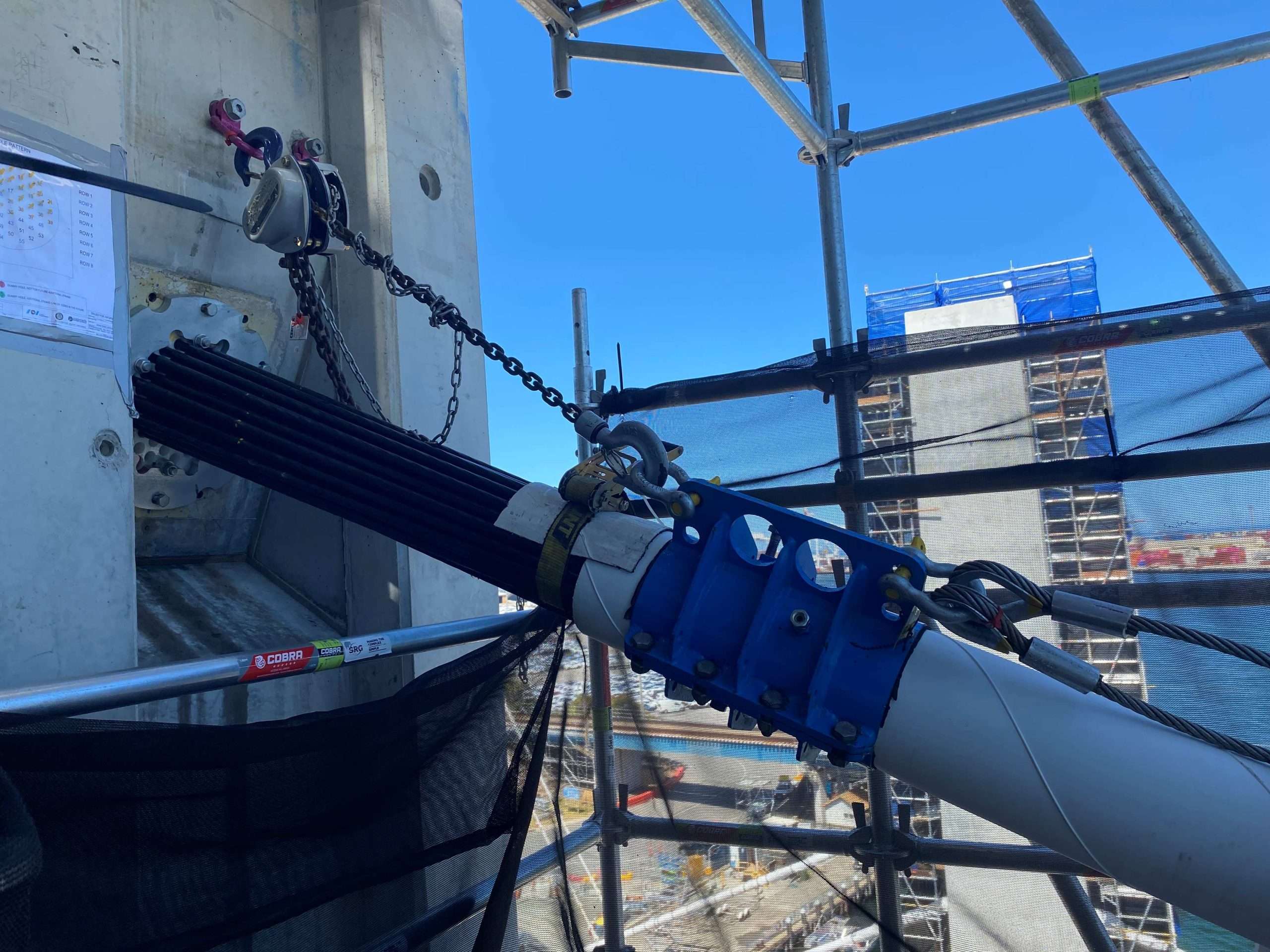
Figure 2. Cable stay concrete saddle at the top of the tower
Removal Progress
Removal of the old traffic bridge is making strong progress – here’s an update:
• All concrete sections of the old bridge deck have been removed.
• Removal of the upper piers (above water) has started on the north and south.
• Fender removal is underway on the south.
• Over three-quarters of the timber deck has been dismantled, including both the northern and southern navigational channels.
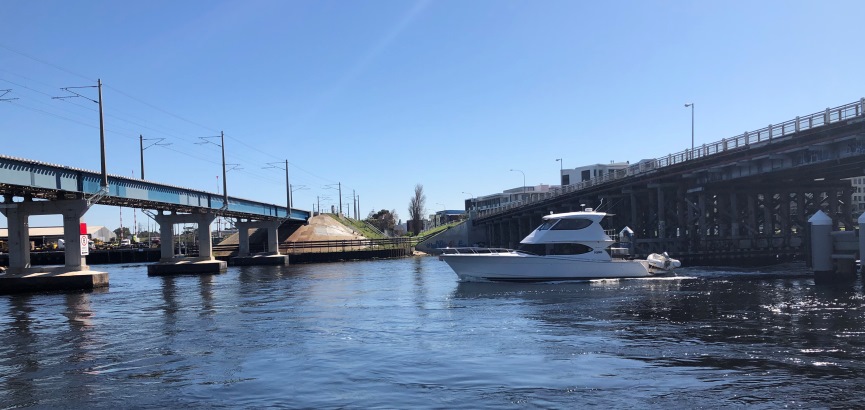
• A new 9 metre height clearance is operating, which is two metres higher than the current traffic bridge. The existing rail bridge now has the lowest height clearance of 8 metres on this stretch of the Swan River.
• Bridge abutment removal on the north is complete; southern abutment removal is expected to start in mid-April and finish in early May.
• Underwater pile removal has started. A barge is operating in the southern navigational channel (for approximately 20 days and nights), so one navigational channel is closed at all times. Spotter vessels will continue to assist with vessel management during daytime, with contraflow vessel arrangement in place. At night, the barge will be lit to ensure vessels can see it. In May, the barge will move to the northern channel, which will then be closed. Our bridge removal factsheet is here – check out our step-by-step process.
Figures 3 and 4 follow.
Figure 3 Bridge removal with all navigational channel spans open
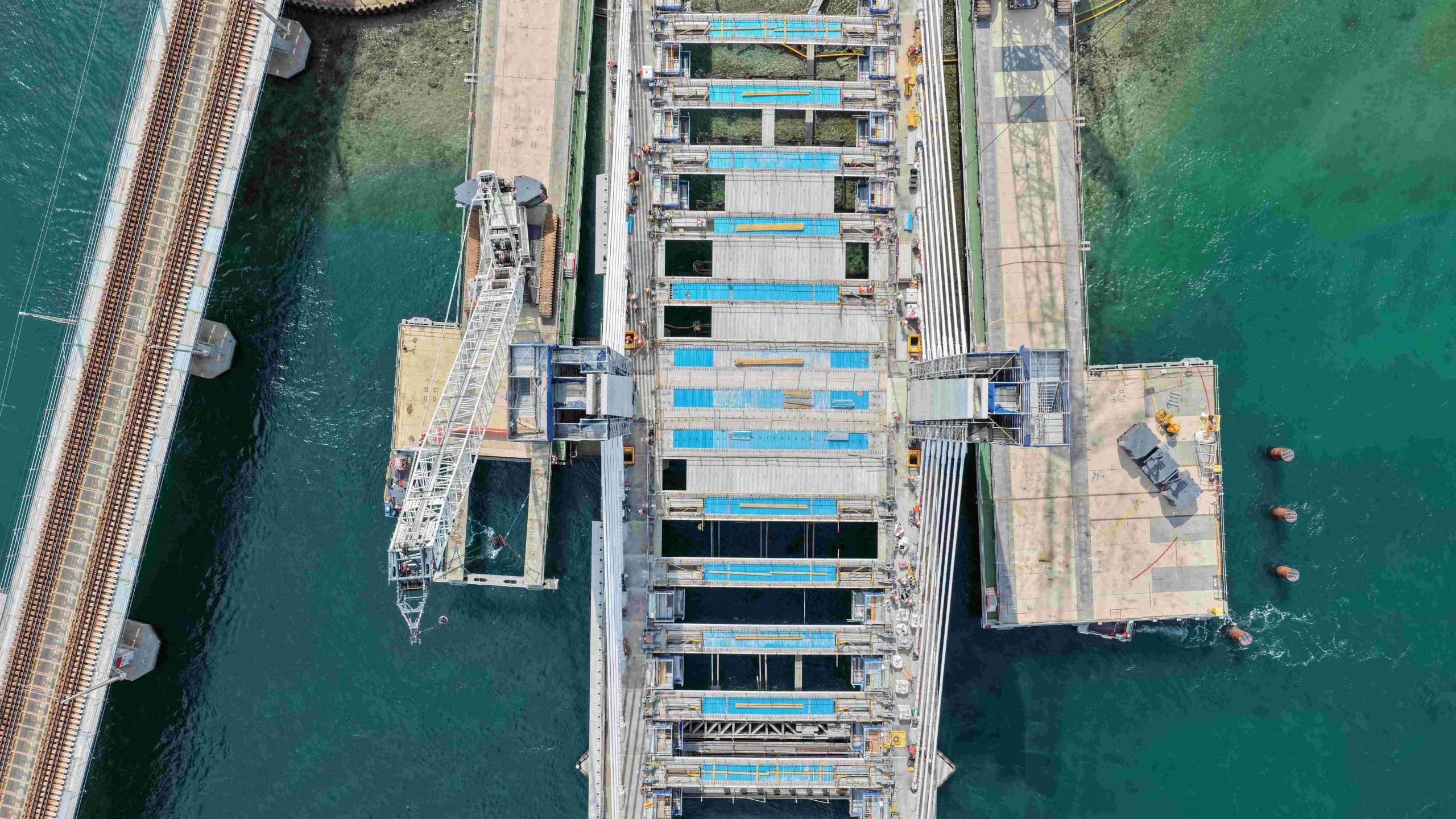
Figure 4 Bridge removal on the north with first beam installed
Temporary Jetty Removal Underway
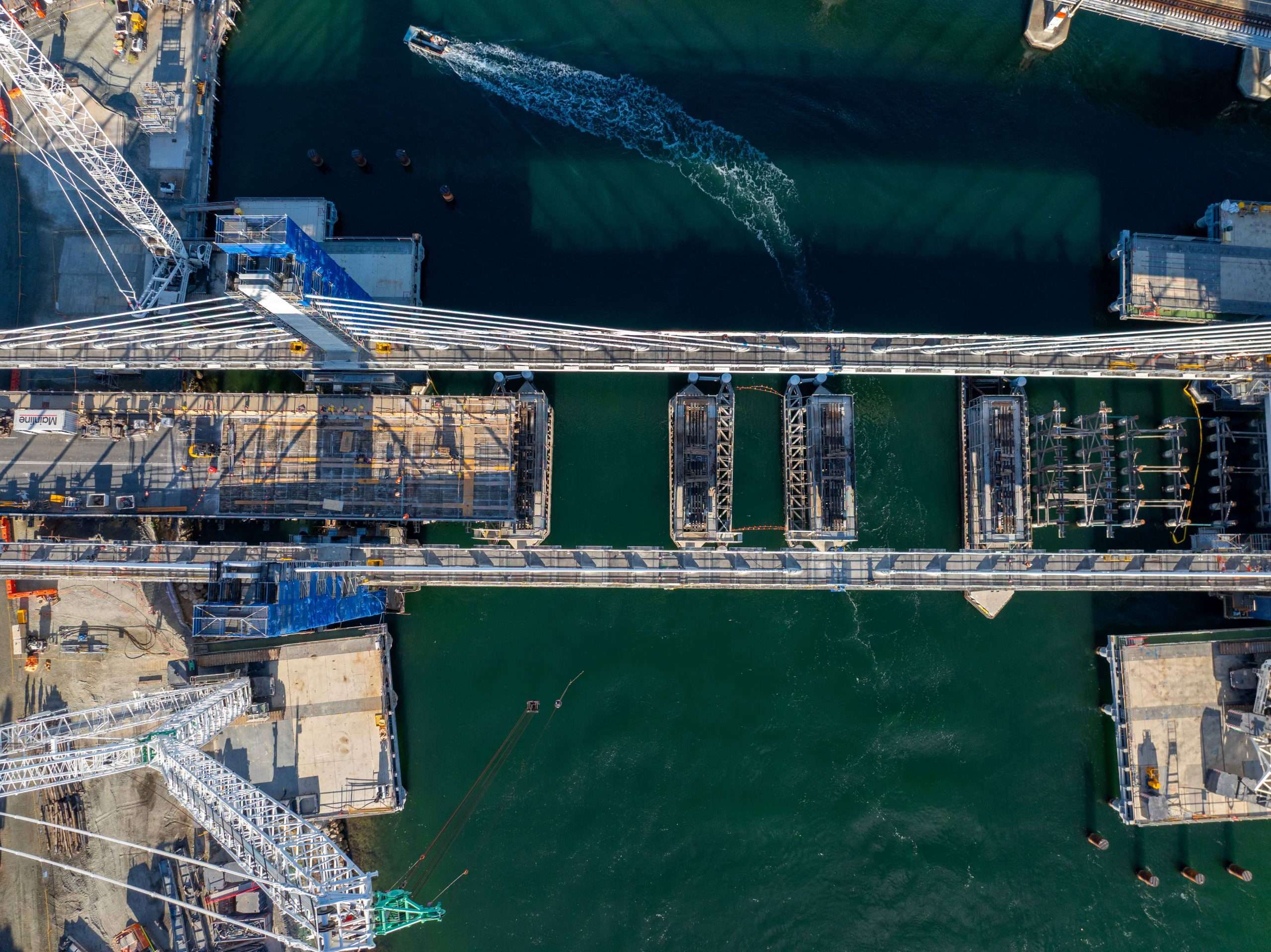
For the past 18 months, much of the bridge’s construction has been carried out from temporary jetties located on the northern and southern sides of the river. With towers, edge beams and cable stays now in place, these jetties are no longer required. Jetty removal started on 1 April 2026 and will continue intermittently through to September 2026. Works are being carried out span by span, starting from the end of the jetty working back towards the shore.
Intermittent, in-river vibratory piling to extract the temporary piles that support the jetties, is being undertaken from Monday to Saturday 7am to 7pm. While this process does generate noise, which will be amplified underwater, noise and vibration levels will not be as significant as those experienced during the piling program undertaken for the new bridge in 2024/25.
Exclusion zones will apply to swimmers and other river users, including kayakers and stand-up paddle boarders. These will be monitored by spotters ensuring the zones are free of swimmers and marine mammals.
Figure 5 follows. Temporary jetty removal works underway
Spotlight on the Environment
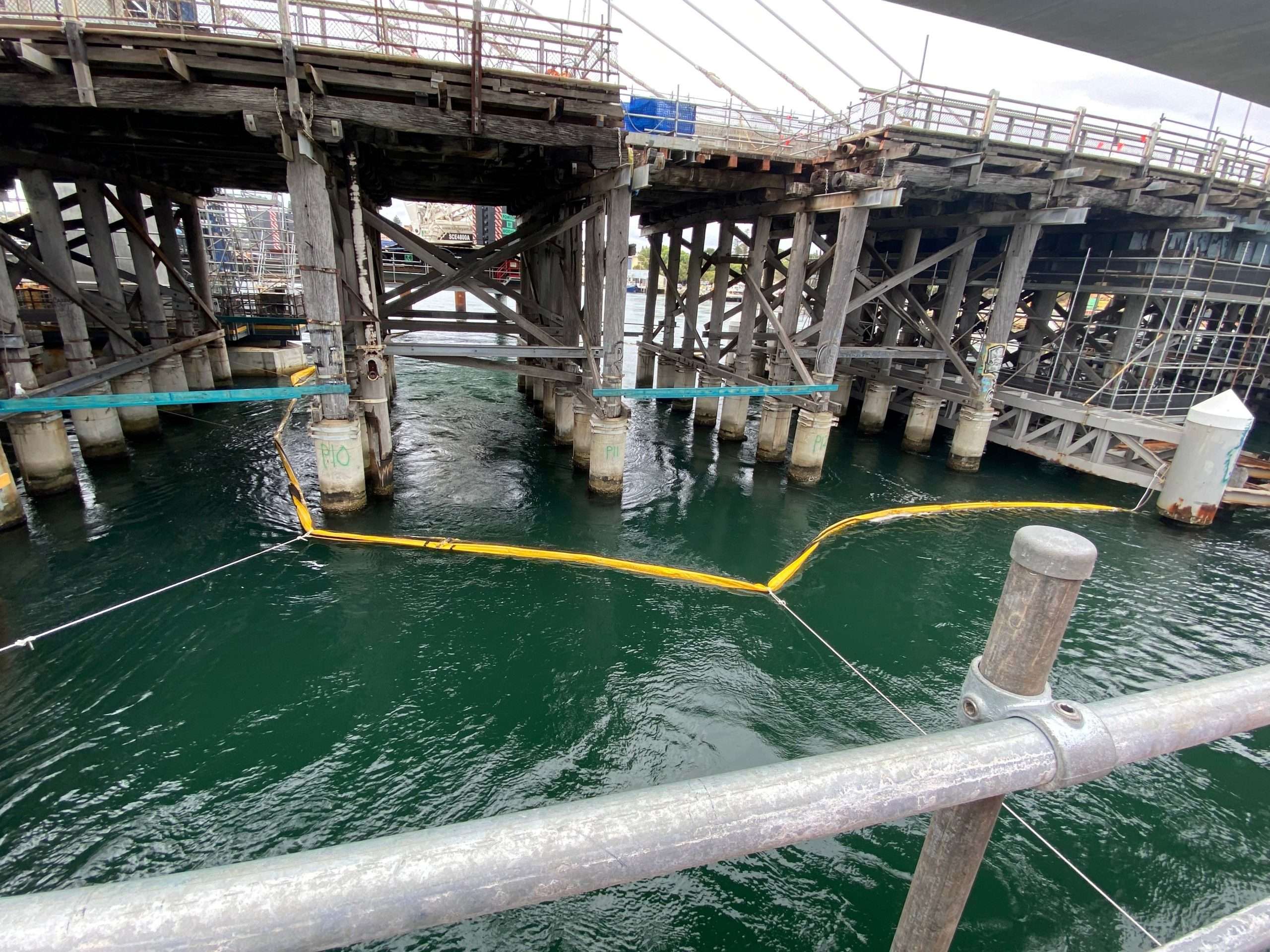
Protecting the environment is a critical consideration during the removal of the old traffic bridge, with a series of controls successfully deployed during the recent removal of the timber bridge deck to prevent debris entering the Swan River. The following controls were implemented during every span cut:
• Physical containment and capture of debris and dust integrated into working platforms.
• Progressive vacuum extraction on the bridge deck to capture sawdust and timber fragments at the source.
• Floating yellow booms in the river to capture any debris/material that may fall during cutting.
• Spotter vessels are used to collect any stray sawdust or floating debris captured within the boom.
• Continuous monitoring to ensure the river environment is protected throughout the works.
• These measures reflect the project’s commitment to safeguarding the Swan River while delivering critical infrastructure for the community.
Figure 6 follows.
Figure 6 Debris booms under the exisiting traffic bridge
Common Community Queries
We’ve had a few queries about this intersection, including requests to install a roundabout. This was investigated during the planning phase of the project.
• It was not feasible to achieve a safe and appropriate design in that location as the gradient of East Street is quite steep and that section of Canning Highway is used as a high-wide load vehicle route from the port.
• A temporary traffic management improvement was implemented during bridge closure, which included reducing Canning Highway to one lane in each direction and providing temporary median islands to improve pedestrian crossing distances/refuges across East Street. This was raised by community as a potential benefit.
• Traffic patterns have changed on Canning Highway with vehicles driving at a reduced speed in this area, which helps make turning movements safer for those entering via East Street.
Signal Timings at Canning Highway and Stirling Highway Intersection
The key focus during bridge closure is to keep traffic moving on Stirling Highway to minimise congestion. Main Roads’ Road Network Operations Centre is actively monitoring the network and signal timings. Traffic signals are adjusted to prioritise key movements, particularly north and south on Stirling Highway when required. It is expected that some congestion will occur on Canning Highway as Stirling Bridge is the only north – south crossing point over the river. Main Roads will continue to actively monitor signal timings in this location.
~ Here’s more of our coverage on FSN of the Old/New Fremantle Traffic Bridge
~ If you’d like to COMMENT on this or any of our stories, don’t hesitate to email our Editor.
~ WHILE YOU’RE HERE –
PLEASE HELP US TO GROW FREMANTLE SHIPPING NEWS
FSN is a reader-supported, volunteer-assisted online magazine all about Fremantle. Thanks for helping to keep FSN keeping on!
~ Don’t forget to SUBSCRIBE to receive your free copy of The Weekly Edition of the Shipping News each Friday!