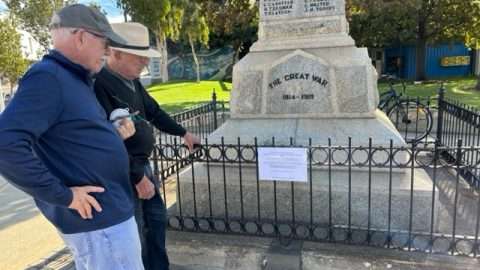
In this wonderful piece, Bruce Menzies writes about Friendship
Can you remember your first real friend? A friend who wasn’t a family member. My memories are vague, mostly reconstructed from black and white photos of our backyard in Subiaco where I’m sitting outside with the young lad from across the road, Chris Harris. We are yet to turn three. Within a couple of years, I will be climbing the mulberry tree in Chris’s backyard, and enduring reprimands from my mother when I finally come home, splattered head-to-toe in purpling juice.
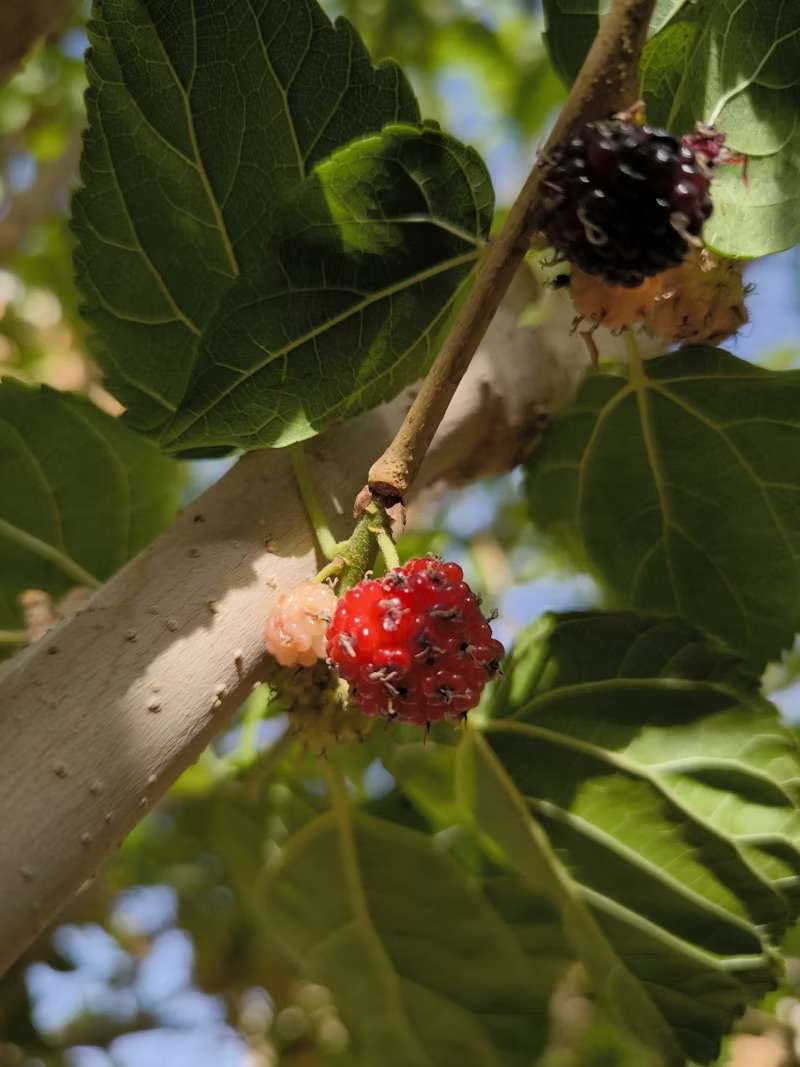
Credit Azzam Mozam and Unsplash
Fast forward. A book lies open in front of me. On Friendship. A birthday present from a dear friend. The author, Andrew O’Hagan, is a Scot. In the early pages, he is musing about the Irish poet Seamus Heaney:
‘Like one or two others I have met in life, he was a friend to friendship itself, and was intentionally inclined, which didn’t mean he lacked beliefs about his country but that he governed them aesthetically, never allowing his own certainties to cancel or violate the certainties of others. That was his style, and, for my purposes here, I want to suggest they derived from his sense of the verities of friendship. For sure, there were disputes and naysayers, envies and accusations, but the skill of the oarsman can sometimes be felt not merely in the speed of the journey but in the subtlety of it, in how the waves are met with and crested and sometimes avoided.’
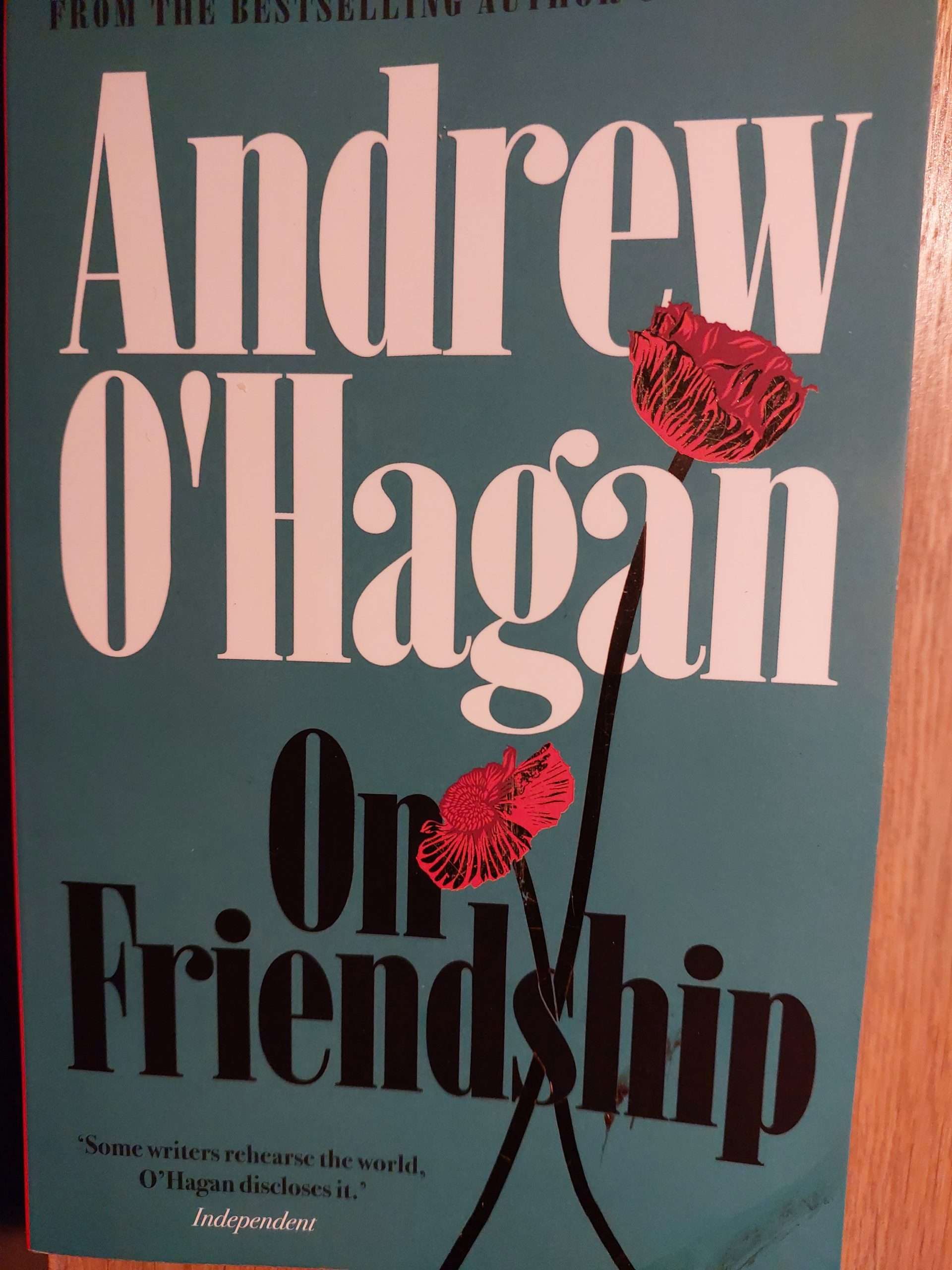
A friend to friendship itself. Beautiful expression. O’Hagan goes on to talk about his childhood friendships, ones that endured and others that didn’t – and about the loss of friends, through dislocation, disappearance, and – increasingly – through death.
It set me thinking about a group of school friends. How we have remained close or regained touch with one another, sometimes after considerable gaps in time.How we have managed to bridge those passing years, not to mention our swirling, oft-conflicting views on this, that, and everything.
We are a quintet, all married (though not to one another, at least in any legal sense). Each Thursday, we walk and swim and caffeinate. And our yarning waxes and wanes, from personal to philosophical, from geriatric foibles to global shenanigans. Our wives get an occasional mention, usually with respect. We touch upon our children and grandchildren, often in the context of what their future portends. Every now and again we venture into Docker dreamland and wonder what their future portends.
Between physical catch-ups, we exchange emails, pontificating on the state of the world, sharing articles, books, and extracts from newspapers. Some of us luxuriate in this medium of exchange; others are less entranced.
We press each other’s buttons. Inevitably, I think, given our divergent interests, political leanings, and the trunk-full of opinions each of us have accumulated over eight decades. Yet, when available, we rock up each week and take pleasure in each other’s company. It’s passing strange but feels intrinsically healthy, perhaps confirming the human imperative to socialise; that ‘no man is an island’.
Part of the glue that holds us together, I suspect, is contained in O’Hagan’s observation about Seamus Heaney ‘never allowing his own certainties to cancel or violate the certainties of others’. Underlying this attitude, I would say, is recognition the kernel of friendship is stronger than the ripples of opinion that radiate from each participant. While we may roll our eyes, or argue forcibly, or tune out when one of us is beating a well-worn drum, we seem to have developed an inbuilt recovery mode.Thus far, we’ve been able to mend fences when return jabs are perceived as unfair or unwarranted. We might grumble and stumble, yet there is enough honey in the glue to draw us back together, week after week. As I remind myself, when feeling frustrated or misunderstood, it’s not something to take for granted.
On the flipside, there have been times in my life when I’ve had close friendships that have not held up. This can happen if we shift camp. Before the age of the Internet, before Zoom and Facetime, we had to rely on letters and long-distance phone calls. When friends moved interstate or overseas, you had to work hard to stay in touch on a regular basis. Old friendships could easily lapse, or drift into hibernation.
And then there were friends with whom you no longer saw eye to eye. This came home to me most strongly in the aftermath of my years with a guru. There was a sense of you’re either in or out – and I was definitely ‘out’. My experience, one shared by others with whom I’ve spoken, has been that such schisms are hurtful and puzzling. But they do say something about belonging and an identity attuned to ideology. Criticise group-think or, worse still, critique the leader – and you risk the exit button being pressed, even by those who you once considered solid in friendship.
Work friendships are another sphere altogether. O’Hagan says he developed ‘some of the best friendships of my life next to the photocopier, or by working desk-adjacent with people whose minds affected my own’. I wonder how many of us have flourishing friendships that originated from working together? My own peripatetic ‘career path’ has taken me from the Commonwealth Public Service to the Perth/Fremantle legal fraternity and later to law firms in Denmark and Albany – before doing time in a counselling agency in the metropolitan area. While I have acquaintances from each of those staging posts, with a couple of notable exceptions, my gold-standard friendships originate elsewhere. Yet I know this is not true for others who have formed deep and enduring connections within the workplace.
Earlier, I mentioned friendships that fell ‘into hibernation’. One of the joys of Internet connectivity and Dr Google has been the opportunity to resurrect friends from the past. When I was a young graduate in Canberra in the late 1960s, most of us hailed from elsewhere. We shared hostels and houses, picnicked, played social cricket, serious hockey or football, and learnt to ski. When we were not imbibing trad jazz and inebriating ourselves on Monday nights at the Dickson Hotel, we eased our way into careers. Many of us also experimented with falling in love.
In recent years, some of those friendships have grown fresh blooms – and continued to bloom in ways that surprise and delight. That, to me, is a measure of how a shared past at an important stage of one’s life can lay the groundwork for a re-formation of friendship, years down the track.
People say it’s harder to make good friends as you get older. In general, that may be true. Yet magic can still happen. While hoping not to cause embarrassment, I can say that being hooked up with our Editor (in a manner of speaking), has warmed the cockles of my heart, as someone’s grandmother might’ve said. A friend indeed.
What about gender? Conventional wisdom attempts to portray differences in the nature of women’s friendships and those between men. Which group is more likely to share feelings – and which group is more likely to keep the conversation on a more practical basis? I suspect this perceived dichotomy has always been a simplified construct – an unsubtle formulation of varying values. But less and less, I reckon, is this an accurate lens with which to perceive what is actually happening within many societies.
Once upon a time, there were more women than men with whom I could swim easily in the current of emotions. Women, not necessarily lovers, to whom I could confide my hopes and fears, fantasies and foibles. These days it feels more like a level playing field. Both men and women enrich my inner life.
In Australia, we deal with legacies of our upbringing and a culture historically discouraging blokes from uttering the F-word – ‘Feelings’. Yet times are surely a’changing, if the south-coast OMG (Old Men’s Group) to which I belong is any indication. We spill the beans with one another, reflect and respond. As with groups of this nature, the depth and extent of our revelations are predicated upon trust and a sense of safety, buttressed by humour and attentiveness.
Both my sons, now in their 50s, have shared with me insights gleaned from their men’s groups. Sensitivity to others, and the confidence to express powerful, often painful feelings has been a hallmark. Away from the group, individuals enhance their desire for connection by hanging out with other members, building on the formal processes they have absorbed.
Yet it needs to be remembered that friendships are multifaceted. Many men seem happy to associate with one another in pubs and clubs, watching sporting events together, or strolling the golf course. Who’s to say their friendships are qualitatively of less substance than those formed and embellished in a structured setting where vulnerability and honest sharing is supported and encouraged? The intention can be pure but the proof, I venture, is always in the product.
Which brings me full-circle. As a little kid, I must’ve felt a sense of excitement and expectation as I crossed the road to meet up with young Chris and climb his mulberry tree. My mother may have breathed deeply as she watched me go but had the good sense to loosen the apron strings. And I wouldn’t have gone, had I not a friend to go to. A bit boring to climb alone. Much more fun to chuck berries at one another and rejoice in the sense of adventure.
Though I would never have entertained the conscious thought, in reality I was stepping outside the bounds of the family. Forming a friendship with a young neighbour. Another boy. Drawn by mysterious and mischievous forces that impel us to explore our human experience, to fulfil our tribal destiny, and to ‘add – venture’ to our expanding world.
As one of my great mates is prone to exclaim: ‘How good is that?’
By Bruce Menzies. Based in Fremantle, most of the time, Bruce Menzies is the author of three novels, a family history, and a recent memoir. Details at BruceJamesMenzies.com If you’d like to read more of Bruce Menzies’ work on Fremantle Shipping News or listen to a fascinating podcast interview with Bruce, look here.
~ If you’d like to COMMENT on this or any of our stories, don’t hesitate to email our Editor.
~ WHILE YOU’RE HERE –
PLEASE HELP US TO GROW FREMANTLE SHIPPING NEWS
FSN is a reader-supported, volunteer-assisted online magazine all about Fremantle. Thanks for helping to keep FSN keeping on!
~ Don’t forget to SUBSCRIBE to receive your free copy of The Weekly Edition of the Shipping News each Friday!