Josh Wilson MP for Freo and Assistant Minister for Energy and Climate Change this morning held a presser at the Pillay home in Beeliar 6164, near Fremantle 6160, to talk about Clean energy transition and the Household Energy Upgrades Fund. Here’s the unedited transcript of who said what.
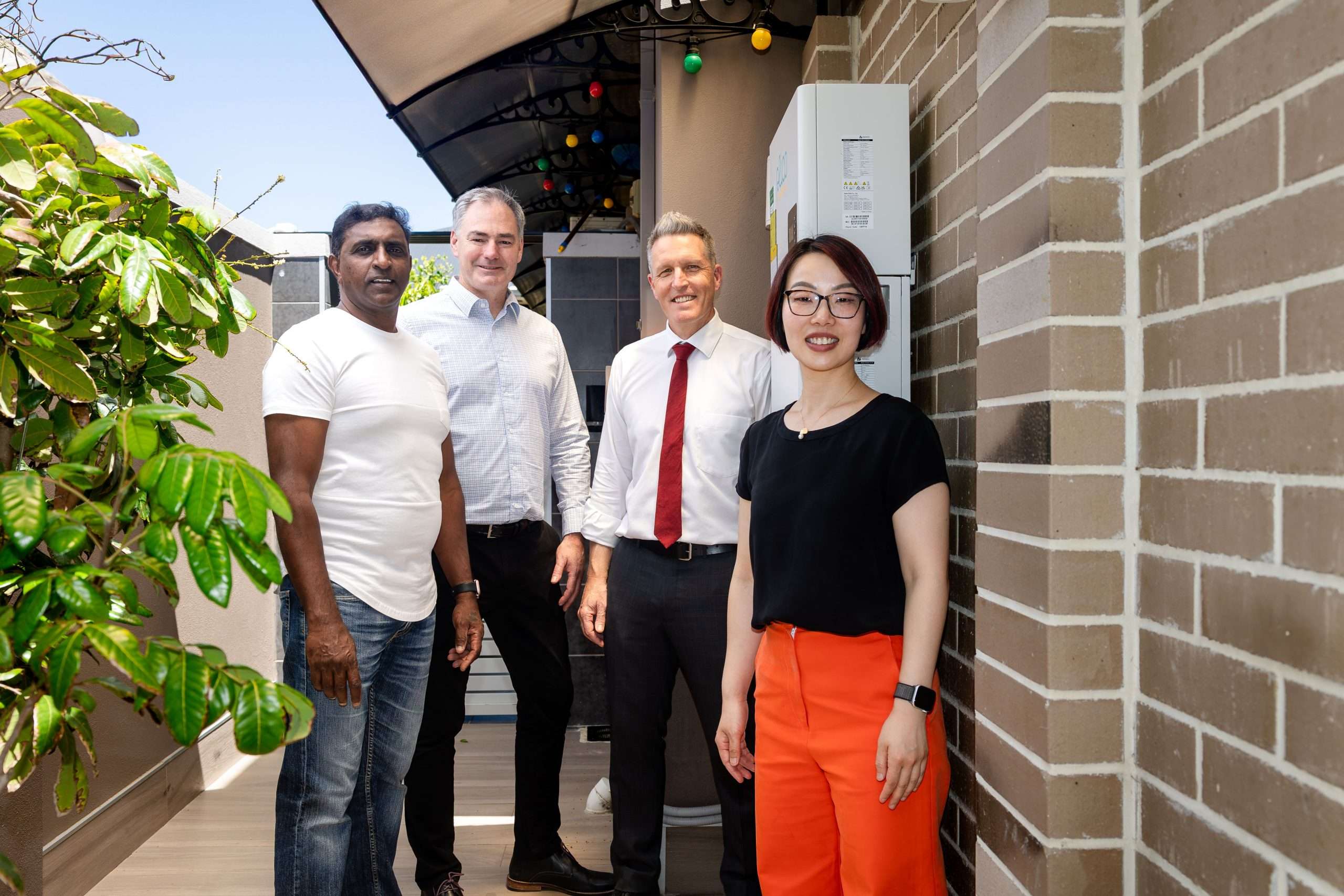
From left: Nanda Pillay, Beeliar homeowner, Robbie Campbell Plico, Josh Wilson MP for Fremantle (the one wearing a tie on a near 40 deg Beeliar day!), Grace Tam CEFC
JOSH WILSON, ASSISTANT MINISTER FOR CLIMATE CHANGE AND ENERGY AND MEMBER FOR FREMANTLE: Good morning, everyone. I’m really pleased to be here in Beeliar today to announce a commitment from the Albanese Government of $35 million through the Clean Energy Finance Corporation (CEFC) as part of our Household Energy Upgrades Fund.
That funding will go to homegrown Western Australian success story, Plico, as they help Western Australians continue to be part of the energy transition – by taking on new technologies in the form of solar batteries, and greater coordination through virtual power plant arrangements. What that delivers for households is energy cost reduction – up to $1,000 per household, per year, if they make these kinds of smart investments in their own energy self-sufficiency.
It’s great to do it with Plico, because they are a startup that began life here in Western Australia, and they’ve done so much good work. It’s great to do it here in Beeliar in my electorate, because Beeliar is part of a postcode – 6164 – that is the fourth ranked postcode in Western Australia when it comes to the take-up of rooftop solar. About 16,500 households in this postcode already have solar, and its 14th nationwide.
It’s great to continue the work of the Albanese Government in managing a smart and sensible energy transition – an energy transition that does bring down costs at a time when we know there are cost of living pressures, but also delivers the energy transition we need as old coal-fired power generators come to end of life, and deliver the emission reductions that we need to see to make a contribution to that vital global cooperative effort.
It’s interesting to reflect on the progress that we’ve made. I think the community Australia-wide should be heartened by the work that began under the Rudd Gillard Government – at a time when one in 1000 Australian households had rooftop solar – has progressed to the point now where one in three have rooftop solar Australia-wide. We are the world leading jurisdiction when it comes to the distribution and the take-up of rooftop solar, and in Western Australia, it’s two in five households that have taken that step.
Of course, it provides about half of our renewable energy generation, and just in the last six months, we’ve crossed some really important milestones: we’ve gone beyond four million households, in September for the first time renewables out-generated coal in Australia’s main grid for an entire month, and for the first time we’ve crossed 50% of renewable energy at times – and rooftop solar provides half of that.
We need to go further though than just making those generation changes, both in distributed energy and in large-scale solar and wind. We need more storage, and we need more integration and coordination. That makes costs lower for households and small and medium enterprises, and it makes the system cheaper as a whole and delivers those benefits to everybody who is part of the system – whether they’ve got home solar or a battery, or are a part of a VPP.
So, it’s really important progress. I’m glad that the Albanese Government can make this contribution of $35 million to Plico through the CEFC under the Household Energy Upgrades Fund as part of the billion dollars that we under Australia’s first National Energy Performance Strategy. And I’m going to start by handing over to the CEFC.
GRACE TAM, CEFC HEAD OF CONSUMER FINANCE: Thank you. The CEFC’s Household Energy Upgrades Fund is helping Australians take charge of their energy future. By working with companies like Plico we’re making it easier for families like the Pillays to access affordable finance, cut their energy bills, and support stronger grid networks. The CEFC is working with more providers to give Australians more options so that more households can benefit from cleaner, affordable energy. I’ll now pass on to the CEO of Plico, Robbie.
ROBBIE CAMPBELL, CEO OF PLICO: This is a great day for clean energy. The $35 million support for the rollout of further solar and battery systems across Australia is a great win for all households. It’s important that this rollout includes the virtual power plant. So solar, battery, plus virtual power plants is what Plico provides across the country.
For around about $38 per week, a solar and battery system becomes really affordable – so you can save money, not only on your electricity bill, but across your finance cost as well. So, thanks to the Clean Energy Finance Corporation for providing that investment into the finance of Plico’s solar and battery systems – making solar and battery even more affordable to all Australians.
Thank you.
REPORTER: How do people access the discounted loans?
CAMPBELL: You access the discounted loans through Plico working with the Clean Energy Finance Corporation to provide that support to Australians.
REPORTER: And what might it cost to get set up?
CAMPBELL: To get set up, there’s no big upfront costs with this finance. So, you’re looking at around a $38 per week – less than a cup of coffee per day to afford your solar and battery system. For example, the Pillays, whose lovely house we are at today, are 98% self-sufficient with their solar and battery system. All Australians can work towards that kind of solution as well.
REPORTER: How important is it combining the batteries with the rest of it?
CAMPBELL: The virtual power plant is effectively thousands of individual solar and battery systems, combined through software to form one giant clean energy power plant. And what that means is that clean energy power plant can provide clean energy to the grid when the grid is under pressure. So not only are you getting a solar and battery system that is supporting your household, but it’s supporting the grid at the same time as and when required.
The beauty of the virtual power plant is that not only does it support the grid, but it also pays you to be part of that virtual power plant. So, if your system is activated, you’re paid up to about three times your electricity tariff to be for the electricity that’s taken out of your battery.
REPORTER: And how long might it take to pay off?
CAMPBELL: In terms of your in terms of the financing of these systems, the idea around it is that you get your solar and battery system with no upfront costs, and that you save money from day one.
REPORTER: WA is really getting around solar. How great is it to be able to take it sort of that next step with initiatives like this? How much more are we getting out of it now?
WILSON: WA is already a leader when it comes to rooftop solar and we want to see that go forward. We want to see it complemented by community and large-scale batteries, but also by more of these virtual power plant arrangements.
Again, in that area, Western Australia has already benefited from an ARENA grant through the Albanese Government in what was called Project Symphony, and then Project Jupiter. The current plan is to make virtual power plant arrangements available to all electricity customers in our own standalone Western Australian grid by 2028.
As has been explained, when you get that greater coordination and the system can benefit from generation and storage at the household level, the household then benefits from that, but you get system benefits that are that are broader and keep costs down – as we here in Western Australia make a transition that is distinct from the Eastern States, because we are a standalone grid, and one of the largest isolated, standalone grids in the world.
REPORTER: When does the program start?
JOSH WILSON: The Home Energy Upgrade fund kicked off last year, with the $1 billion dollars that was extended to the Clean Energy Finance Corporation. Then they have gone on and sought funding partners like Plico to help provide that that concessional finance, and help people make the steps.
REPORTER: Do you see any reason why virtually every West Aussie household can’t have solar panels?
JOSH WILSON: We’d like to see it go as far as it can. It will depend a little bit on the nature of people’s homes and circumstances. We are mindful at the federal level, that we need to provide support right across the community. One of the programs I’m proudest of is the Social Housing Energy Performance Initiative – that recognises that people in social housing are less able to enter into these kinds of arrangements, and that’s why we’re going to upgrade 100,000 social housing dwellings Australia-wide.
But Australia is blessed with both the best sun and wind resources in the world, but also good, stable regulatory and investment conditions and a fantastic, well-qualified world when it comes to electricians and all of those other kind of supports and the right sort of built environment. All those ingredients have helped us become the world leader in in rooftop solar, but we’ve got further to go if we want to get to 82% renewables by 2030 and we’re on track to achieve that.
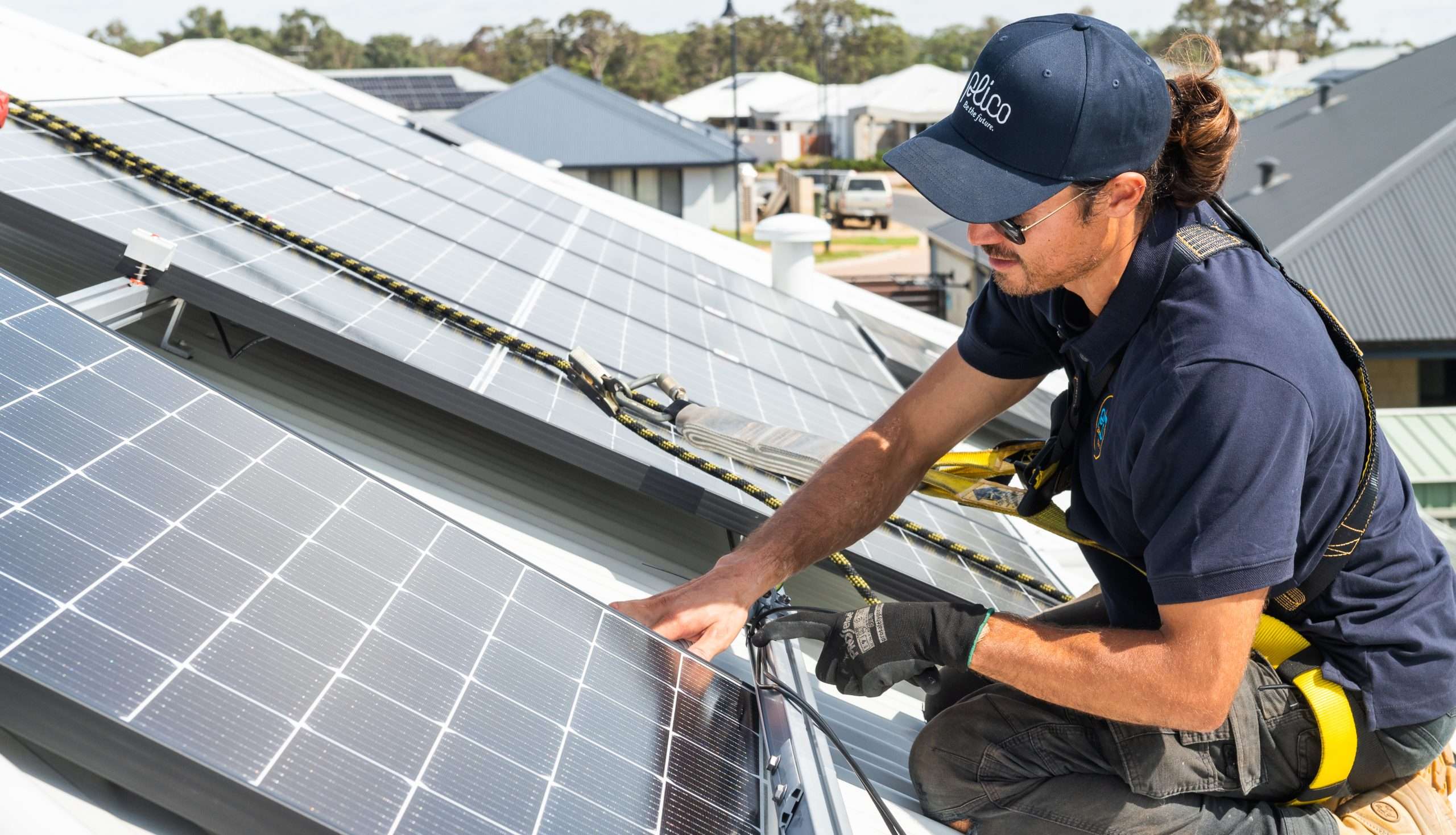
By way of further background, Fremantle Shipping News understands the Pillay family of four has estimated that since installing rooftop solar & a household battery system their electricity cost has reduced from $350-$500 to $50-$90. They installed a household battery about three months ago using the WA state-Federal rebate program. On top of that, with the Virtual Power Plant connection, they hope to earn three times as much per kWh supplied to the grid (min 97c/kWh) than they would pay to buy a kWh (residential anytime consumption is 29c/kWh). They have also replaced their gas hot water system with an electric alternative.
As is well known, WA leads the nation in rooftop solar. Two in five WA households have rooftop solar systems installed. Nationally, it is one in three. Nationally, more than 4.2 million rooftop solar PV systems have been installed across Australia, with more than 170,000 installed so far this year.
Solar energy now generates more than 20 per cent of our electricity, and there is now more household solar capacity in Australia than all the remaining coal-fired power stations across the country.
So, there you go!
By Michael Barker, Editor, Fremantle Shipping News
~ If you’d like to COMMENT on this or any of our stories, don’t hesitate to email our Editor.
~ WHILE YOU’RE HERE –
PLEASE HELP US TO GROW FREMANTLE SHIPPING NEWS
FSN is a reader-supported, volunteer-assisted online magazine all about Fremantle. Thanks for helping to keep FSN keeping on!