Madeleine Cox Reports on the Call from the AI Impact Summit in India for AI to Serve Humanity and Protect Our Planet
Last week in New Delhi, India, technology specialists, politicians and policy makers, scientists, academics and campaigners met at the world’s fourth international summit on the practical impacts of artificial intelligence. This was the first AI Impact Summit of its kind to be held in a Global South country, and follows a series of global AI summits which commenced with the Bletchley Park AI Safety Summit in 2023, the AI Seoul Summit in 2024 and the AI Action Summit in Paris in 2025.
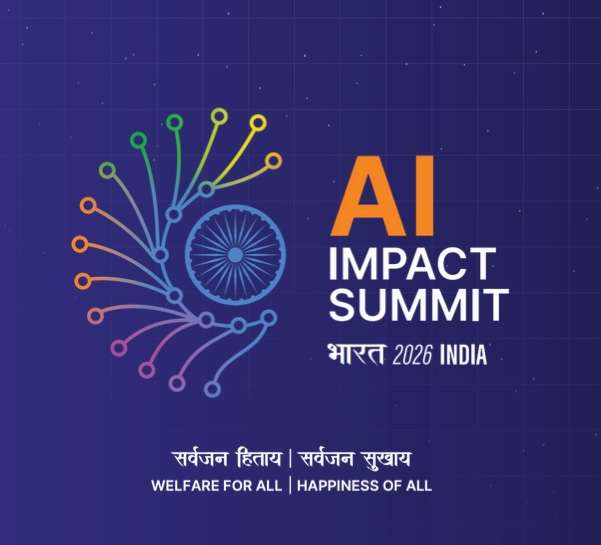
Source: https://impact.indiaai.gov.in/about-summit
Prime Minister of India Narendra Modi said of the India AI Impact Summit: ‘India looks forward to welcoming the world to the AI Impact Summit in February 2026. We have picked the theme of Sarvajana Hitaya, Sarvajana Sukhaya or welfare for all, happiness for all’.
The noble aim of the India AI Impact Summit was to vision the democratisation of the use of AI and technology. The Mantra specified on the summit website is:
‘to chart a path towards a future where the transformative power of AI serves humanity, drives inclusive growth, fosters social development, and promotes people-centric innovations that protect our planet. It seeks to amplify the voice of the Global South, ensuring that technological advancements and opportunities are shared broadly, not concentrated in a few regions.’
The full agenda of the India AI Impact Summit as well as the webinars can be accessed here. Like the Mantra for the summit, the agenda draws on Indian traditions and has been organised around the three ‘Sutras’ of people, planet and progress, and the seven ‘Chakras’ of human capital, inclusion for social empowerment, safe and trusted AI, resilience, innovation and efficiency, science, democratising AI resources and AI for economic growth and social good.

Source: Photo by Solen Feyissa on Unsplash
In the lead up to the India AI Impact Summit, Dario Amodei, the CEO of Anthropic, one of the largest US based AI companies and creator of what aims to be a safe and trustworthy alternative AI, the LLM Claude, wrote an important essay titled ‘The Adolescence of Technology: Confronting and Overcoming the Risks of Powerful AI’. Amodei wrote:
‘But in this current essay, I want to confront the rite of passage itself: to map out the risks that we are about to face and try to begin making a battle plan to defeat them. I believe deeply in our ability to prevail, in humanity’s spirit and its nobility, but we must face the situation squarely and without illusions.‘
Amodei also explicitly says in the essay we are ‘considerably closer to real danger in 2026 than we were in 2023.’
Sam Altman, CEO of Microsoft backed OpenAI which gave the world ChatGPT and rival of Dario Amodei also spoke at the India AI Impact Summit. Of note is that Anthropic was created when Dario Amodei and a crew of other former OpenAI researchers formed it after leaving OpenAI. Also of note is that former CEO of Microsoft Bill Gates pulled out of attending the summit.
Altman called for ‘urgent regulation’ and democratisation of AI as the ‘only fair and safe’ path forward’. Altman also noted that powerful open-source models could potentially be misused: ‘There will be extremely capable biomodels available that could help people create new pathogens,’ he said. These risks meant a ‘society-wide approach’ was needed and that the world may need a body similar to the International Atomic Energy Agency to manage risks associated with advanced AI systems.
Also at the India AI Impact Summit, Google DeepMind co-founder and CEO and UK Government AI Adviser Sir Demis Hassabis called for ‘smart regulation’ for ‘the real risks’ posed by AI.
However, the US continues to support no regulation of AI. The head of the US delegation to the India AI Impact Summit, Michael Kratsios, who is the director of the White House Office of Science and Technology Policy, said: ‘As the Trump administration has now said many times: We totally reject global governance of AI’.
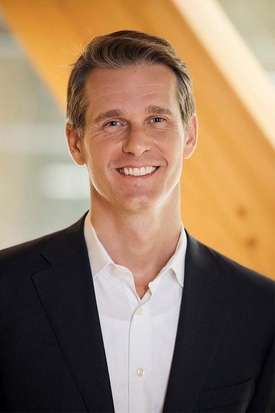
Andrew Charlton, Cabinet Secretary and Assistant Minister for Science, Technology and the Digital Economy. Source: https://www.nswlabor.org.au/andrew_charlton
Australia was represented at the India AI Impact Summit by Dr Andrew Charlton, Assistant Minister for Science, Technology and the Digital Economy. Charlton spoke at the summit emphasising that ‘technology can’t just be solely about growth, productivity, or profits – it has to be about people’, and called for global discussion to create pathways for training, redeployment and safety standards.
Also attending the India AI Impact Summit from Australia was Dr Mahima Kalla from the Centre for Digital Transformation of Health at the University of Melbourne, who took part in an interdisciplinary panel exploring inclusive AI strategies, and how to mitigate unintended harm in the design of AI systems in healthcare.
Independently of the India AI Impact Summit, according to a report in the journal ‘nature’, China wants to lead the world on AI regulation. Yet it is unclear if this will work. According to the New York Times, China’s plan involves organisations and states adhering to an increasingly complex set of rules and this may undermine entrepreneurship and business.
Taken together, it appears the majority of organisations and states, except for the US administration are in support of AI governance and it is clear AI is here to stay. However, the calls for global regulation and safety around AI have been made at each international summit since the first summit held at Bletchley Park in the UK in 2023. China despite it’s expressed desire to lead the world on AI regulation was mostly absent from the India AI Impact Summit. This factor, together with the US’s continued rejection of global AI regulation, means the India AI Impact Summit, notwithstanding its aims, underscored how AI governance continues to lag behind the rapid pace of development, and that global co-ordination remains limited.
All of this still leaves many of us wondering whether humanity will be able to tackle the pace of innovation in AI as well as address the accompanying harms and risks? Will AI be like social media where the harms scale faster than the benefits?
Other issues reported on in the past week around AI and technology highlight other challenges which are beyond the technology space and beyond the agenda of the 2026 AI India summit and include:
- an AI tool is decreasing political polarisation from social media algorithms – look here
- yet AI reinforces existing inequality, including gender inequality – look here
- AI is changing healthcare and it may result in improved patient-centred care – look here and here
- will AI and data centres be able to deliver on their green energy promises? – look here, here and here
- why do technology specialists feel the need to build bunkers? – look here
- Meta Platforms founder and CEO Mark Zuckerberg has testified about youth accounts on Instagram – look here and here
- if Australia wishes to develop its own AI like India and France, copyright reform will be needed – look here
- AI and data centres as well as defence industries and the energy transition are dependent on the supply of critical minerals including copper, silver, nickel, lithium, graphite, cobalt and rare earths. There have been some reports that supply of some critical minerals will soon be unable to meet demand, and that China has acted to safeguard supply for itself. Indeed, China now controls the price of metals worldwide and some see this as ‘an existential threat’. This significantly explains the US’s rush to hoard critical minerals as well as their interest in Greenland and the Ukraine – also look here and here.
All of these challenges highlight how it is time for states to act to prevent unacceptable and internationally destabilising AI risks. The Global Call for AI Red Lines launched during the 80th session of the United Nations General Assembly in September 2025 proposes:
‘A practical next step would be to harmonise the AI red lines that some governments and AI companies have already established, with the aim of reinforcing them through international agreements.’
This global call includes 11 former heads of state and ministers and 15 Nobel Prize and Turing Award, including American economist Joseph Stiglitz, Filipino-American journalist Maria Ressa, Israeli historian and author of ‘Sapiens’ Yuval Noah Harari and Canadian computer scientist Yoshua Benigo.
Readers who wish to dive deeper into AI can also have a look at stories about AI brought to you by Fremantle Shipping News here, here, here, here, and here.
By Madeleine Cox
* Madeleine Cox was raised on a farm on Bindjareb Noongar country and now, together with her New Zealand/Aotearoa husband, lives with their children in Fremantle/Walyalup. She loves exploring places and ideas, and connecting with people and nature. This has compelled Madeleine to start writing independently, after many years work as a corporate and government lawyer, and service on not-for-profit boards in the health and education sectors.
~ For more articles by Madeleine Cox on FSN, look here.
~ If you’d like to COMMENT on this or any of our stories, don’t hesitate to email our Editor.
~ WHILE YOU’RE HERE –
PLEASE HELP US TO GROW FREMANTLE SHIPPING NEWS
FSN is a reader-supported, volunteer-assisted online magazine all about Fremantle. Thanks for helping to keep FSN keeping on!
~ Don’t forget to SUBSCRIBE to receive your free copy of The Weekly Edition of the Shipping News each Friday!