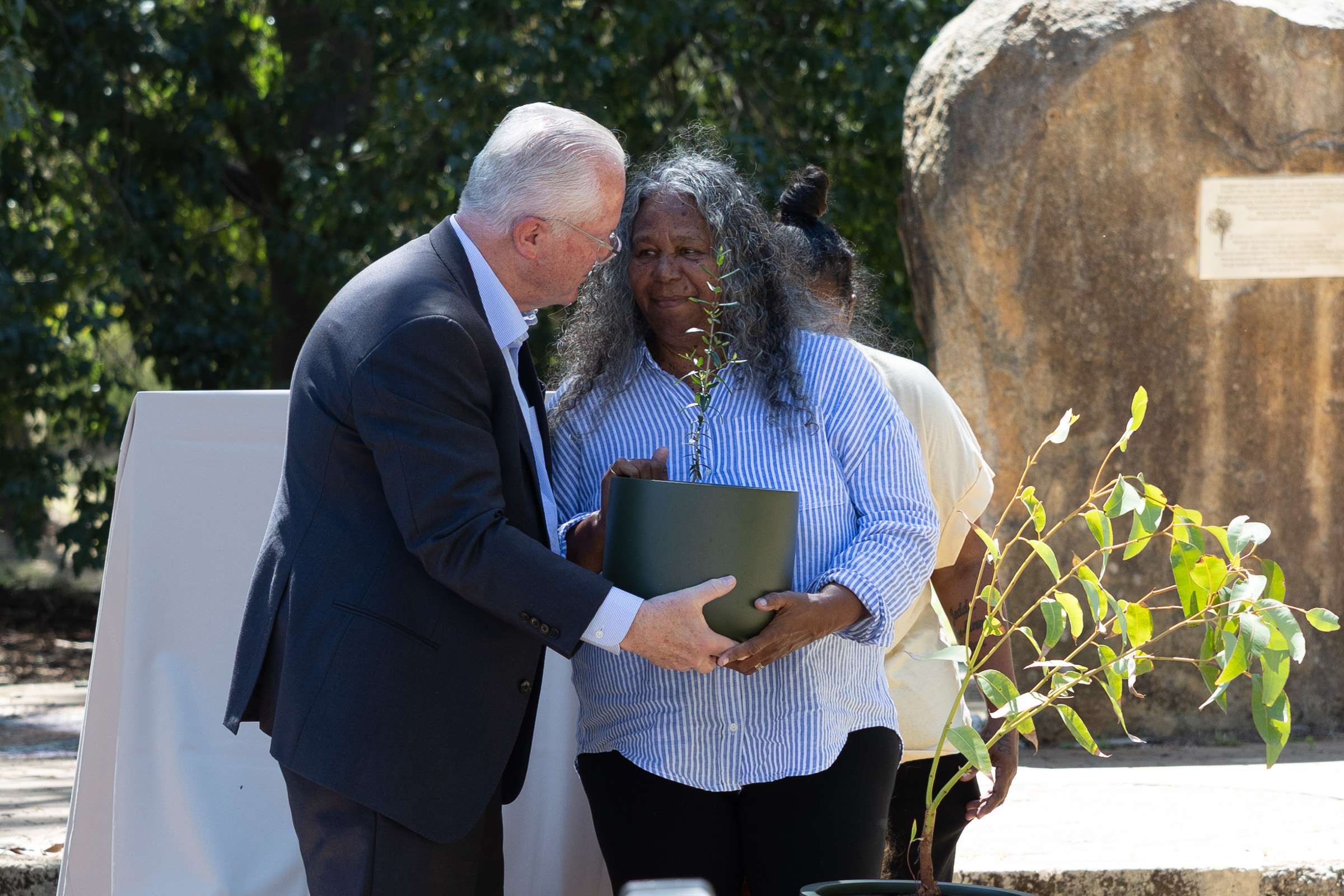
Earlier this week on Tuesday, 28 October 2025, some 100 people or so gathered by the banks of the Murray River a little downstream from Pinjarra. They did so as the east wind blew about the strongest it has felt this Kambarang, and the sun’s rays warmed Boorloo and surrounding Noongar boodja to the hotest it’s been since Makuru.
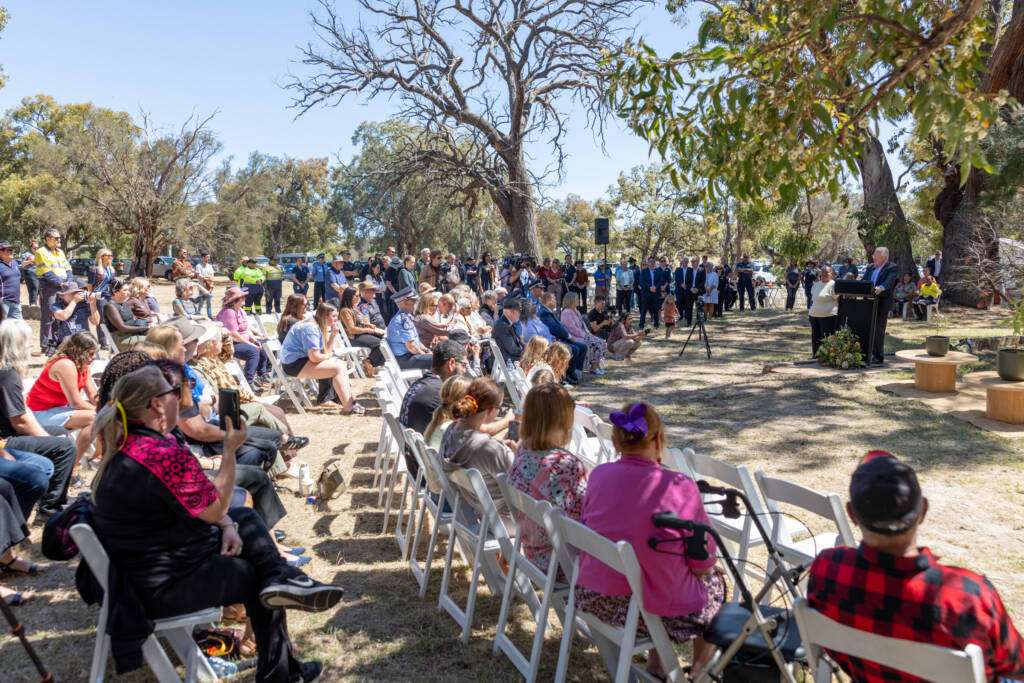
And something significant and historic took place. This day might now be remembered as a crossing point, marking a new season of truth, healing and growth between Aboriginal and non-Aboriginal people.
WARNING: Below, this story contains details some readers may find distressing.
At the invitation of the Bindjareb Noongar people, Western Australian Governor Chris Dawson formally apologised for the actions of WA’s first Governor Sir James Stirling on this day in the year 1834, just 191 years ago.
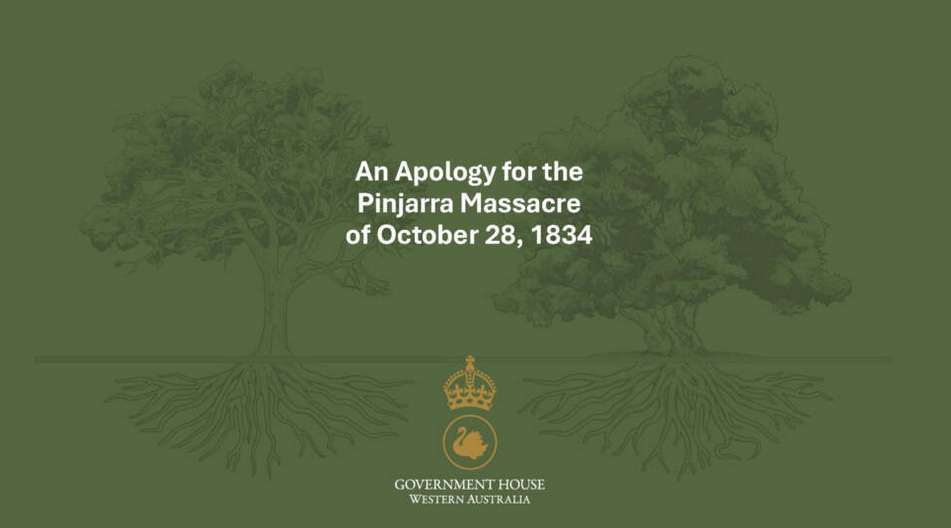
Momentously, Governor Dawson acknowledged the truth of what took place and the apology sets out full details of what occurred. This truth is informed by newly recovered historical documents found by researchers helping Governor Dawson prepare for the apology, including the only known statement made to colonial authorities by Aboriginal witnesses to the planned devastating attack on Bindjareb people.
Until now, earlier accounts of the event and the complex sequence of events that lead up to it were primarily based on the account contained in the Perth Gazette for 1 November 1834 which referred to the event as an ‘encounter’, as well as Governor Stirling’s report of the same date for Lord Glenelg, Parliamentary Secretary for the Colonies which described a ‘skirmish’, and the diary of George Fletcher Moore who became Advocate General in 1834.
Two days after the event, Moore wrote in his diary:
‘A strange rumour has reached us here that the party who went to the Murray River have fallen in with the [Bindjareb people] there and killed 35 of them, Captain Ellis being slightly wounded, and a soldier grazed by a spear. This is important if true.’
The ‘party’ consisted of 25 people and included Governor James Stirling, Surveyor-General John Septimus Roe and Mr Thomas Peel, whose names we frequently encounter in and beyond Fremantle. According to the Perth Gazette, ‘about 70’ [Bindjareb people] were observed as Stirling and his party approached.
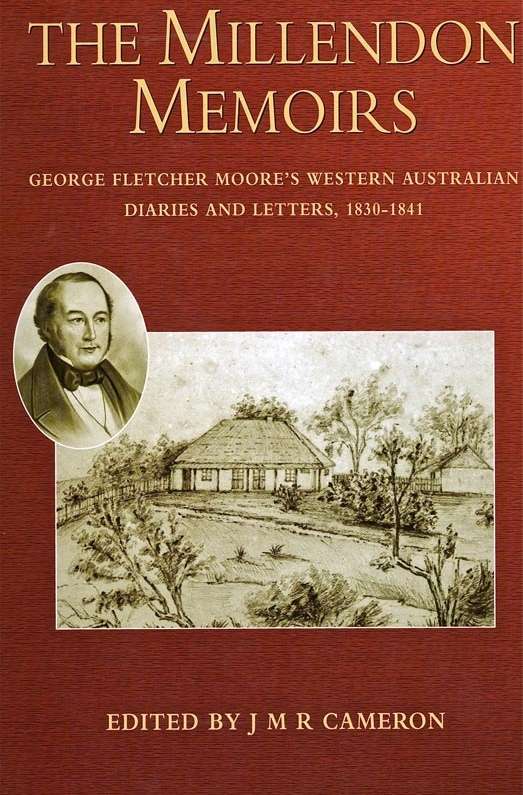
Just four days after the event, Moore wrote in his diary of the account he got from Governor Stirling of ‘the battle of Pinjarra’, and according to ‘The Millendon Memoirs’ edited by J M R Cameron, this was the first recorded use of the term ‘battle’ to describe the confrontation.
These words ‘encounter’, ‘skirmish’, ‘battle’ all downplay the impact and significance of what occurred. Even so, the accounts describe at least 25 to 30 people being left dead on the field and in the river, and it probable that even more men were killed in the river, and that several children were killed and one woman injured.
Importantly, in this week’s apology Governor Dawson said:
‘Governor Stirling came to this place in 1834 with an intent to punish the Bindjareb Noongar people.’
He added:
‘Governor Stirling reported killing 15 Aboriginal people, with the death of one of his party, Mounted Police Superintendent Ellis. Other estimates stated a much higher casualty number of the Bindjareb Noongar people were killed. The precise number of deaths of the Aboriginal population are now impossible to determine.’
At the gathering, Governor Dawson described what occurred on Bindjareb boodja on 28 October 1834 as a ‘mass execution’. He said:
‘The Bindjareb Noongar people killed in this massacre had not been subject of any judicial or fair trial process that warranted their mass execution.’
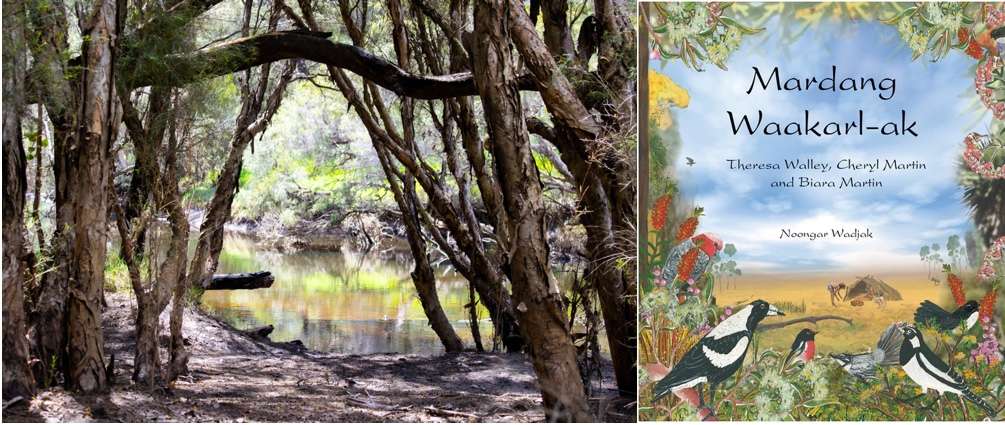
For this writer who once called Bindjareb boodja home, hearing of this truth and apology has taken my breath away and I am deeply moved. Throughout my childhood growing up in the Shire of Murray in the 1970’s, the details of the then deceptively called ‘Battle of Pinjarra’ always felt like a dark hidden secret which could never be broached. There was a terrible joke you sometimes heard, which I won’t repeat yet am forever grateful for it being made light of in the brilliant improvised play Bindjareb Pinjarra.

I noticed Aboriginal people were scarce in and around Pinjarra and Mandurah and I wondered why. For the rare few I encountered, it seemed life was tough. I have long felt discomfort about my life and the opportunities I have had, and over time have become increasingly aware of the long term impact of this dreadful wrong perpetrated on the Bindjareb people, and the devastating impact on their language, culture and knowledge.
In January 2023, I was fortunate to talk with a Noongar woman whilst my children and I wove totems with colourful wool at Boola Bardip. She bravely told me how so many Bindjareb people were killed that terrible day, that almost every form of food at hand would have been taboo and that this would have led to hunger.
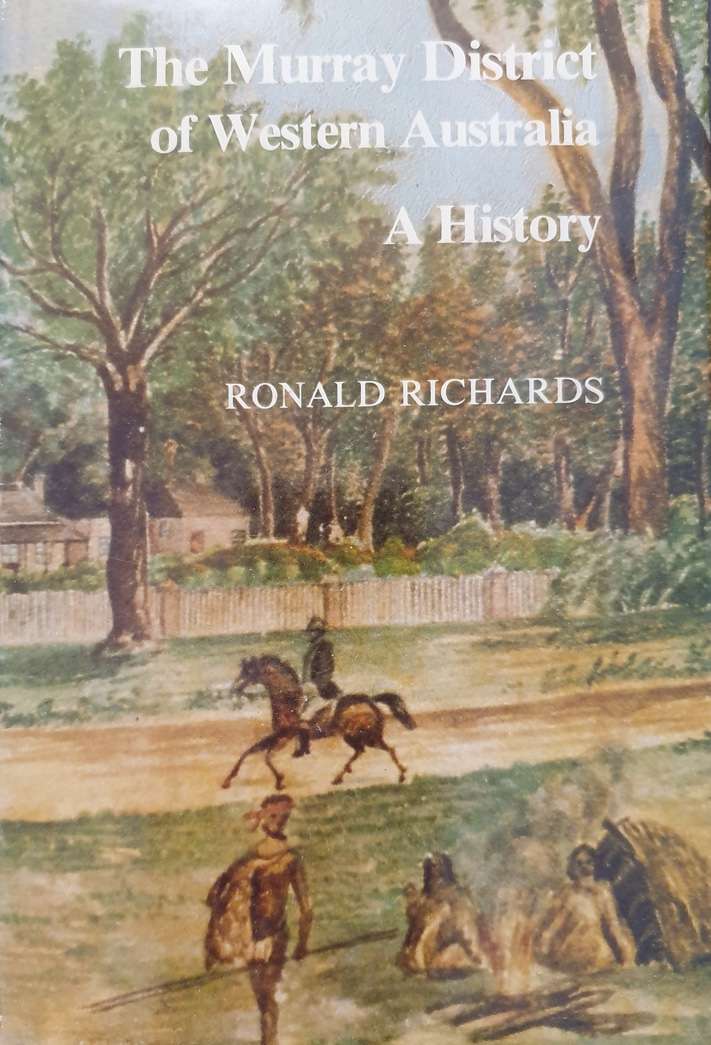
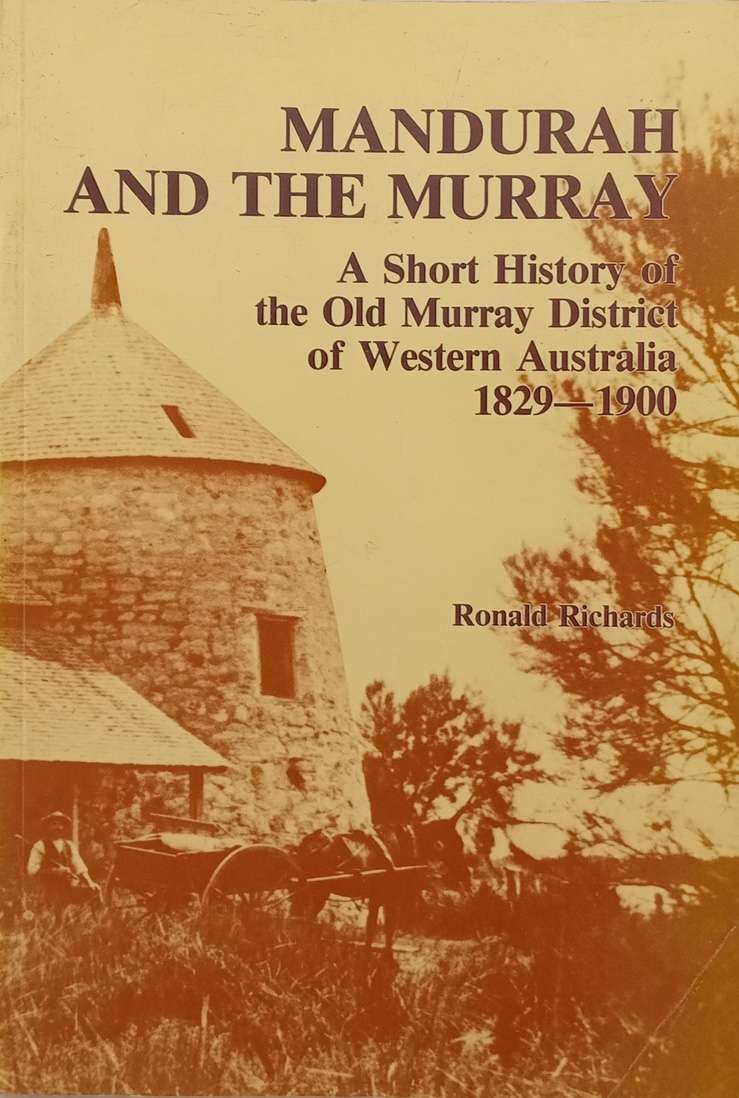
This set me on a journey into the history books and in Ronald Richard’s ‘Mandurah and the Murray – A Short History of the Old Murray District of Western Australia 1829-1900’ published in 1980 I found this:
‘The [Bindjareb people] were thrown into considerable disarray by the events described, not only because of the high death toll, but also due to the fact that there were severe social and religious ramifications as well. With so many dead, their food totem system would have been difficult to uphold. Practically every form of food at hand must have been taboo for a year to relatives. In addition, the [Bindjareb people’s] intricate arrangement of rites, responsibilities and duties, from one person to his fellow tribesmen, was thrown into chaos.’
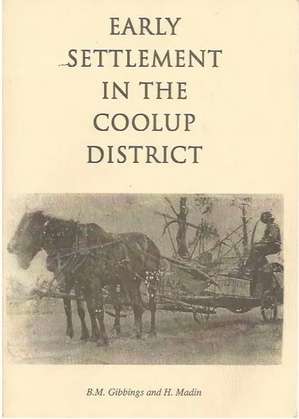
I also took time to learn some Noongar words and to seek out the meaning behind the place names in and around Bindjareb. Bindjareb means ‘place of swamp’ which describes the country in and around Pinjarra so well. And from ‘Early Settlement in the Coolup District’ by B M Gibbings and H Madin published in 2001 based on work completed in around 1960 I learnt:
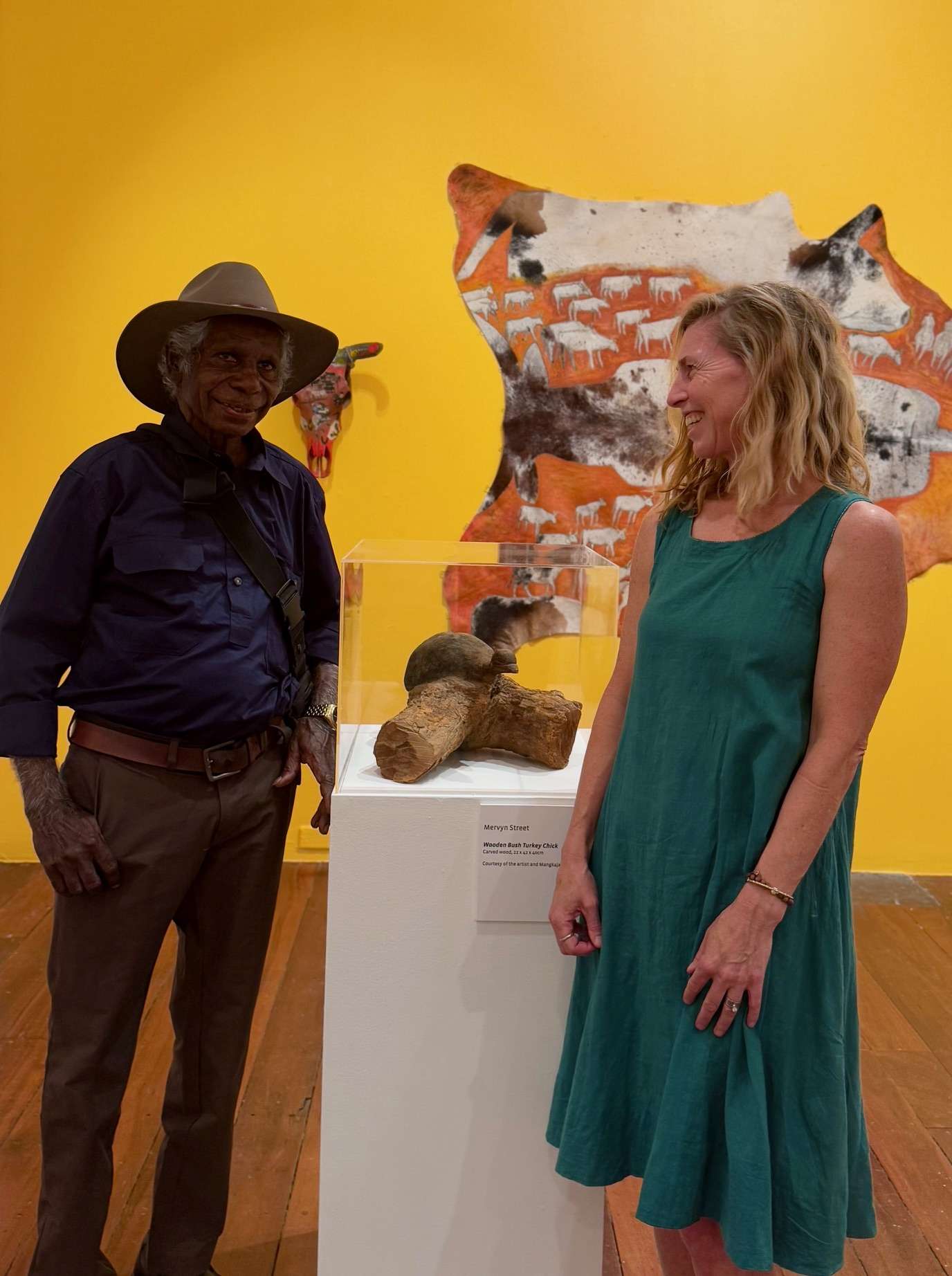
‘Coolup, once Koolinyinup or Koolinup, place of the wild turkey. Even to consider the Aboriginal significance of the name carries us into a strange and very different past. Roll away the mists of more than a century past and see, if you can, the densely wooded hills unscarred by axe or fire; away to the west the peppermint and tuart forests with the wide salty expanse of estuary and lakes, where the chatter and splash of wild fowl has never, since the beginning of time, been harshly interrupted by gunfire. And in between the hills and the salt waters the plains, swampy and dry, sandy and fertile, the haunt of the grey kangaroo, the nomad aborigine and the mighty wide-winged wild turkey. He is gone form us now, the wild turkey, gone with proud echoing name that stamped this place as his very own.’
The loss of the wild turkey or in Noongar, ‘koorli’, from it’s favoured habitat the place of swamp is to me a totemic representation of what we all have lost from our collective past.
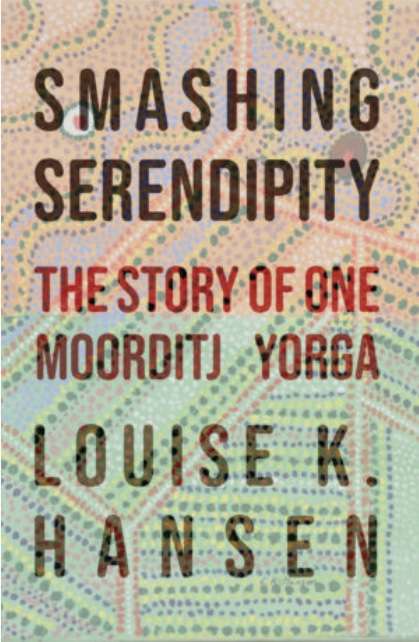
More recently, I came to understand more of what we collectively have lost as well as what life was like for Bindjareb people growing up in Pinjarra thanks to the inspiring and courageous memoir ‘Smashing Serendipity’ by Louise K. Hansen and published by Fremantle Press in 2022.
Until yesterday, no formal apology had been issued to the Bindjareb people for what occurred to them in 1834. For this Western Australian, it is long overdue and it brings with it hope for healing and growth and a bright future.
Here is the Governor’s full apology.
The Governor concluded his address and apology by saying –
‘My call to all Western Australians, is that we speak the TRUTH. That we do as much as we can to assist in the HEALING of our community between all people.
‘That we GROW in unison to make us stronger, resilient and be a land and a people of FAITH, HOPE and LOVE for our present and our future generations. ‘
To the Governor of Western Australia: I am listening. To the Bindjareb people and all people: I will well and honestly speak the truth to the best of my knowledge and ability, and I will do as much as I can to assist in the healing of our community in relation to all people.
By Madeleine Cox
* Madeleine Cox was raised on a farm on Bindjareb Noongar country and now, together with her New Zealand/Aotearoa husband, lives with their children in Fremantle/Walyalup. She loves exploring places and ideas, and connecting with people and nature. This has prompted Madeleine to start writing independently, after many years work as a corporate and government lawyer, and service on not-for-profit boards in the health and education sectors.
~ For more articles by Madeleine Cox on FSN, look here.
~ If you’d like to COMMENT on this or any of our stories, don’t hesitate to email our Editor.
~ WHILE YOU’RE HERE –
PLEASE HELP US TO GROW FREMANTLE SHIPPING NEWS
FSN is a reader-supported, volunteer-assisted online magazine all about Fremantle. Thanks for helping to keep FSN keeping on!
~ And SUBSCRIBE HERE to receive your FREE copy of THE WEEKLY EDITION of Fremantle Shipping News each Friday