SEEING RED is an irregular column on Fremantle Shipping News by Barry Healy*. In this piece, Barry considers the effects of recently announced US imposts on China ships arriving in US ports.
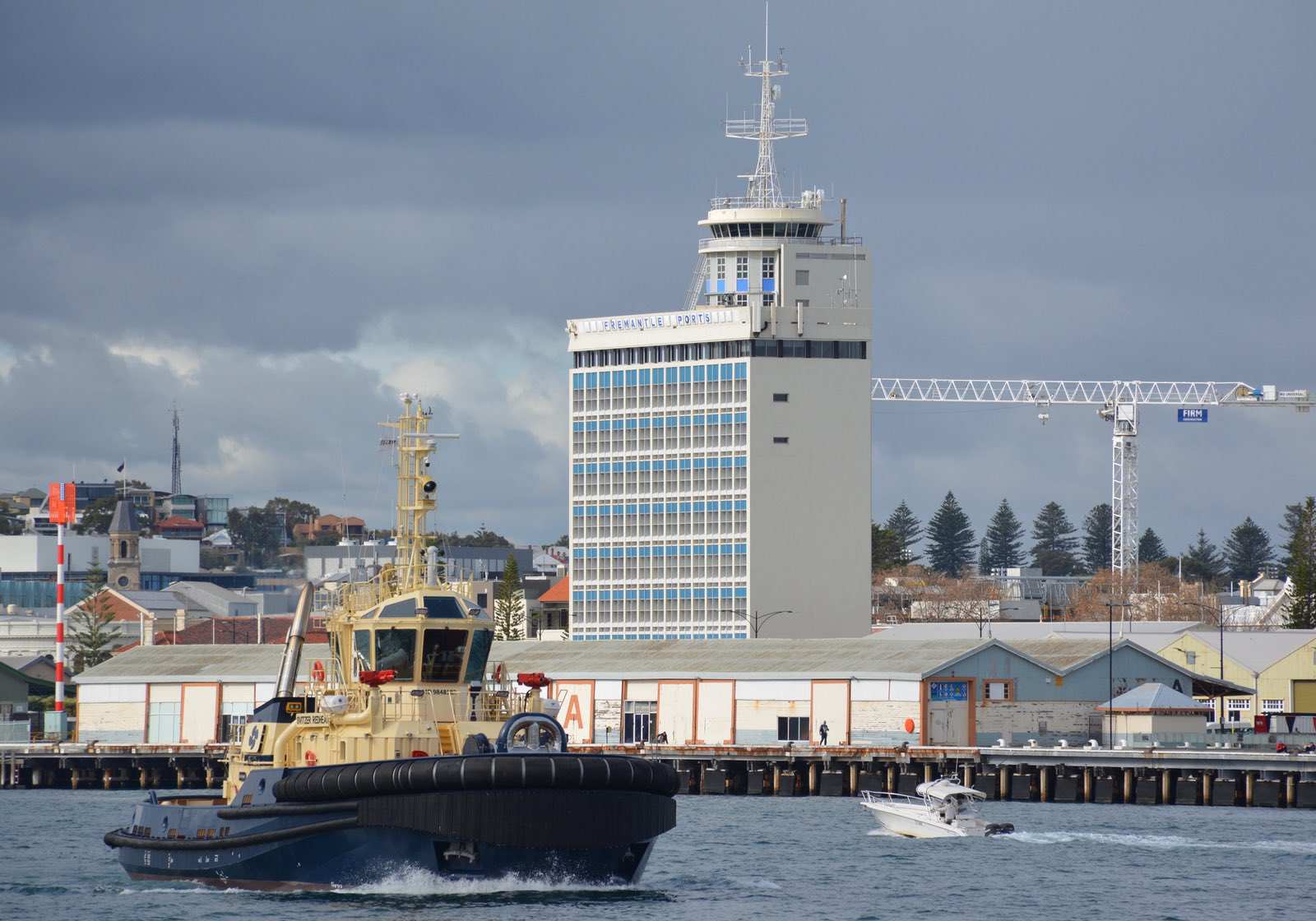
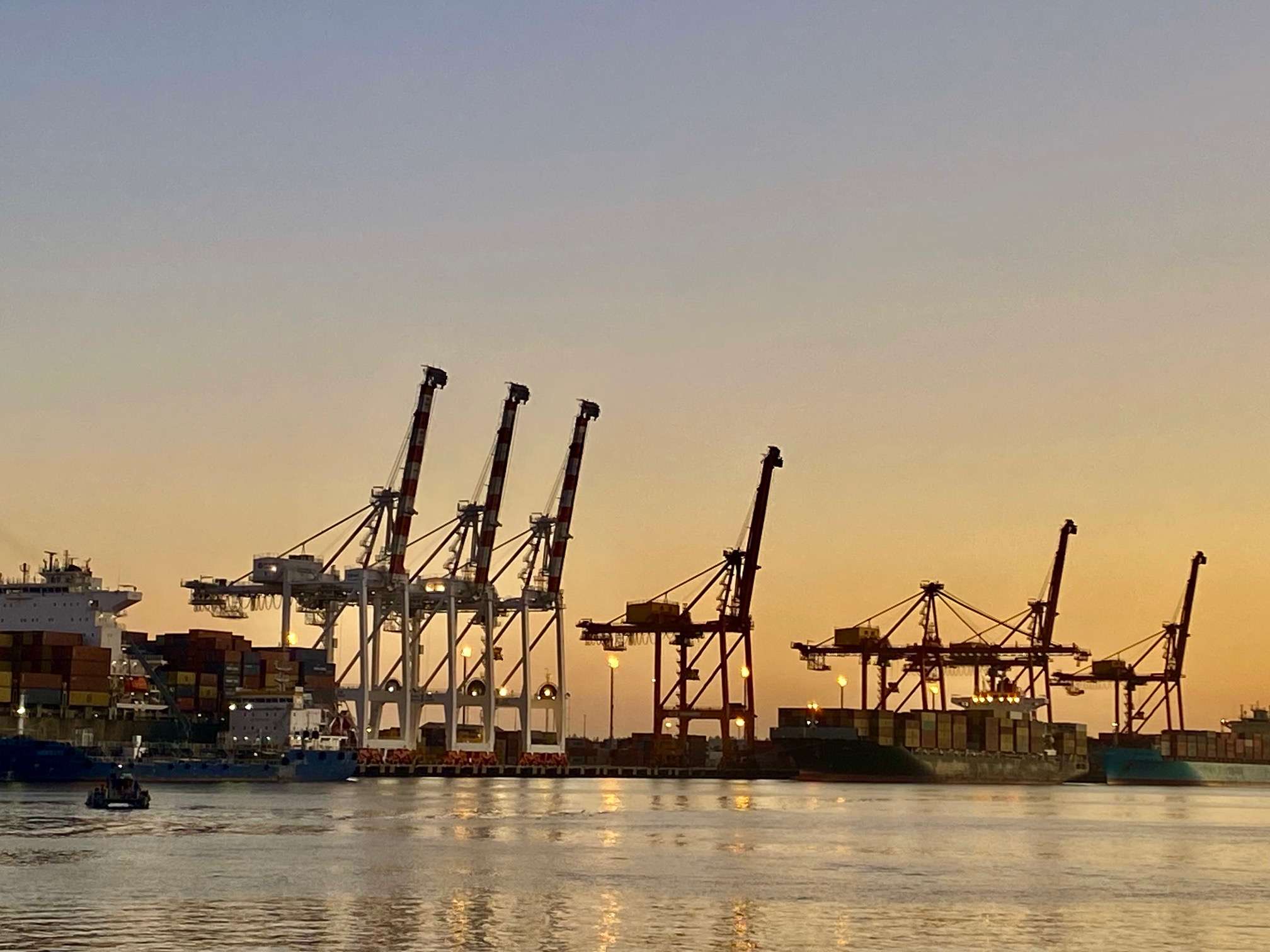
Glance across the wharfs of Fremantle when the big cranes are operating and consider just how many COSCO ships and containers you see. Bear that in mind as you consider what Donald Trump is doing under the declared aim of reconstructing the US ship building industry.
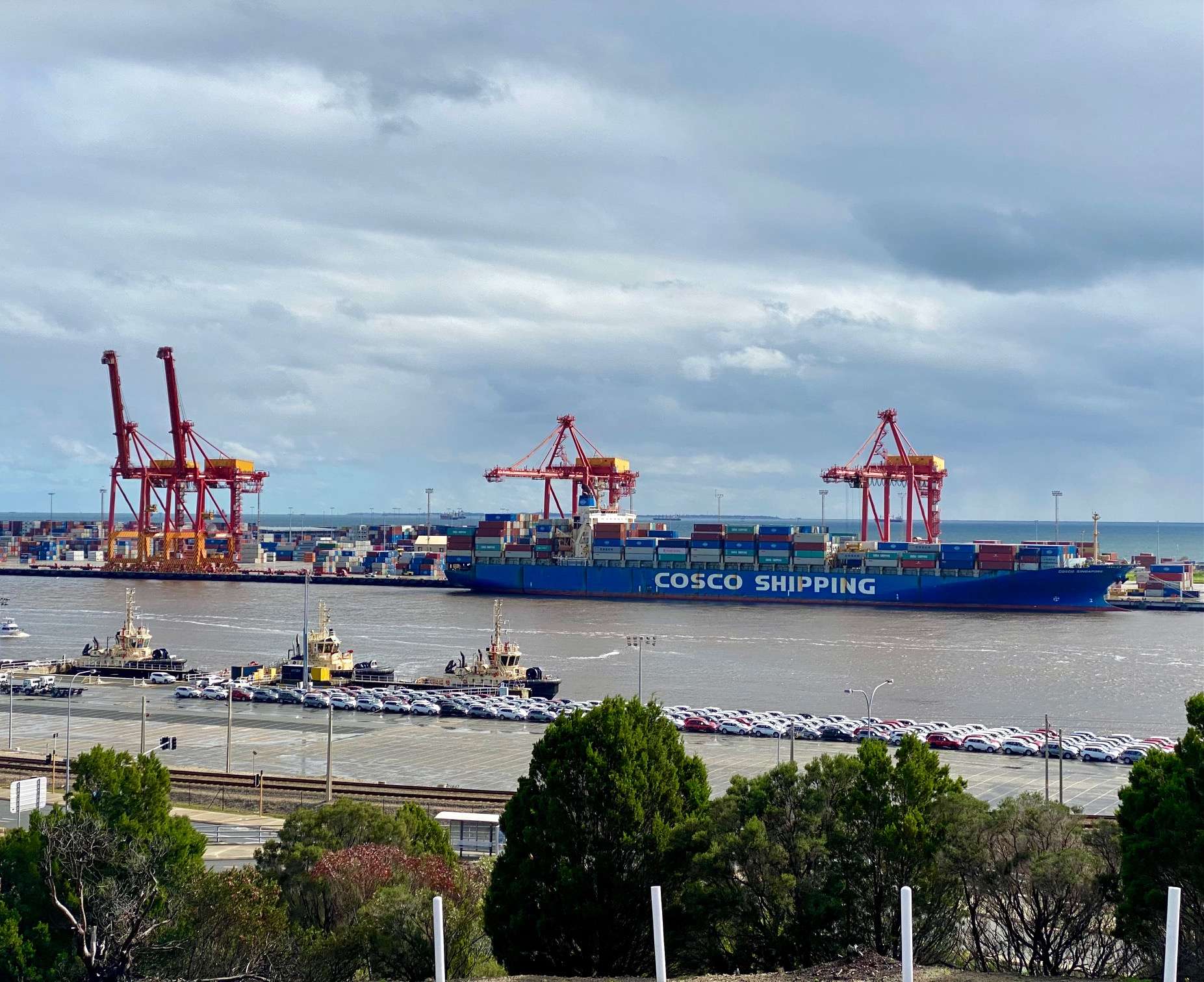
Credit Fremantle Shipping News
In an astonishing display of a nation cutting off its nose to spite its face, the Trump administration has started punishing China for shipping goods to the USA with a set of fees to be charged at US ports. These port charges are on top of his infamous tariffs and they will escalate in coming years.
These things will affect Australia. In years to come, as you wonder at the price of an imported goods, no matter the source country, think of what Donald Trump has done for you.
At US ports as of 14 October, in addition to normal port charges extra imposed costs are $50 per ton for Chinese operated ships, $18 per ton for ships that are built in China but operated by others and $120 per shipping container brought in on those Chinese-built ships. By 2028 these fees will rise to $140 per ton for Chinese operated ships, $33 per ton for ships that are built in China and $250 per shipping container brought in on Chinese-built ships.
For the targeted shipping companies that can add up to over a million dollars for each port visit, and often freighters will visit more than one US port. The Nikkei Asia website says that HSBC bankers “estimate COSCO and its units could face total port fee bills of more than $2 billion next year.” It is inevitable that all these costs, estimated at $30 billion a year will ultimately be passed on to US consumers.
The port fees are forcing shipping companies to plan their runs to minimise their Chinese-built ships going to US ports.
Trump believes this will induce shipping companies to start building cargo vessels in the USA, where the ship building industry effectively died years ago. That was because the Wall Street neo-liberal whiz kids realised that they could make a killing investing in ships built and operated outside of the USA in “low cost” countries. They killed ship building in the USA.
In 1950, USA flagged ships carried over half the world’s cargo. Now they carry a half of a percent.
It is inconceivable that ship building will return to the USA. China builds ships faster, cheaper and better than anywhere else and the order book for vessels is rising despite Trump’s port fees.
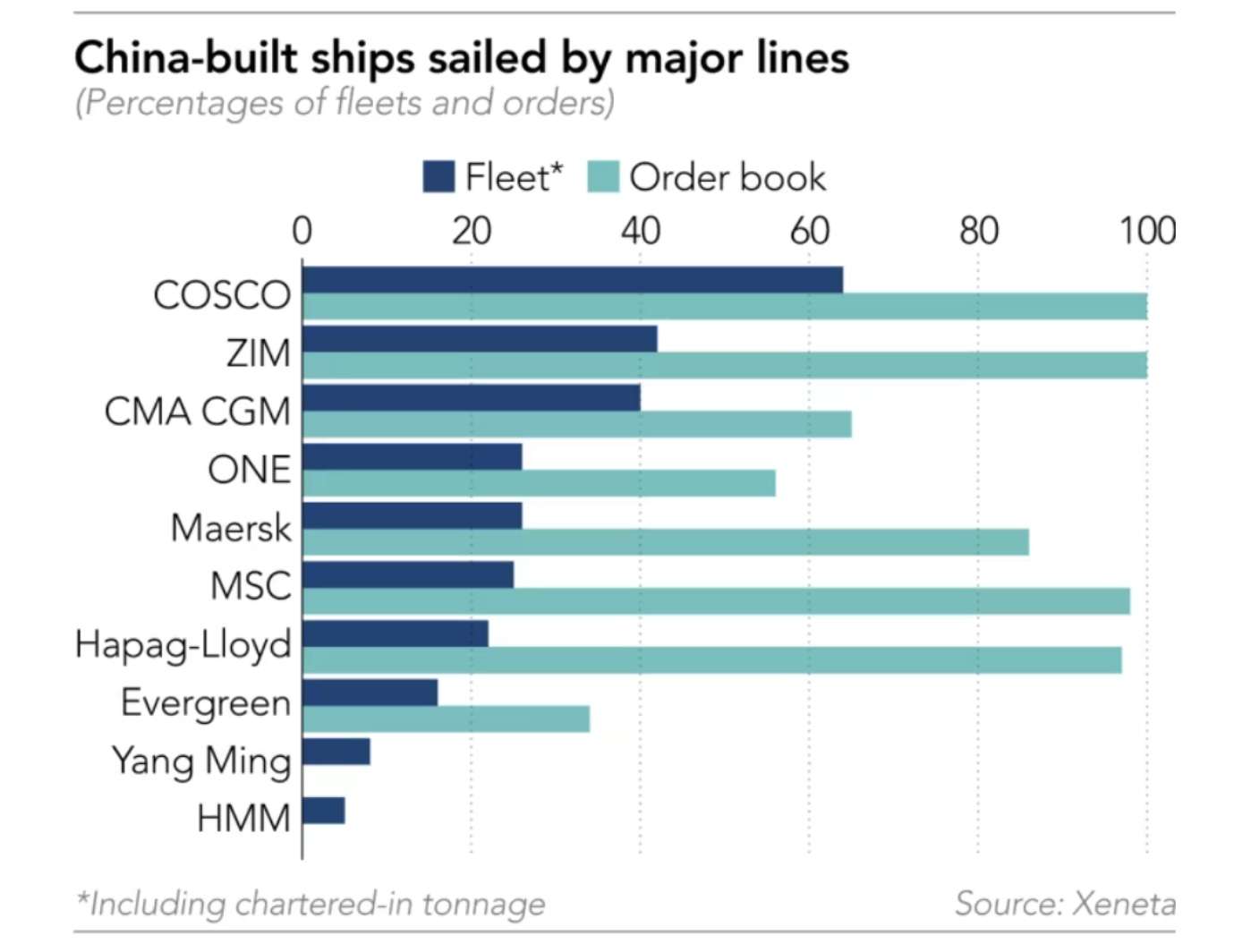
Graph: Nikkei Asia
How is China responding to Trump’s fees? By demonstrating US President Theodore Roosevelt’s dictum that the essence of diplomacy is to “speak softly and carry a big stick.”
China has announced measures that avoid even mentioning the USA. Chinese officials now have wide discretion to impose fees on ships coming to Chinese ports, based on ownership. What ownership will attract fees? The wording is so ambiguous that shipping companies are wondering what it could mean for them.
For example, Global Ship Leasing is an American company headquartered in London. Over half the company’s shares are owned by major US institutions. The Greece-based Star Bulk Carriers carries a lot of cargo in and out of China. Star Bulk also has a lot of ships on order from Chinese shipyards. But the company’s shares are traded in the United States and almost all its major stockholders are American investment companies.
How might those two companies fare once they tie up at a Chinese port? US pension funds in particular like these companies. How might US workers respond if they see their pension funds dwindle at the same time as their cost of living rises due to Trump’s trade war?
Nobody knows if or how Chinese officials might mirror Trump’s fees based on the ownership model of a particular company. That is the opacity that is keeping shipping company bosses awake at night. And they have more to worry about because the Chinese regulations are worded such that they might be applied in any Chinese-owned port.
COSCO, for example is not just a shipping company; they also own and operate ports. Internationally, they have 39 ports and 379 shipping berths. COSCO is negotiating to buy more, including two Panamanian ports, one at each end of the Panama Canal.
You can see the complexity of all this. Major shipping companies going to the USA will be trying to delicately balance the costs of using Chinese flagged ships, Chinese-owned ships and Chinese-built ships, dividing up cargoes and managing the logistics. And they might have a similar problem when they go to China, or to a Chinese-owned port anywhere in the world. It is a nightmare made in the USA.
All this will drive up the cost of world shipping, including for Australia, which is massively involved in world trade. Under the AUKUS agreement we are squandering billions of dollars on nuclear submarines supposedly to protect our trade routes with China.
When will Australia face up to the question of exactly who is interfering with those trade routes?
Credit Fremantle Shipping News
By Barry Healy
* Barry Healy is a life-long Marxist who first came to Perth in the 1970s to establish the Resistance young socialist group. He was a founder of the Green Left and currently edits the Culture section of the Red Spark website.
~ Here’s our story on COSCO Shipping from 2020
~ If you’d like to COMMENT on this or any of our stories, don’t hesitate to email our Editor.
~ WHILE YOU’RE HERE –
PLEASE HELP US TO GROW FREMANTLE SHIPPING NEWS
FSN is a reader-supported, volunteer-assisted online magazine all about Fremantle. Thanks for helping to keep FSN keeping on!