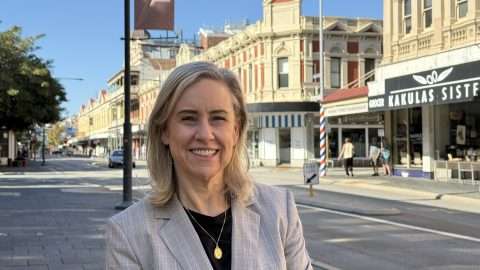
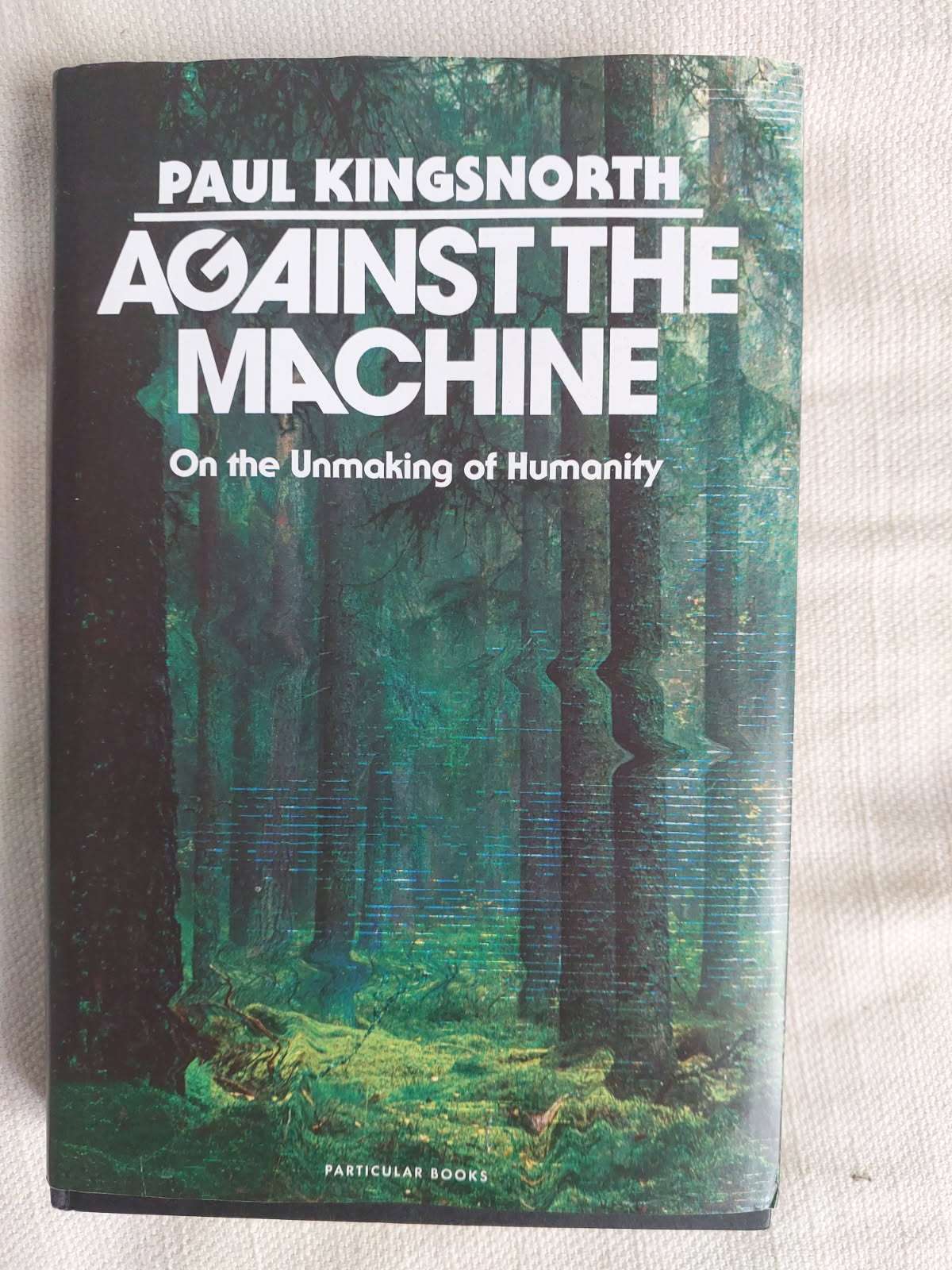
A few months ago, our regular contributing thinker Bruce Menzies* wrote what he describes as a ‘meandering article’ that dealt, in part, with Paul Kingsnorth’s book, Against the Machine. In retrospect, Bruce thinks it may have served readers better had there been more of Kingsnorth’s erudition, and less of his meanders. Given Kingsnorth’s book is, Bruce says, ‘a brilliant book, dealing with the dark matter of our times’, he is now wanting to have another shot at conveying its scope, with liberal use of the author’s words. Here’s Bruce’s next shot.
Publication took place last year – a decade after Kingsnorth, an award-winning novelist, relocated from London to the west of Ireland. Literally and creatively, his journey involved putting down new roots. As he describes it, dwelling in and drawing from the world of imagination comes with a price:
‘Meanwhile, out in what is fondly called ‘the real world’ by people who often don’t know very much about reality, you are living in a metastasising machine which is closing in around you, polluting your skies and your woods and your past and your imagination. If you have the kind of sensibility which prefers Lothlorien to Isengard, this means that you are a character in a tragedy rather than a heroic epic. Most of the things you like are fading away. The great forests and the stories made in and by them. The strange cultures spanning centuries of time. The little pubs and the curious uninhabited places. The thrumming temples and dark marshlands and crooked villages and folk tales and conviviality and spontaneous song and old houses which might have witches in them. The possibility of dragons. The empty beaches and wild hilltops, the chance of getting lost in the rain forever or discovering something that was never on any map. A world without maps, a world without engines.’
Kingsnorth, with runs on the board as an environmental activist, goes on to expand:
‘This world, you can see, is on the way out, if it is not already long gone. The one that is manifesting to replace it is a left-brain paradise, all straight lines and concrete car parks where the corn exchange used to be. The future is STEM and chatbots and cashless parking meters and economic growth and asteroid mining forever and ever. There is no arguing with it. You can feel the great craters that it makes in the world, you can feel what is being tarmacked and neatened and rationalised into oblivion, and the depth of what is leaving, but you cannot explain or justify it in the terms which are now the terms we live by. You just know that something is wrong. Everybody tells you that you feel this because you are infected with something called ‘nostalgia’, or that you picked up a dose of ‘Luddism’ or ‘Romanticism’ at a party or in a doctor’s waiting room. Basically, there is something wrong with you. You don’t understand Progress, which is always and everywhere a Good Thing.
Perhaps alluding to those like Stephen Pinker who like to point out humans live longer, are better off materially, and tend not to live in caves, Kingsnorth returns serve: ‘You can feel something going on that is not a good thing, and it doesn’t matter how many lies, damned lies or statistics are produced to prove otherwise. You can feel this something enveloping you.’
Staring this in the face, motivates Kingsnorth. In Australian parlance, he goes bush with his family – not exactly living off-grid but, in Thomas Hardy language, ‘far from the madding crowd’. The wild Irish countryside is a sanctuary. He is restored, and he writes:
‘I’m older now, married with children. My wife and I fled our urban lives in England more than a decade ago, bought a small house on a bit of land in Ireland, threw away our TV, and started growing food and homeschooling our children, all of it in an attempt, again, to fend off the excesses of the Machine. I kept writing, too, to understand it. This book is an attempt—a final attempt, I hope—to circumscribe this thing with words.’
My guess is Kingsnorth may be premature. His writing is both potent and lyrical. His account so instructive and heartfelt. For my money, it’s the power of the pen, writ large. It would not surprise me if he has more to say, as the message he delivers is more likely to influence others, than taking to the streets. It’s the kind of informed activism that speaks to me, and I’m sure will speak to many readers.
Yet I have a problem. There is so much in the book. A summary feels trite. Even cherry-picking from the many chapters will come across as partial. But I will draw breath and give it a go, with the caveat that much will be left out.

Credit Jesse Bowser for Unsplash
One story begins in a garden, where we eat the fruit and gain knowledge. We are shamed by our nakedness and fall out of the garden forever. As Kingsnorth sums up: ‘We chose knowledge over communion; we chose power over humility.’ This results in ‘the Western deviation’. (Although other foundation stories among the world’s religions echo a similar dynamic.)
Years later, another story arises. The Creator sends his offspring to put the ship right. A new religion – a new sacred story – is born. For many, it provides both meaning and hope. But it also spawns certainty and righteousness. Woe betide those who do not fall into line.
Then, in the West, we come to the Enlightenment. But delightful concepts of Liberty, Equality and Fraternity don’t equate with human behaviour. Instead, we get Robespierre, Stalin and Hitler. In Kingsnorth’s words: ‘This has been the terrible irony of the age of reason’.
Whither the way forward?
Before venturing into the future, Kingsnorth looks over his shoulder. There is no such thing as a perfect society, he says, and ‘anyone who tries to build one will either go mad or become a tyrant.’ And then he delivers his own caveat, declaring that while human cultures have been flawed, those that last have been rooted. (And by ‘rooted’ he is not talking Aussie slang!)
Drawing from Simone Weil’s book, The Need for Roots, written during the Second World War, Kingsnorth talks about transforming the meaning attached to ‘greatness’. Though Hitler and Stalin have been dispatched to the dustbins of history, ‘our society has attached a meaning to greatness that is not as far away from Hitler’s as it would like to believe, despite our cant about democracy and freedom. Our idols today are economic conquest, unending growth built on turning all life into resources for human consumption, scientism disguised as object of enquiry, manic forward motion, and the same old quest for perfectibility.’
This theme echoes throughout the book. Kingsnorth is not the first and not the last commentator to rail against modernity. The global economy ‘demolishes borders and boundaries, traditions and cultures, languages and ways of seeing wherever it goes.’ Record numbers of people are literally uprooted. Most of us now live in megacities, cut off from nature……‘our culture is not in danger of dying; it is already dead, and we are in denial. This, now, is the reality we have to wrestle with – and transcend.’
Kingsnorth then takes us on a historical tour into the past, drawing from other writers and observers. I was attracted to his remarks about the enclosure process in early modern England, a process ‘intimately linked with the rise and subsequent global dominance of modern capitalism.’ Drawn, because my family history research brought forth the movement of my Scottish ancestors from small communities in the Highlands to the jute factories and tenement slums of Dundee. No wonder some were motivated to board a sailing ship and endure a long and often dangerous voyage to the Antipodes.
Against the Machine is also a treatise upon power and its misuse. Wealth and status beget power just as the exercise of power begets wealth and status. Quoting from the American academic, Lewis Mumford:
‘Never before has the ‘citadel’ exercised such atrocious power over the rest of the human race. Over the greater part of history, the village and the countryside remained a constant reservoir of fresh life, constrained indeed by the ancestral patterns of behaviour that had helped make man human, but with a sense of both human limitations and human possibilities. No matter what the errors and aberrations of the rulers of the city, they were still correctable. Even if whole urban populations were destroyed, more than nine tenths of the human race still remained outside the circle of destruction. Today this factor of safety has gone: the metropolitan explosion has carried both the ideological and chemical poisons of the metropolis to every part of the earth; and the final damage may be irretrievable.’
Readers may blanch at Mumford’s conclusions, written sixty years ago. Surely there is hope? Surely, we are clever enough to alter course, even put the Machine into reverse?
Well, unless you are a super, starry-eyed optimist, the signs ain’t good.
But let me flip to the final chapter in Kingsnorth’s manifesto. Again, quoting Simone Weil: ‘To be rooted is perhaps the most important and least recognised need of the human soul. It is one of the hardest to define. A human being has roots by virtue of his real, active and natural participation in the life of the community which preserves in giving shape certain particular treasures of the past and certain particular expectations of the future.’
These are multiple roots and have been largely trashed, perhaps less so in indigenous communities which still struggle to insulate themselves from global infection. We have lost touch with these roots, says Kingsnorth – our connection with people, place, prayer, and the past.
Once upon a time, when I was a young fella, I intuited that the web of life was untangling. But my version of rebellion was the dream-dance of a privileged individual. I’d run a mile from my mild Christian upbringing and sought salvation in the East. The dance emptied me out and held me in a communal interlude that nourished and then destroyed. But there were lessons to be absorbed, and the dance continues.
Those who read these words may reflect on their own dance within the life we’ve been given. Kingsnorth has written a brilliant account, a powerful cri de coeur. Like some others who articulate what they see and feel about what Nate Hagens calls the human predicament, he does not offer prescriptions. Yet, in the closing pages of his book, he lays out where he is at:
‘I have come to the end now, and here is what I think: that the age of the machine is not after all a hopeless time. Actually, it is the time we were born for. We can’t leave it, so we have to fully inhabit it. We have to understand it, challenge it, resist it, subvert it, walk through it on towards something better. If we can see what it is, we have a duty to speak the words to those who do not yet see, all the while struggling to remain human.’
This resonates with me. There are no easy answers. There is no simple timeframe. Yet there is opportunity. It boils down to choice. It boils down to how we think about the world and what we value. And it may well boil down to what we are prepared to give up, those of us whose material needs have been well satisfied. For my money, in whatever years I’ve got left, it’s worth paying attention, communicating and connecting with others as best I can – and trying to walk this uncertain talk. Therein lies both meaning and possibility.
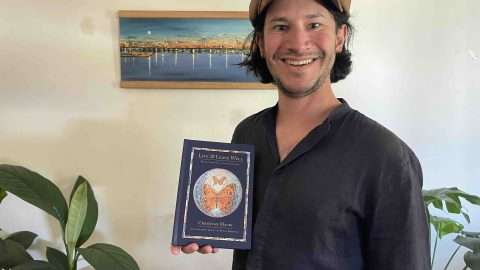
Against the Machine can be bought at New Edition in Fremantle.
Paul Kingsnorth has appeared in many podcasts and talks. Here is the link to his conversation with Iain McGilchrist
*By Bruce Menzies. Based in Fremantle, most of the time, Bruce Menzies is the author of three novels, a family history, and a recent memoir, as well as be8ng a regular contributor to FSN. Details at BruceJamesMenzies.com If you’d like to read more of Bruce Menzies’ work on Fremantle Shipping News or listen to a fascinating podcast interview with Bruce, look here.
~ If you’d like to COMMENT on this or any of our stories, don’t hesitate to email our Editor.
~ WHILE YOU’RE HERE –
PLEASE HELP US TO GROW FREMANTLE SHIPPING NEWS
FSN is a reader-supported, volunteer-assisted online magazine all about Fremantle. Thanks for helping to keep FSN keeping on!
~ Don’t forget to SUBSCRIBE to receive your free copy of The Weekly Edition of the Shipping News each Friday!