We publish below the full transcript, issued this morning Fremantle time by Pat Conroy, the Minister for Defence Industry, of what the Minister had to say yesterday Washington time to a media conference in Washington DC on the topic of AUKUS and whether it’s still happening. In super-short, the Minister was at pains to assure/reassure everyone, Aussies included, that all is well with AUKUS and it’s full steam ahead. You can make up your own minds.
In a slightly less than super-short summary, Minister Conroy said AUKUS is “happening right now”, highlighting expanded US – Australian submarine production, record‑performing Australian trainees, and new industrial milestones including Aussie steel entering US Virginia‑class submarines and a contract for Australia’s contingency dry dock. He insisted the US will meet future submarine transfer commitments as production capacity grows. He reaffirmed Australia’s push for sovereign missile manufacturing and deeper co‑sustainment with US forces. On autonomous vessels, he rejected claims the program is dead, saying Australia has funding, time, and multiple partner options. He noted stabilised China ties but emphasised China’s rapid, opaque military build‑up.
Here’s the full transcript of the Minister’s comments
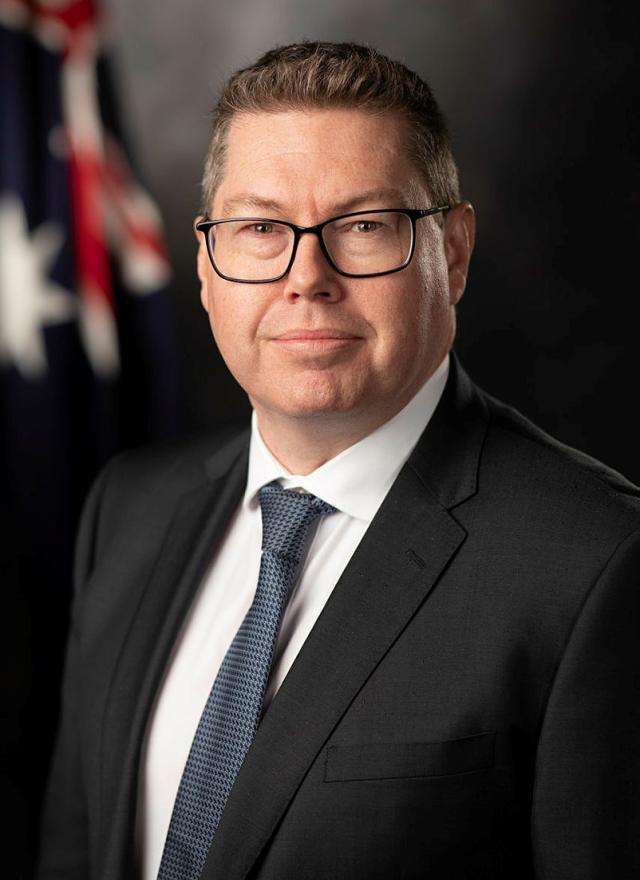
THE HON PAT CONROY MP
MINISTER FOR DEFENCE INDUSTRY
MINISTER FOR INTERNATIONAL DEVELOPMENT AND THE PACIFIC
E&OE TRANSCRIPT
WASHINGTON DC, USA
TUESDAY, 28 JULY 2026
SUBJECTS: AUKUS, Virginia-class construction rate, Autonomous vessel development, China relationship.
MINISTER FOR DEFENCE INDUSTRY PAT CONROY: Good morning, everyone. We all set? Well, it’s great to be here in Washington, D.C. again for a visit firmly focused on Aussie industry and Aussie jobs. I’ve just come from Charleston, South Carolina. Charleston, South Carolina, where I did a number of things. I visited Newport News’ new submarine factory there to see the co-investment from the US and Australian governments to expand the submarine industrial base in action.
We’re seeing a ramp-up of effort to build the Virginia-class submarines that’s unprecedented in the last few decades. We also visited Aussie students at the AUKUS Nuclear Power Training Unit where Australian students continue to, quite frankly, set the world on fire. A female naval officer, an Aussie naval female officer has recorded the highest grade-point average in the history of that entire training unit, that has existed for decades. And Aussie sailors are really becoming duxes of most of their classes. And it was inspiring to see young Australians who will be crewing our AUKUS submarines into the future.
This trip is focused on building opportunities for Aussie jobs and Aussie industry as we build self-reliance within the alliance. And that’s what my focus will be. Today and tomorrow I’ll be meeting with senior US administration officials, including at the Pentagon, Congressional leaders and industry leaders across both sides of the aisle. And my main message to them is that Australia is committed to the alliance. Australia is committed to increasing our self-reliance and sovereignty. Australia is committed to growing our defence industry. Not just to support the Australian Defence Force but also to promote deterrence and peace in our region.
I’ll then move on and visit Tucson, Arizona, where I’ll be going to an RTX missile factory, one of the biggest missile factories in the world. We’re focused on our guided weapons and explosive ordnance enterprise. We’re focused on building missile factories in Australia because if you want to avoid being at the end of the queue, you have to build your own missiles, and that’s what we’re focused on. I’ll be exploring our commitment to undertake maintenance, repair and overhaul of the Advanced-Medium Range Air-to-Air Missile AMRAAM, as well as looking at opportunities to produce that very advanced air-to-air missile in Australia. That’s part of our $36 billion investment in the guided weapons and explosive ordnance enterprise.
One of my other main messages today is that the US remains our principal strategic partner. And that has been the fact since the ANZUS alliance was consummated, and AUKUS is the latest manifestation of that. As I said at the National Press Club a few weeks ago, AUKUS is happening right here, right now. We’ve got 1,100 Australians in South Australia working on building the shipyard, the submarine construction yard where we’ll build SSN AUKUS. We’ve got hundreds of Australians training at both Pearl Harbour and in US Navy submarines right now. And we’re building parts for not just the UK, but the US as well.
I’ve got two significant announcements around AUKUS today. The first is that we’ve awarded a contract, to Leidos Gibbs & Cox, to design the contingency dry docking facility that we need. This dry dock is another milestone in AUKUS. This contingency dry docking facility is a critical pathway to us getting sovereign ready to receive our first Virginia-class submarine in the early 2030s. So, that’s a significant milestone on AUKUS. The second milestone that I’m announcing today is for the first time ever, Aussie steel will be going into US submarines. Electric Boat has signed a $2 million contract with Bisalloy to acquire Aussie submarine-grade steel that will go into Virginia-class submarines. These are submarines that the US Navy will use. So, we’re seeing Australian industry, Australian jobs, supporting the build of Virginia-class submarines for the US Navy. So, this is another manifestation of AUKUS. There’s another example of what AUKUS is about, which is about expanding the industrial base of all three countries to deter conflict and promote peace in our region, as well as supporting Australia to acquire the most advanced, nuclear-powered but conventionally armed submarines in the world. So, you can expect to see more announcements around AUKUS as time progresses, because it’s happening right now and it will contribute to peace and security in our region. Happy to answer any question.
JOURNALIST: Mr. Conroy, the Pentagon is reviewing its military footprint in Europe. Do you think that opens up an opportunity for the US to shift more of its focus to the Indo-Pacific region? And would you be hopeful that they might increase troop rotations and the size of deployments to Australia?
MINISTER CONROY: Well, that’s obviously a question for the Pentagon to decide, but we’ve obviously got SRF-West starting next year. We’ve got the Marine Rotation Force as well in Darwin, as well as a range of other rotations through the continent of Australia. We work really well with PACOM under Admiral Paparo. I met with him recently, and we meet regularly to discuss how we can work together. So, that’s a question for them. I’m also focused on co-production or co-design, co-development, co-production and co-sustainability statement so that US forces can use our industrial base. To give you a couple of examples, a US Virginia-class submarine docked in Fremantle recently, and swapped out its entire Mark 48 torpedo load and received a load of Australian torpedoes maintained at the torpedo maintenance facilities there. A US Navy Romeo helicopter received deep-level maintenance at our Nowra industrial facilities, undergoing identical industrial treatment as if they were in the United States. This is examples of us working together on co-sustainment so that it’s much faster for US assets to get deep-level maintenance in Australia than to travel all the way back to the continent. So, we are working closely together and obviously what they decide there is a matter for them.
JOURNALIST: Minister, the United States would obviously like to be making more Virginia-class submarines. They’ve said that the estimates are they’re making between 1.1 and 1.4 a year. Are you confident that the Americans are making enough that they’ll be prepared to actually give Australia some of their Virginia-class submarines under the AUKUS deal?
MINISTER CONROY: Yes, I am, and I’m confident for a number of reasons. First, testimony from Admiral Caudle recently said that they are on track to achieving the build rate of 2.3 in the early 2030s. That’s the critical point. People are focused on the here and now, and that’s understandable. But 2.3 is the goal in early 2030s. Importantly, another way of freeing up Virginias is increased maintenance efficiency, and the US is doing that as well. But ultimately, it’s expanding the submarine industrial base that will allow this to happen. The US has put aside $US17.5 billion to expand the submarine industrial base. We’ve put aside $3 billion, of which we’ve committed slightly over $2 billion already. That money is flowing right now to expand the industrial base. As I said, I was at a Newport News facility in South Carolina yesterday. That one facility, that only opened last year, will contribute 1.5 million hours of production to the Virginias each year. That is a very significant increase in Virginia production. And that’s one of 34 distributed sites that Huntington Ingalls is doing by themselves, let alone what Electric Boat is doing. So, the submarine industrial base is expanding, and that will flow through over the next few years to increase those production rates. Equally, obviously, we’re making a commitment as well. So, that steel announcement is a precursor of more to come. We’ve got an Australian company called AML3D that in Ohio is manufacturing 3D printing machines right now that is contributing to the industrial base. So, I’m confident for those reasons, I’m confident that that will occur. As has been said, AUKUS is full steam ahead.
JOURNALIST: And is there any concern in the Australian government that under the AUKUS agreement, the American president, whoever it will be at the time, has discretion as to deciding whether or not to go ahead with handing over those submarines to Australia. Should Australia have signed a deal that ultimately gives discretion to somebody we don’t even know who that person might be?
MINISTER CONROY: Well, I’d make a couple of points. AUKUS is in the national interest of all three countries. That’s why we’re pursuing this. This is not an act of charity. This is about expanding the industrial base of all three countries. So, we go from three construction yards capable of making nuclear-powered submarines to four. It’s in our national interest. It’s in the national interest of the US and UK, and that’s why it survived changes of government in all three countries. And I’m confident it will continue.
JOURNALIST: We reported in the Herald and The Age this week that there were grave doubts about Australia’s program to acquire six large, optionally crewed surface vessels based on a US prototype that’s now no longer happening. So, is Australia’s program on that essentially dead now?
MINISTER CONROY: Absolutely not. The Integrated Investment Program that I released with the Deputy Prime Minister in April, an investment plan that allocated $425 billion to equipping the Australian Defence Force, included funding for autonomous vessels for the Royal Australian Navy. And this is part of our effort to more than double the Royal Australian Navy surface fleet. We’re acquiring 11 Mogami-class frigates; we’ve got the Air Warfare Destroyers and the Hunter class, and then six autonomous vessels would bring the fleet to more than double. Obviously, the US have changed their investment priorities, but it would be incorrect to say that they’re moving away from autonomy. They’re increasing their investment in autonomy. Their program focuses on a medium-sized unmanned surface vessel that would have the ability to carry missiles. And I’m aware of at least four or five companies that were awarded contracts for prototyping. So, the US have a program that could be complementary to ours. The UK have announced the Hybrid Navy, which would include a range of autonomous vessels. So, our program still exists; it’s being funded. We’ve got time to look at what the rest of the world is doing. We lead the world in certain areas of autonomy through the Ghost Bat, Ghost Shark, Blue Bottle and Speartooth. In this area, we’ve identified that we’re looking to partner with another nation. It could be the United States, it could be UK, it could be a third country. But autonomy is going to become an increasingly prominent feature in naval warfare. And just because one program has changed doesn’t mean our commitment has changed.
JOURNALIST: Where we stand today, we don’t know where those are going, obviously, we’re not designing them ourselves. We don’t know where they’re going to come from. And it might not be the US?
MINISTER CONROY: Well, the US is a good option. The UK is another. We’ve got funding to do this, but you think about the pathway for construction. These are to be constructed at the Henderson Maritime Precinct. At the moment, the Henderson Maritime Precinct is planned to build landing craft medium and heavy and then transition to build the Mogami-class general-purpose frigate, which is the most advanced general-purpose frigate in the world. Towards the end of the Mogami build, it will then move to building these autonomous vessels. So, we’ve got time, we’ve got funding for this. This is an area where it’s probably in our interest to, to be a fast follower rather than to lead the world. We’re leading the world on extra-large autonomous underwater vessels with Ghost Shark. We’re leading the world on collaborative combat aircraft with Ghost Bat. And we’ve got Speartooth and Blue Bottle. This one will be a fast follower. But we’ve got funding, and we’ve got time.
JOURNALIST: And sorry, just on that, is that matter something you’ll be discussing with US officials on this?
MINISTER CONROY: I will be exploring their plans for autonomy, not just with US officials, but with the defence industry here. I had a good conversation with HII about it when I was down in South Carolina yesterday, and I’ll explore it with other industry partners. But we’ve got time. I meet regularly with companies like Saronic that are one of the competitors in the US program, so we’ll see where it goes. But we’ve got funding, and we’ve also got time because we’re focused on building the landing craft and Mogami first.
JOURNALIST: The new British prime minister is now in place; can you bring us up to speed with conversations the Australian Government’s had with Andy Burnham? And when do you hope that the leaders of AUKUS will meet again?
MINISTER CONROY: Well, obviously that’s a matter for the three leaders. I know that Prime Minister Albanese has exchanged messages with Prime Minister Burnham and I congratulate him on his election. I know that DPM Marles has exchanged messages with the incoming Secretary of Defence Wes Streeting, and obviously the return of John Healey as Chancellor of the Exchequer is well and truly welcome. John is a great friend of Australia, and he’s passionate about defence. So, and I’d also say that Prime Minister Burnham, in his first comments, recommitted the UK to all the defence partnerships and that includes AUKUS. So, I’m sure a meeting will occur, but at an official’s level, work is continuing on AUKUS unchecked, and that will continue.
JOURNALIST: Minister Conroy, one of the recent developments with AUKUS was the news that the subs that Australia will receive will be older subs, all of them. So, I’m curious about what you say to people who might be concerned about what that means for their active service life, whether that might be reduced as a result. And are you holding conversations on this trip about how old the models will be?
MINISTER CONROY: Well, we’ve got good, we’ve got good clarity about the age of the in-service Virginia-class submarines we’ll receive. So, much so that conversations are going to a granular level about which particular submarines are the logical ones. So, we welcome the decision of the US to move from two in-service submarines and one new Virginia to three in-service. That’s in our national interest. That’s what we sought when we negotiated the optimal pathway in late 2022, early 2023. And it’s in our interest for a number of reasons. First off, getting three submarines of the same configuration will be cheaper to run. They’ll be more efficient to run, rather than having an orphaned submarine of a different configuration. Secondly, these submarines will be roughly, they would have had their first depot-level maintenance, which usually occurs around seven years into their life cycle, out of a 33-year life cycle. So, we’re anticipating submarines that have between 24 and 26 years left on their life, and that’s consistent with the AUKUS submarine replacing them in the mid-2050s. But the beauty of this approach is that, just like a lot of advanced technology, they’re most expensive to run and most challenging to run at the start of their service and at the end of the service. This is called the bathtub curve. Whereas you go through the bathtub of ownership and you want, the maximum efficiency is at the bottom of the bathtub, which is normally when they’ve had the first depot-level maintenance. So, this is good news for Australia. They’ll also be cheaper to acquire. So, for a number of reasons, this is what we sought, and it’s good news for Australia.
JOURNALIST: Minister, from a defence point of view, is there any difference or perspective or emphasis in the way the United States views China and the way Australia views China? And I ask that because obviously for Australia, they’re our major customer, which then [indistinct] the United States. So, do you think that the US and Australia see China and the future differently?
MINISTER CONROY: Well, I think that’s really a question for commentators to compare different countries’ approaches. What I can say to you is that Australia has stabilised our relationship with China. We’ve restored trade; they’re an incredibly important economic partner. But we should also say that we’ve seen the biggest arms buildup in our region by China without the strategic reassurance and transparency that would be expected and should be expected. And so these are challenging times, and we face strategic circumstances that have deteriorated. But ultimately how different countries see third-party countries is a matter for them. Last one.
JOURNALIST: The Pentagon’s Deputy Policy Chief, Austin Dahmer, told an inquiry from Capitol Hill only last week that the production rate of Virginia’s was still between 1.1 and 1.2. And he said, explicitly, that all the money that Congress and I guess by extension Australia have put in hasn’t moved the dial at all. So, I know people are saying by the 2030s it’ll get there, but the fact is, he said only last week, it hasn’t changed. Shouldn’t that be ringing alarm bells for the Australian Government?
MINISTER CONROY: Well, first off, I point you to Admiral Caudle’s testimony to Congress. As the Chief of Naval Operations, he is the ultimate uniformed responsible. And he said that they’re on track for 2.3. Secondly, that is one measure amongst many of submarine availability. You’ve got maintenance, but even within production rates, that’s one measure. And if you think about it, that rate is determined by the slowest supplier for that submarine. So, you could have the rest of the submarine supply chain much more advanced. But one part on the critical path is the one slowing down that rate. So, the important thing is, is there more production occurring? And let me give you another example. HII last year increased their throughput from submarine, nuclear, sorry, Virginia-class submarine construction by 15 per cent. So, they increased their production by 15 per cent. This year they’re on track to increase it by another 15 per cent. As I said, they’ve just opened a factory that will contribute 1.5 million man-hours to Virginia-class submarine construction each year. So, you’re seeing more production throughout the supply chain. Yes, there’s specific elements that are moving slower than others, but that $20 billion is flowing through the system and production is expanding. You can’t argue with that. And that’s why I’m confident rates will continue to increase and that we’ll get our Virginias. Thank you very much, everyone.
*By Michael Barker, Editor, Fremantle Shipping News
~ If you’d like to COMMENT on this or any of our stories, don’t hesitate to email our Editor.
~ WHILE YOU’RE HERE –
PLEASE HELP US TO GROW FREMANTLE SHIPPING NEWS
FSN is a reader-supported, volunteer-assisted online magazine all about Fremantle. Thanks for helping to keep FSN keeping on!
~ Don’t forget to SUBSCRIBE to receive your free copy of The Weekly Edition of the Shipping News each Friday!