Bruce Menzies offers some thoughts about Welcomes to Country
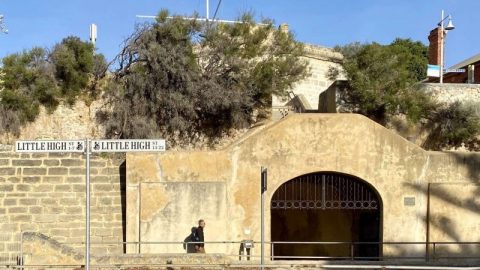
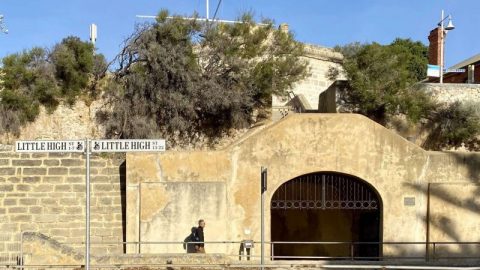
Shivering in the predawn chill, I stand on Monument Hill in Fremantle. Huddled around me, a smorgasbord of locals – from elderly ladies leaning on their canes to infants pouched on parental backs. As the sun rises over the Darling Ranges, the air is sombre yet expectant. Anzac Day. A day of remembrance; a day of gratitude. When a bugler plays The Last Post, tears begin to fall.
Later, as I cycle home – to a warm house where coffee and breakfast await – my head swirls with images of young soldiers. Men in uniform disembarking in a Turkish cove, wading ashore under fire, many dying as bullets rained down from above or drowning under the weight of their heavy packs. I wonder about their thoughts as they scrambled towards shelter under the cliff face, those who made it that far. Or were there no thoughts, simply the sheer instinct for survival?
My great-uncle Tom was at Gallipoli. He survived, only to die far from home in a later campaign. My uncle Ted, a draughtsman from Subiaco became a sapper, digging tunnels under France and Belgium. His German counterparts dug tunnels in the opposite direction. Each side planted explosives, aimed at blowing up the other’s trenches. For his sins, Ted was gassed and his life thereafter, like millions of other young lives, became one of trauma and forgetting.
I grew up with family stories. War stories – or rather, snippets of stories – told in the main by aunts and grandmothers and mothers. Those who remained at home. My father, wounded and evacuated from the jungles of New Guinea, was largely mute. He marched on Anzac Day, with his medals and his mates. And when he did speak about the war, an unspoken lid of necessity and self-protection kept his emotions in check. Once, in a moment of idiocy, I asked him whether he had received any counselling. He looked at me with a mixture of amusement and derision: ‘Counselling! You’ve got to be joking. We were just told to get on with it.’
Get on with it they did, these post-war generations. Making a life, doing the best they could, and all the time praying there would never be another war.
Now, another Anzac Day has just passed. Distracting us from the silent homage to those long gone, we find ourselves arguing about the nature of this annual commemoration and the role of our indigenous brethren. Instead of solidarity we have division. Instead of compassion we have outrage.
Why is this so?
Opinions abound. Some argue that a Welcome to Country ceremony is incompatible with the solemnity of Anzac Day. That instead of the one day of the year when we honour and pay our respects to those who have fallen, the occasion is somehow compromised.
To me, this argument reflects a poverty of understanding. It also reflects a certain attitude – an attitude that has become embedded in some hearts, perhaps increasingly so, in the decades since Welcome to Country and Acknowledgement of Country rituals became part of our culture.
In the eyes of many, ‘country’ is reduced to the landmass of Australia. Non-indigenous indignation is along the lines of ‘why should I be welcomed to my own country?’ Unfortunately, this reductionism is both a poverty of understanding and a poverty of education. I venture that, often through lack of interest or education, the vast majority of those Australians have a limited understanding of how First Nations people hold the concept of ‘country’.

Rather than attempt an explanation in my words, let me quote from a 2025 article by John T Patten, a Bundjalung-Yorta Yorta artist with Anglo-Celtic ancestry.
‘You’re not being welcomed to a part of the landscape. You’re being welcomed to a concept of where the people who have lived in that region for tens of thousands of years, cared for it, and allowed it to care for them, have grown their culture, laws, and a kinship system that maintains a balance with nature, your neighbours, and your obligations to your ancestors, your present, and those who will inherit the product of your actions thousands of year into the future. As someone who was not born within the framework of that Country, it is welcoming you into that system, and you have an opportunity reaffirm that you care about where you are, its history, and its future.’
Perhaps this framework is difficult to comprehend, let alone absorb, for those of us who are far removed from indigenous roots. Yet it strikes me as crucial if we are to deepen our understanding, acknowledge the physical, emotional and cultural bonds that are embodied within indigenous psyches, and to accept – even welcome –this form of connection to country into our own hearts and minds.
On the other hand, we need to look carefully at what lies beneath what has become an undercurrent of resistance. An undercurrent that manifests crudely in the boos that rang out across Australia during Anzac Day ceremonies.
It doesn’t take much foraging in social media and elements of the Media to find other expressions of this resistance. In the minds of some commentators and many ordinary folk, there is an ‘Aboriginal industry’ where preference, often in the form of financial gain, is seen as unfair and divisive. There is a sense that, even though the Voice referendum was lost, indigenous voices are over-represented and gain too much traction. In keeping with a more general pushback against ‘wokeness’, there is muttering in households and organisations about having to conform to alien cultural expectations and to perform, at umpteen meetings and gatherings, the now-ubiquitous acknowledgements to the original (human) occupants of that relevant parcel of land.
None of this is likely to dissipate any time soon. From my discussions and observations, these mutterings reflect an undercurrent leaching throughout non-indigenous Australia. Sometimes it breaks through the surface, as with the recent displays of hostility during the Anzac Day services. Mostly, however, it is held as a kind of attitudinal discomfort; a vortex of conflicting emotions, often involving blame, shame and guilt, usually on the part of those who see the need for genuine reconciliation but react internally if they feel compelled to answer for the deeds of their ancestors.
Within what I’ve just described there is of course a wide spectrum of attitudes and beliefs. And indigenous and non-indigenous Australia is by no means alone in this struggle for clarity, collaboration and cohesion. Other countries with colonial pasts swim in the same soup. There is no magic wand.
Yet, despite other events and trends in the wider world, perhaps it is intrinsically helpful and healthy to hold out hope that some form of magic can happen. Among some of my friends, we continue to find ways to express and explore our concerns. Our heritage suggests it’s more natural for us to embody the Anzac Day spirit than to absorb the depths of indigenous culture. Yet, I believe it behoves us to bridge that gap as best we can. And, by doing so, not only to enhance our own lives but to invite reciprocity – a mutuality that has been in such short supply throughout human history.
Perhaps that commitment to magical hope is really a commitment towards reality. And perhaps, against the odds, Welcome to Country and Advance Australia Fair can embrace in an enduring love-dance that reverberates throughout this Great South Land.
******
By Bruce Menzies. Based in Fremantle, most of the time, Bruce Menzies is the author of three novels, a family history, and a recent memoir. Details at BruceJamesMenzies.com If you’d like to read more of Bruce Menzies’ work on Fremantle Shipping News or listen to a fascinating podcast interview with Bruce, look here.
~ If you’d like to COMMENT on this or any of our stories, don’t hesitate to email our Editor.
~ WHILE YOU’RE HERE –
PLEASE HELP US TO GROW FREMANTLE SHIPPING NEWS
FSN is a reader-supported, volunteer-assisted online magazine all about Fremantle. Thanks for helping to keep FSN keeping on!
~ Don’t forget to SUBSCRIBE to receive your free copy of The Weekly Edition of the Shipping News each Friday!