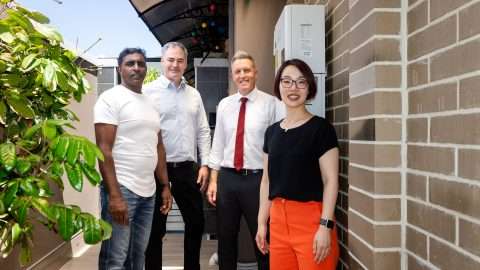
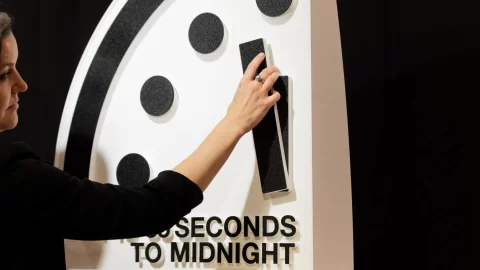
WA Premier Roger Cook and WA Energy and Decarbonisation Minister Amber-Jade Sanderson faced the media yesterday at the WA State Labor Conference in Fremantle to announce the State’s new plan for local green steel to be used on major government projects.
The Shipping News, as do many, likes the idea of green steel. But is anyone locally making green steel in commercial quantities for local use, or for that matter, is anyone anywhere making green steel in commercial quantities that could be used locally any time soon?
So we made inquiries.
The answer, it seems, is that several companies are actually producing or will soon be producing green steel in other parts of the planet, and hopefully locally too as the industry transitions from pilot projects to commercial-scale production.

Credit Philip Oroni for Unsplash
Those said to be currently or imminently producing elsewhere in the world include –
- Stegra (formerly H2 Green Steel), which is building the world’s largest green steel plant in Boden, Sweden, scheduled to begin production in 2026 . When fully operational, it is projected it will produce around 5 million tonnes annually and has already pre-sold over 1.5 million tonnes to customers including Mercedes-Benz, Volvo, IKEA, and Porsche Stegra.
- Boston Metal, based in the USA, that completed its first industrial reactor run in early 2025, producing about a ton of steel using its electricity-based process. They plan to bring their steel decarbonization technology demonstration plant online in the coming years.
KEY TECHNOLOGIES being used are –
• Hydrogen-based reduction: Uses green hydrogen (from renewable electricity) instead of coal to reduce iron ore
• Electric arc furnaces: Powered by renewable electricity for recycling scrap
• Molten oxide electrolysis: Uses electricity to directly convert iron ore to steel.
Major producers with commitments are listed to include companies like ArcelorMittal, SSAB, Emirates Steel Arkan, Nucor, and China Baowu Steel Group that are establishing green steel production plants targeting 2025-2030.
So green steel is moving from concept to reality, though it still represents a tiny fraction of global steel production. The technology exists and is scaling up.
So far as WESTERN AUSTRALIA is concerned, it has several green steel initiatives at different stages of development.
GREEN STEEL WA
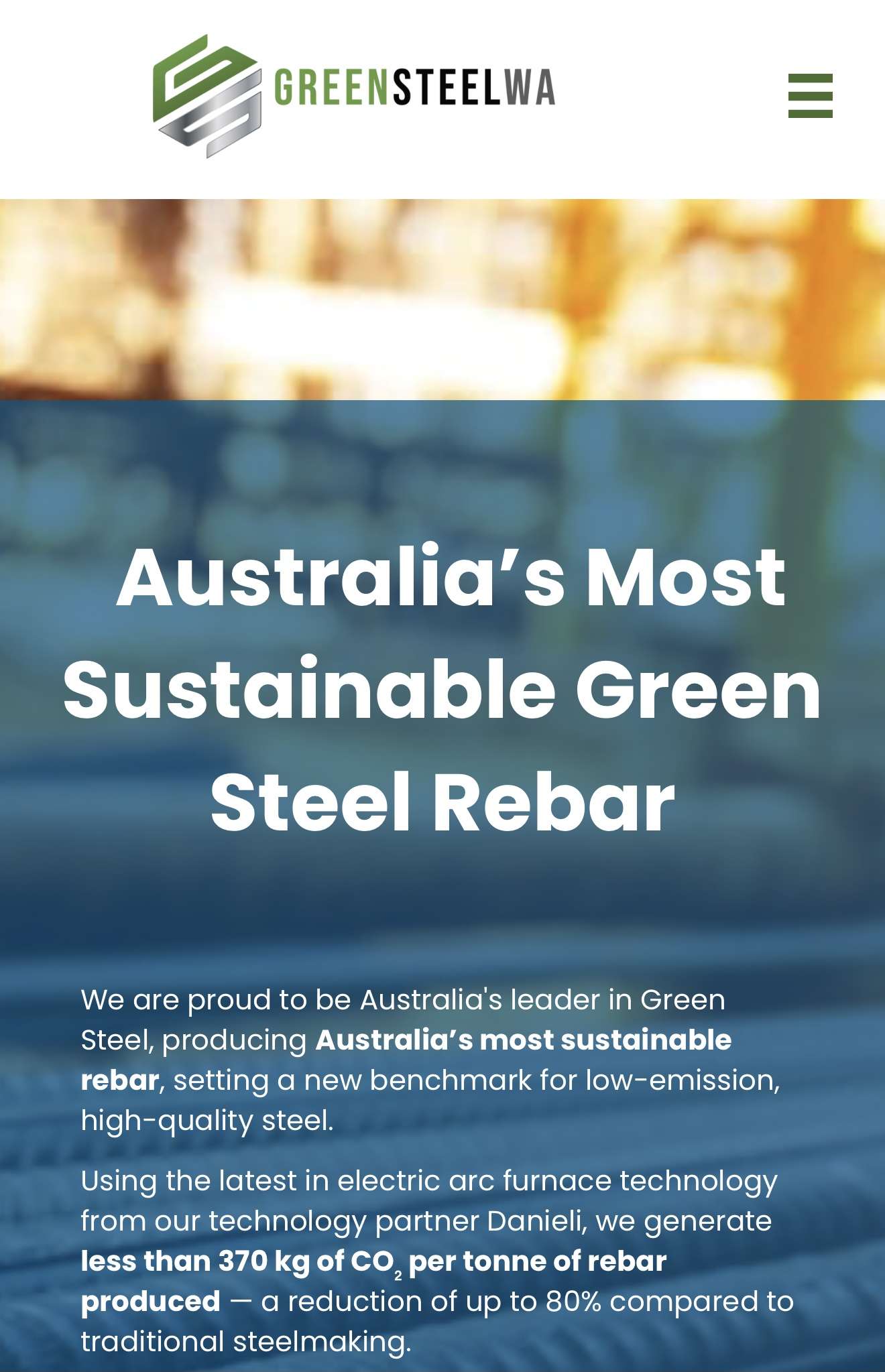
GSWA is the most advanced by all reports. GSWA has two major projects. (1) A $400 million green steel recycling mill in Collie that will use an electric arc furnace powered by renewable energy to convert scrap steel into rebar, with capacity to produce up to 450,000 tonnes annually when production starts in 2026. As of April 2025, reports indicate they are in advanced stages of development and proceeding towards a final investment decision . Analysts say they’re targeting a final investment decision in late 2025, with operations beginning in 2027. (2) GSWA’s second project is a $2.5 billion Direct Reduced Iron (DRI) plant near Geraldton that will convert WA iron ore into green DRI for export, using technology that allows them to start on natural gas then transition to green hydrogen in time.
FORTESCUE

Fortescue – Pilot Stage: Fortescue has a green iron pilot project at Christmas Creek in the Pilbara with first production scheduled for 2025, projected annual output exceeding 1,500 tonnes, with a capital expenditure of US$50 million. This is a small pilot, but Fortescue has outlined plans to scale up production to supply over 100 million tonnes of green iron metal to China annually by 2030. The WA Premier and Minister perhaps have that source in mind for WA.
WA, in summary, appears to look like this: GSWA’s Collie mill is the most advanced commercial-scale project, though it hasn’t reached final investment decision yet. Fortescue’s project is smaller and more experimental but operational sooner.
So WA has real projects underway, but they’re still in development/pilot phases rather than producing green steel at commercial scale today.
Fearing that this might mean the Premier’s and the Minister’s statements yesterday should be considered more aspirational than real in the short term, and our analysis more conservative than it should be, we asked Peter Newman, Professor of Sustainability at Curtin University, author of the recently published book Net Zero Cities With Sustainability: A Practitioner’s Approach and a regular contributor to the Shipping News, for his take on where green steel is at locally.
Professor Newman said he considered our analysis to be ‘very conservative’ and that green iron will be possible in the next 3 years and green steel in 5. The key, he said, is the renewable energy needed ‘that will be very cheap as it’s getting cheaper every year’. He concluded –
The processes for green iron and steel are mostly about electric processes based on electric arc furnaces. These are now being trialled. The mining companies exporting iron ore are all in the process of trying to get ahead of global markets by showing the green iron and green steel options are easier to do near where the iron is mined. It’s only the fossil fuel companies that are now trying to show that such matters can’t be done here. We don’t need cheap labour just the best technology and trained people to manage this. We have both.
So there we are. Onwards and upwards!
By Michael Barker, Editor, Fremantle Shipping News.
~ If you’d like to COMMENT on this or any of our stories, don’t hesitate to email our Editor.
~ WHILE YOU’RE HERE –
PLEASE HELP US TO GROW FREMANTLE SHIPPING NEWS
FSN is a reader-supported, volunteer-assisted online magazine all about Fremantle. Thanks for helping to keep FSN keeping on!
~ Don’t forget to SUBSCRIBE to receive your free copy of The Weekly Edition of the Shipping News each Friday!