After finishing Year 12 at Shenton College at the end of 2024, Izzy Ercleve decided to make 2025 a Gap Year. She wanted to come out of the other end of the year suddenly sure of herself, with a path illuminated in front of her. Unfortunately, that’s not how it works, she learned. This is how it went…
It’s easy to be tempted to go directly into an undergraduate pathway when you finish high school, a pathway that seems like it will spit you right out at the end straight into employment, complete with a pantsuit, briefcase, and office cubicle. Taking a Gap Year can make you feel like you’re stepping off the train at an empty platform that hovers in between two destinations, while you watch all your friends full-steaming-ahead on career tracks. It’s scary to press pause. But let me tell you what I took away from it.

Credit Poelina Kuzovkova for Unsplash
In my final year of high school, I, along with what seems like half of the yearly high school graduates in WA, really wanted to study medicine. I think this was partly due to my understanding of job options being very biased to the ones primary school kids tend to announce at show and tell: for example, a ‘doctor’, a ‘teacher’, a ‘lawyer’, – (or an astronaut)!
As well as this, my last two years of school had me feeling like I was paddling desperately to keep one step ahead of the barrage of homework, tests, assignments, and exams, instead of enjoying the present. So, when I finished Year 12, I wanted to broaden my understanding of different career pathways and to experience horizons outside that of the Perth metropolitan skyline.
On January the 1st, I opened the first page of my Gap Year journal and wrote: “Here’s to day one of an uncertain year ahead of me”. Little did I know that my journal would overflow into many more journals, that followed me through part time work, travelling around Europe, and teaching in Africa.
I didn’t start off my Gap Year by diving straight into adventure. I had a taste of how competitive applying for jobs can be after two months of submitting cover letters online at home, while my email inbox remained empty. Being pretty much unemployed while also having to pay a taster of rent to my parents, made me feel not exactly enamoured by my situation.
I finally did manage to land a job as a receptionist, and I spent the first six months of the year in Perth earning money and appreciating how demanding 9-5 work can be.
Whilst still in Perth, my thoughts about future careers became a bit of an echo chamber. I found myself deliberating so far ahead into the potential outcomes of each university degree option, but of course, it’s hard to firm up on a decision when you’re not gaining new information. How could I suddenly conclude exactly where I want to be in ten years when I was surrounded by the same scenery, same people, same routine? I realised that my planning ahead was futile, and that vantage points and paths only emerge by taking a first step into uncertainty.
At the end of June, I braved the goodbyes to my family and hopped on a plane to Germany, lugging with me a bulging suitcase, backpack, and tennis racquet. I spent the next month hopscotching between hostels and stammering my way through a Deutsch language course, and, as I did, repeating the words “tickets, phone, passport… tickets, phone, passport” in my head.
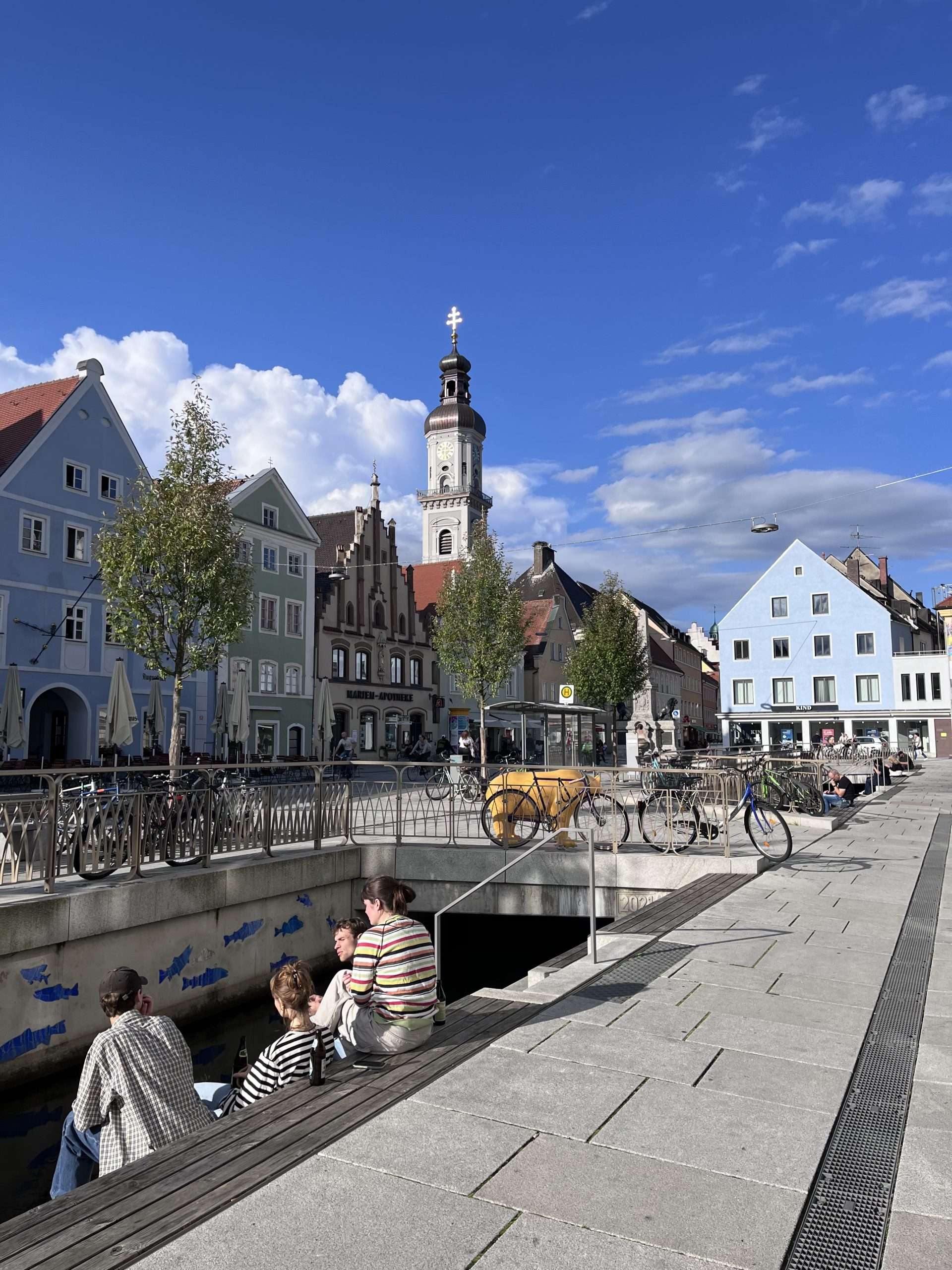
Somewhere in Germany. Credit Izzy Ercleve.
Being by myself in a new city saw me attending to my own laundry, cooking for myself, navigating new systems of public transport, keeping up with admin tasks like purchasing E-Sim cards, and booking and cancelling plans along the way. And if I could stay on top of those tedious aspects of independence, I reckoned I would qualify to work for NASA.
Solo travelling and hostel life also opened me up to people from so many different countries, backgrounds, and cultures, and forced me to be outgoing. The come-and-go nature of fellow hostel travellers encouraged me to be spontaneous and extremely present with the people I’d come across, no matter how fleeting our time together. Of course, bumping into any Europeans in Europe was always humbling, as they would inevitably speak perfect English, as well as at least three other languages.
Being 18 or 19 years old is like no other time in your life. You’re old enough to be considered an adult, but not expected to have figured anything out yet. You know enough to hold your chin up in the world, but still impressionable and formative when facing new experiences.
A month after my European vacation, I traded European architecture and hectic public transport for Zambia’s orange dust roads and banana trees. I spent four and a half months working as a Gap Year student at the high school I had attended six years earlier, teaching English and Music.
I had to adjust to a different high school curriculum from the one I was taught at Shenton. I was initially sceptical of what the standard would be like and found myself looking for ways to claim my Australian curriculum was superior. But of course, education differs across countries and cultures – the curriculum that you were schooled on is not universal, and it is not ‘the best’, as I caught myself seeking to affirm. Trident College’s timetable included two hours of compulsory after-school activities, like sport, arts, clubs, as well as outreach programs with local schools, but without the flashy badges attached.
Life in Zambia ran at a much slower pace than Australia and Germany. You could watch groceries pass along the checkout desk slower than a tectonic drift, not a shred of urgency imbuing the workers. I spent an hour and a half perched on a chair waiting for immigration to process my visa when I arrived, while two officials opposite me enjoyed a chat and a gossip. At a restaurant, once a waiter came into view carrying your order, you could expect them to reach your table at least 120 Mississippi’s later. It was known as ‘the Solwezi shuffle’. On the other hand, walking between classes at school, I’d notice how many students made eye contact in passing, ‘Morning Ma’am’, and walking around town almost every stranger would ask ‘How are you?’, as way of greeting.
As I was walking – perpetually one step ahead – with a fellow teacher, she laughed and asked: “Why do people from developed countries always walk so fast?”
It made me think about Western ‘hustle’ culture, where we prioritise productivity and efficiency and sometimes forgo everyday interactions with the people around us.
I have never taken notice of my skin colour living at home in Australia, but whilst living in Zambia, I was conscious that I was a member of a minority. I became very familiar with the Bemba word ‘Muzungu’, meaning ‘white person’. In the markets, I experienced a kind of inverse racism, where white people were presumed to be wealthy, and the prices and the haggling would ramp up. Being a white woman in an African community could swing both ways; some people were very accommodating and seemed to put me on a pedestal, while for others, I seemed to represent the inequality they faced. My surroundings were a constant reminder of my privilege – how incredibly humbling to come from a developed country, to one where people sell tomatoes at 5 kwacha each on the side of the road for their living.
It was grounding to spend my time in a small developing Zambian town, where families and the surrounding nature was everything. I became part of a tightknit community, I travelled everywhere by bike or carpooling with family friends, and I went for weekly runs through the game park and had to check over my shoulder for angry warthogs. Visiting Meheba Refugee Settlement on one of the school camps showed me that for so many children, playing, clapping and dancing games in a circle, and weaving bracelets out of grass, was a whole afternoon of entertainment.
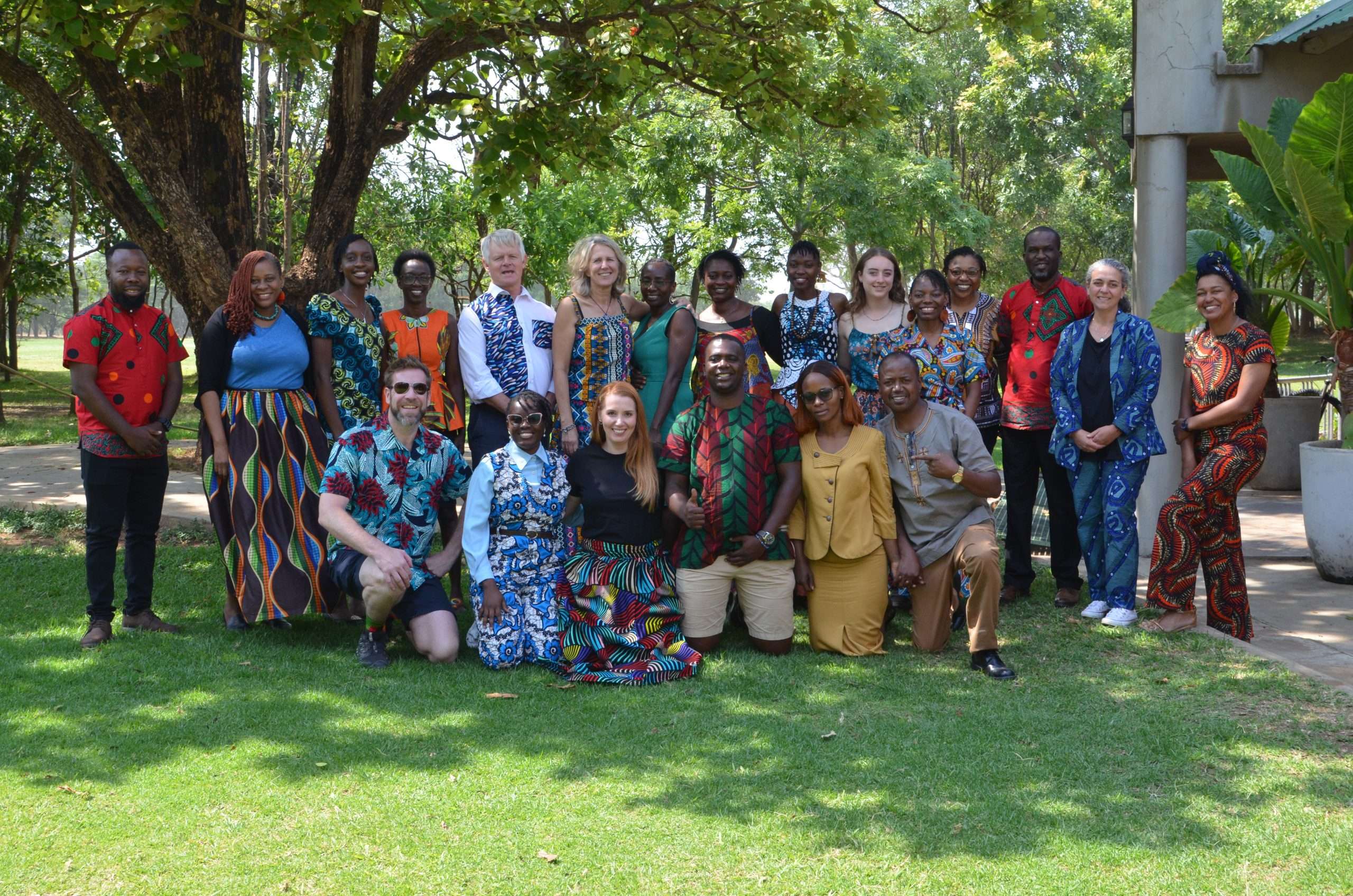
With teaching colleagues in Zambia
After almost five months of intense thunderstorms, analysing Macbeth with year 8’s, and eating the best bananas in the world, I returned to Perth with a lot of decisions to make. After being away, I didn’t pivot so much as come to realise my callings could possibly be as varied as a waterslide tester, or a nuclear plant moisture mopper, or some other quirky jobs that I discovered existed in the world in the course of my Gap Year. However, I did feel much more confident in deciding what I want to do in this new year, 2026, after experiencing different ways of life, rather than speculating about my options from the safety of my home.
I wanted to come out the other end of my Gap Year miraculously changed, being able to speak fluent German, suddenly sure of myself and what I wanted to do. Unfortunately, that’s not how it works.
Maybe I can’t conjugate all the verbs, but I ate German pretzels, danced to techno, and got to know people from Germany and all over Europe. And whilst I don’t think I’ll ever quite know the answer to the question, ‘What do you want to be when you grow up?’, Zambia taught me how I want to spend my time. I want to choose slowing down, inconvenience over instant rewards, embracing uncertainty over living passively.
But most of all, I want to check out all the different train platforms and opportunities that arise between me and my destinations ahead – you just never know what you might learn.
* By Izzy Ercleve
Izzy Ercleve is a Gen Zedder, Shenton College graduate who took a Gap Year in 2025. A writing enthusiast, she also interned at Fremantle Shipping News to learn more about the world of journalism. You will find more of Izzy’s Gap Year posts on FSN right here.
~ If you’d like to COMMENT on this or any of our stories, don’t hesitate to email our Editor.
~ WHILE YOU’RE HERE –
PLEASE HELP US TO GROW FREMANTLE SHIPPING NEWS
FSN is a reader-supported, volunteer-assisted online magazine all about Fremantle. Thanks for helping to keep FSN keeping on!
~ Don’t forget to SUBSCRIBE to receive your free copy of The Weekly Edition of the Shipping News each Friday!